





19th Century Hat Hook
These 19th century hat hook pieces are practical wall fixtures designed to hold garments, most often met as brass hooks, carved wood mounts, or combinations of horn and linden.
19th Century Hat Hook
A 19th century hat hook serves as a functional wall-mounted accessory for hallways and entryways, appearing in various formats from single brass items to expansive carved wooden racks and hall stands. Buyers searching this phrase encounter practical hardware alongside decorative wall displays originating from domestic and regional European workshops.
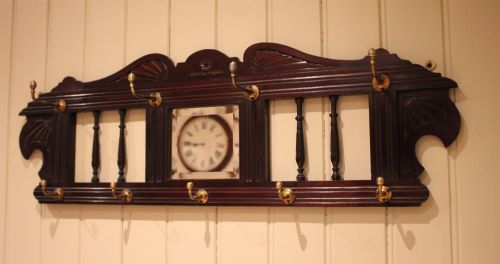
The versions most frequently met on this page include brass single or multiple hooks, alongside carved wooden wall racks representing the Black Forest style. Oak and mahogany formats also feature prominently, often incorporating shelves or multiple hanging points designed for domestic cloakrooms and corridors.
Origins span British, French, and continental European traditions, incorporating regional aesthetic shifts from the Victorian period through to the turn of the twentieth century. These objects bridge the gap between utilitarian storage and domestic ornamentation, utilising local timbers and metals common to their respective periods.
Materials and construction methods
Brass and bronze casting form the primary metal components, utilised for heavy individual hooks and sets designed to withstand daily domestic use. Turned and carved timbers such as oak, mahogany, beech, and linden wood provide the structural backplates and wall racks.
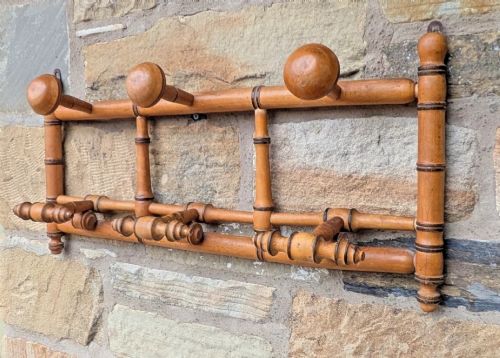
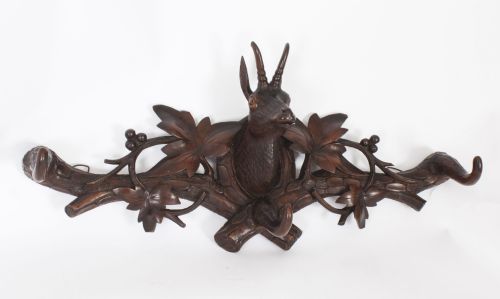
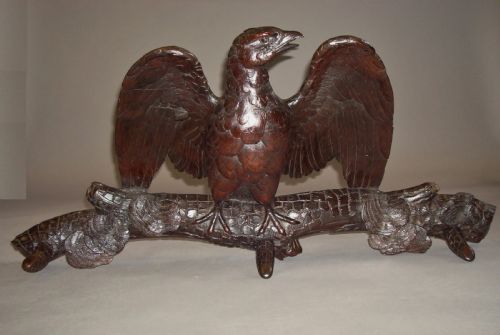
Carved wooden examples utilise traditional hand-chiselling techniques, particularly evident in Black Forest animal motifs featuring deer, chamois goats, and eagles sculpted from linden or horn. Bent wood techniques also appear in specific continental European wall-hanging racks produced during the later nineteenth century.
Materials span cast brass, bronze, horn, glass, and turned or carved woods including oak, mahogany, beech, and linden.
Factors of execution and depth
The distinction between standard utility hardware and superior examples lies in the crispness and depth of the hand-carved details, particularly in animal head mounts and foliage. Cast brass items achieve higher distinction through clean finishing, substantial weight, and well-defined contours rather than mass-produced uniformity.
Structural integrity of the mounting points and the preservation of original surfaces also govern the standing of an individual piece. Items retaining their original patination and robust structural joinery represent the upper tier of surviving examples.
Thonet
The 19th Century Hat Hook Glossary
- Black Forest
- A style of wood carving originating from the mountainous regions of central Europe during the nineteenth century. These pieces typically feature naturalistic depictions of animals and foliage.
- Portmanteau
- A combined wall-mounted rack or stand incorporating facilities for hats, coats, and sometimes umbrellas. It serves as a comprehensive entryway furniture piece.
- Bent wood
- A technique of steaming timber until pliable and bending it into curved structural forms. This method gained prominence in continental European workshops around the late nineteenth century.
- Linden wood
- A pale, fine-grained timber frequently utilised by nineteenth-century carvers for its cooperative texture and lack of prominent grain. It permits intricate detail work.
- Faux bamboo
- A decorative finish applied to wood or metal to imitate natural bamboo stalks. This style gained popularity during the nineteenth-century fascination with exotic design.
19th Century Hat Hook: Frequently Asked Questions
How were these hooks originally mounted?
Most pieces feature integrated screw holes or recessed brackets designed to attach directly to hallway wall studs or wooden battens. They required secure fixing to support the weight of heavy wool coats and hats.
Positioning typically occurred near main entrance doors for immediate access upon entering a residence.
What woods appear most frequently?
Oak, mahogany, beech, and linden wood form the bulk of the timber structures found in these wall fixtures. Linden wood specifically supports detailed animal carvings.
Darker woods like mahogany and oak suited formal Victorian hallways, while linden and beech populated continental decorative styles.
Can these support heavy winter coats?
Solid brass, bronze, and substantial wooden backplates provide the necessary physical strength for heavy garments. Heavy and gutsy brass variants were engineered precisely for robust daily employment.
Lighter decorative carved racks serve better for hats and lighter garments depending on their mounting security.
How do I distinguish Black Forest examples?
Black Forest pieces are defined by naturalistic animal carvings such as deer heads, chamois, eagles, and oak leaf motifs. They utilise linden wood, antlers, and horn.
Swiss and South German workshops drove this distinct aesthetic during the nineteenth century.