


19th Century Harvest Painting
These 19th century harvest painting examples capture rural labour and countryside scenes, offering buyers a glimpse into pastoral life through period oil and watercolour works.
19th Century Harvest Painting
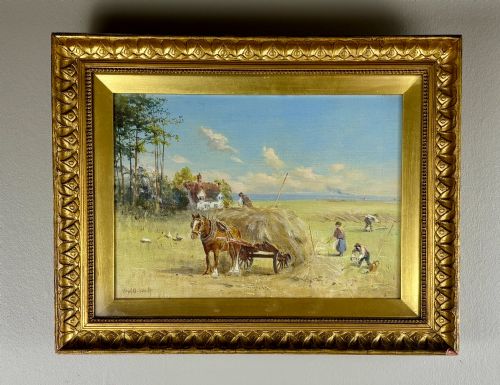
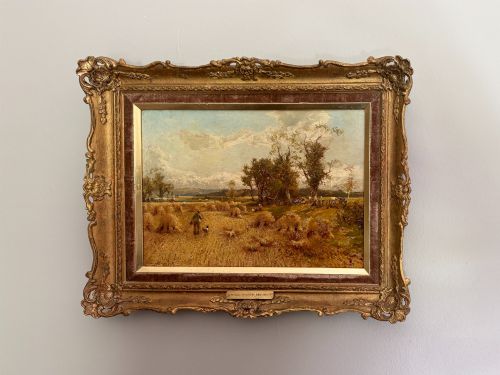
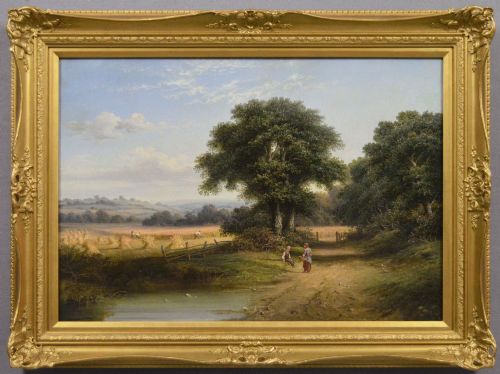
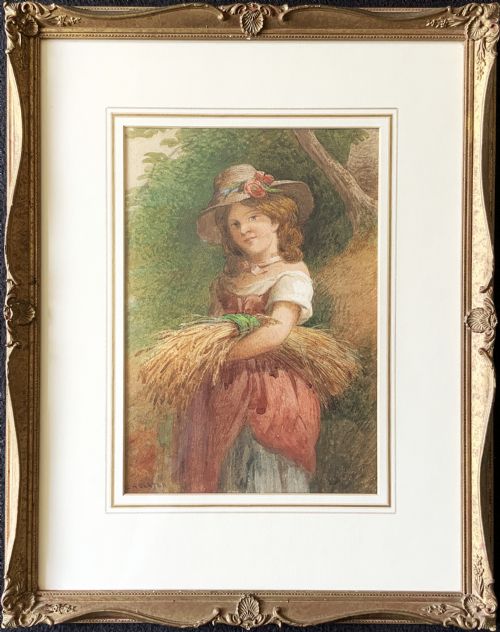
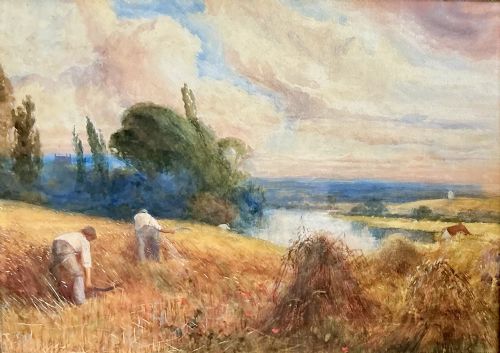
A 19th century harvest painting typically depicts figures working in fields, gathering wheat, haymaking, or participating in rural agricultural scenes. The subjects range from English country landscapes to French grape-picking settings, reflecting agrarian life across the period.
Most items you encounter on this page take the form of landscape oil paintings on canvas or framed watercolours on paper. Artists from this era focused heavily on pastoral realism, capturing natural light during hay harvests and cornfield gatherings.
Materials and techniques
Painters of this era predominantly used oil on canvas or delicate watercolour on paper, frequently housed within ornate wooden gilt frames or simpler giltwood surrounds. Canvas provides the durable base for richly textured oil pigments, while watercolour allows for softer washes on paper.
Wooden panels also appear as supports for earlier pastoral compositions, showing how artists selected their grounds based on scale and portability. Frames often incorporate gold leaf finishes to complement the warm tones of the harvest fields depicted within.
Geese occasionally wander into Nottinghamshire cornfields, sharing the harvest spotlight with hard-working farmhands and horses.
Judging quality in pastoral art
Quality rests in the artist's ability to render atmospheric light, depth within the landscape, and naturalistic movement among farmworkers and horses. Weaker examples rely on formulaic compositions, whereas accomplished works demonstrate confident brushwork and subtle handling of sunset or midday illumination.
The condition of the canvas, the preservation of the original pigment, and the integrity of the period frame dictate the overall standing of a piece. Finer works retain their original surface vibrancy without heavy overpainting, while inferior specimens suffer from dull, degraded varnishes.
Walter Heath Williams·Charles Henry Slater·Frederick Hines·Henry John Boddington·Henry H Parker·Arthur Walker Redgate·Joseph Paulman·Henry John Kinnaird·George Cole·Joseph Thors·Alfred Augustus Glendening Snr·John Clayton Adams
The 19th Century Harvest Painting Glossary
- Oil on Canvas
- Pigment mixed with drying oil applied to a stretched cloth support. This technique allowed artists to build rich textures and deep tones suitable for expansive landscapes.
- Watercolour Painting
- Pigments suspended in a water-based, translucent solution applied to paper. It creates luminous, delicate effects particularly favoured for pastoral sketches.
- Giltwood
- Wood carved and coated with gold leaf or metallic powder. It provides a decorative, reflective border that enhances the warmth of 19th-century oil paintings.
- European School
- A broad designation for artists trained within continental artistic traditions outside Britain. These works often display distinct regional approaches to landscape and genre painting.
19th Century Harvest Painting: Frequently Asked Questions
What subjects appear in these paintings?
The works depict agricultural scenes such as haymaking, wheat harvesting, and grape picking. Figures working alongside horses and carts feature prominently in many rural compositions.
Artists also captured specific countryside locations across Britain and Europe, ranging from Berkshire fields to French vineyards.
How do oil and watercolour differ here?
Oil paintings utilise pigment on canvas or wood panels, offering rich textures and deep colour layering. Watercolours employ pigment on paper, providing a lighter, more translucent quality.
Both mediums were widely used by 19th-century artists to record changing rural light and seasonal farm labour.
How should I frame and display them?
Many pieces retain their original wooden gilt frames, which complement the warm, natural tones of the harvest scenes. Hang them away from direct sunlight to protect delicate watercolours and oil pigments from fading.
Stable indoor humidity levels help preserve both the canvas supports and the antique wooden framing.
Are signatures common on these works?
Numerous pieces feature artist signatures or inscriptions, either directly on the canvas or within the watercolour composition. These signatures help attribute the work to recorded 19th-century painters.
Unsigned pieces frequently belong to the broader European School or regional artistic traditions of the era.