


19th Century Giltwood Table
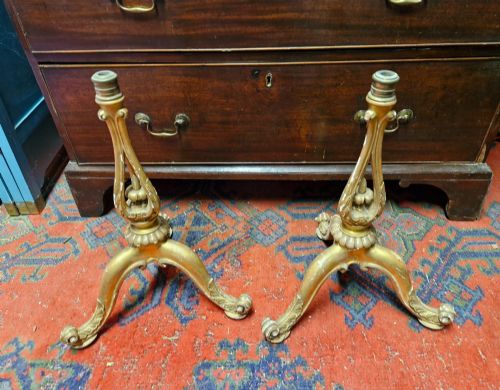
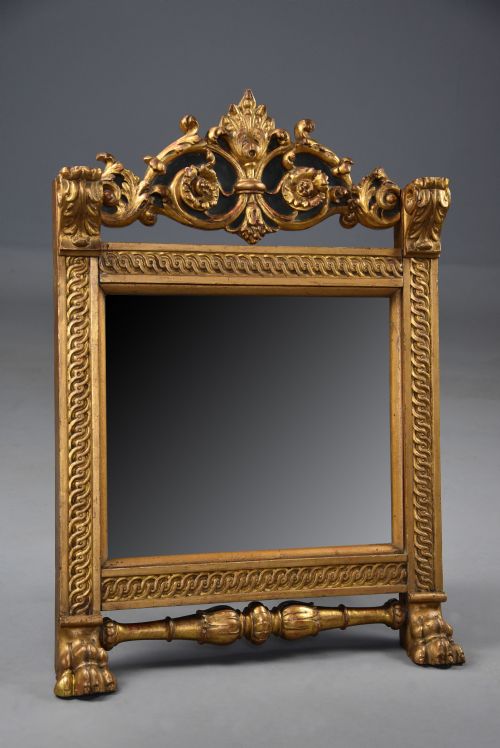
A 19th century giltwood table brings architectural presence and reflective warmth to a room through carved decoration and applied gold leaf.
19th Century Giltwood Table
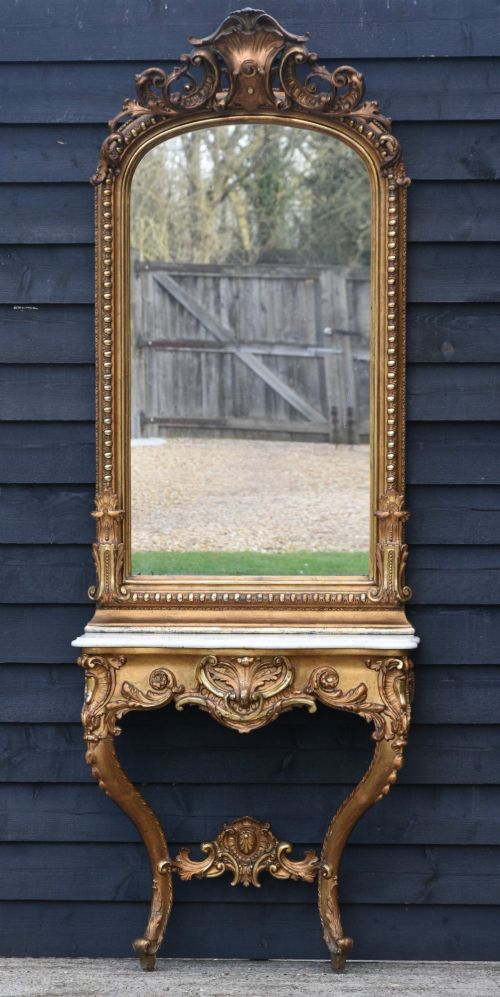
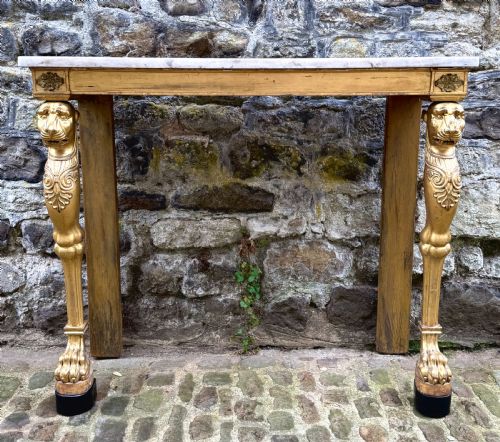
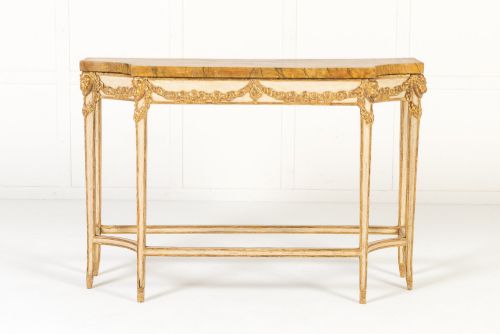
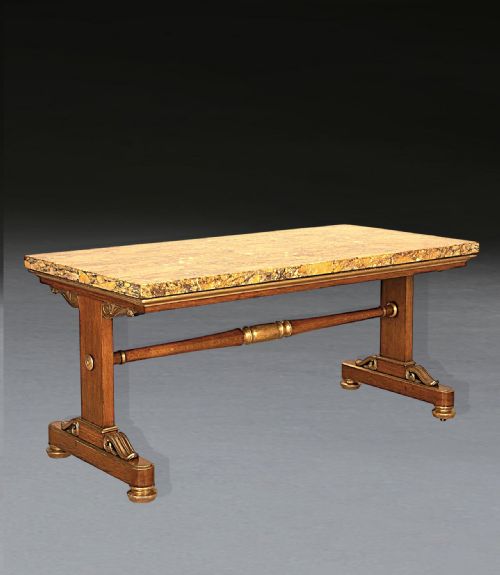
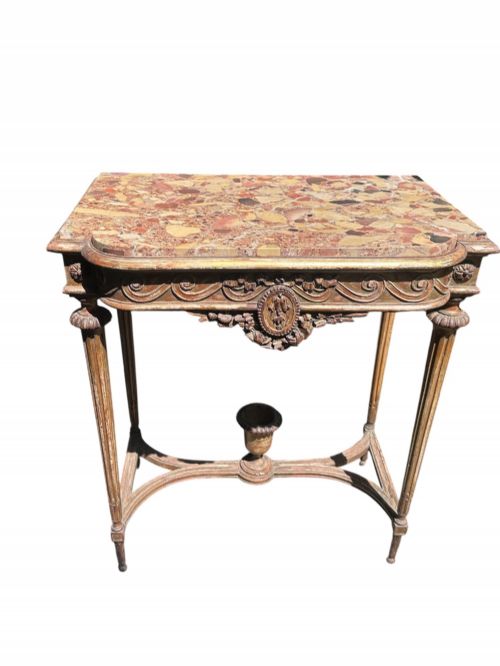
A 19th century giltwood table encompasses console tables, centre tables, and side tables designed for grand reception rooms and hallways. Console tables dominate the selection, frequently paired with matching pier mirrors and topped with marble.
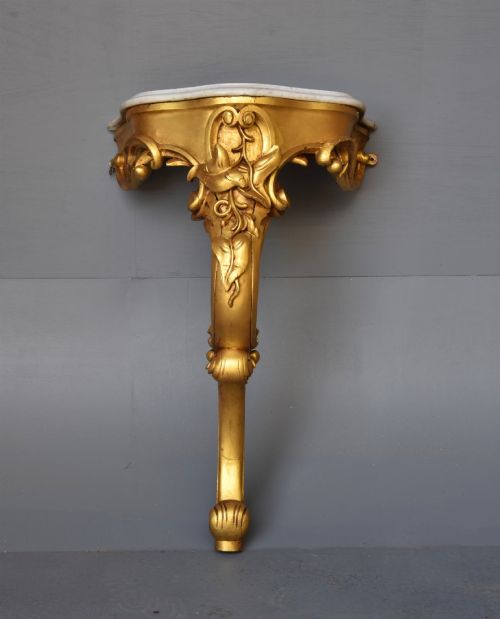
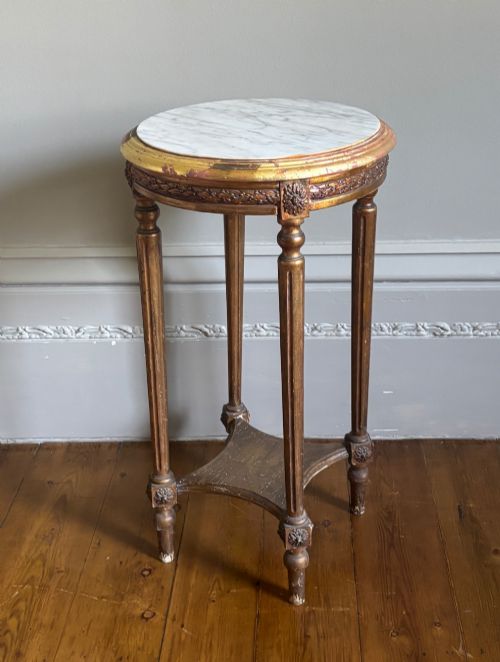
Makers and workshops across France, Italy, England, and Sweden produced these pieces within stylistic revivals ranging from Regency and French Empire to Rococo and Renaissance. The forms vary from wall-mounted console bases with serpentine outlines to freestanding round guéridons and writing desks.
Proportion and silhouette dictate how these tables occupy a space, with many retaining their original stone or wood surfaces. Regional differences emerge in the carving depth and the specific choice of marble, such as Siena or Breccia varieties.
Materials and Construction
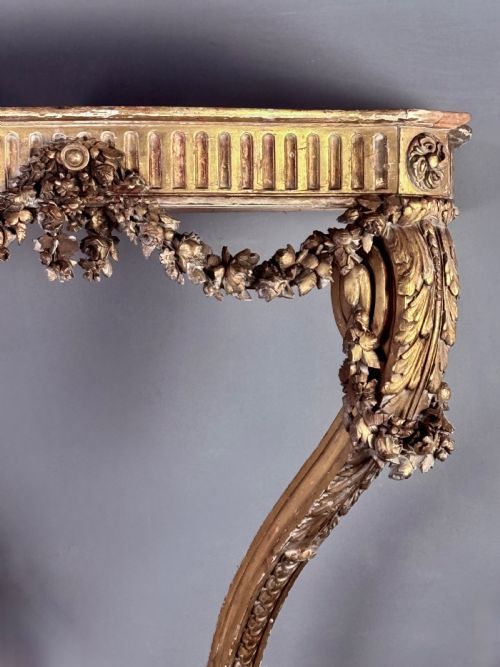
Carved wood provides the structural framework for these pieces, utilising timber such as oak, mahogany, or pine beneath the decorative surface. Gesso is applied in layers over the wood to create a smooth, dense ground for crisp detail work.
Gold leaf is then laid meticulously over the prepared gesso and burnished to achieve a brilliant metallic sheen that catches the light. Secondary materials like marble, brass, glass, and painted wood frequently complete the tops and structural mounts.
Giltwood eagles and carved wooden dolphins occasionally stand in for standard table legs.
Assessing Craftsmanship
The crispness of the hand-carving separates standard production from exceptional work, visible in the depth of floral mouldings and figural elements. Sharp, undercut details indicate a skilled hand, whereas softened or muddy ornament suggests a rushed output.
The integrity of the gilding surface determines long-term visual success, depending on how evenly the gold leaf adheres to the gesso ground. Original marble tops that fit their bases precisely add substantial weight to the evaluation of a piece.
Felix-Alfred Ternisien·Holland and Son·Trollope and Sons
The 19th Century Giltwood Table Glossary
- Giltwood
- Wood that has been decorated with gold leaf applied over a prepared gesso ground. This finish provides the characteristic metallic brilliance seen on formal nineteenth-century furniture.
- Console table
- A wall-mounted or freestanding table supported by two or more front legs, often designed to sit beneath a mirror. These tables typically feature elaborate front aprons and marble slabs.
- Gesso
- A plaster mixture applied to wood surfaces to create a smooth base for subsequent gilding. It allows carvers to achieve fine, sharp relief details.
- Guéridon
- A small, round French table supported by a central pillar or tripod base. The form originated in the seventeenth century and remained popular throughout the nineteenth century.
- Breccia
- A type of marble composed of angular rock fragments embedded in a fine-grained matrix. It appears frequently as a contrasting top on console and centre tables.
19th Century Giltwood Table: Frequently Asked Questions
Where should I place a console table?
Console tables function best against a primary wall in a hallway, reception room, or dining space. They often anchor a vertical element like a wall mirror or painting.
Because many examples feature flat backs intended for wall placement, pairing them with the correct wall architecture ensures stability and visual balance.
How do I clean giltwood surfaces?
Dust giltwood gently using a soft, dry ostrich feather duster or a clean, dry artist's brush. Avoid applying any water, moisture, or cleaning chemicals directly to the gold leaf.
Harsh wiping can wear away the delicate metallic leaf and the underlying gesso preparation, permanently damaging the finish.
Are marble tops original?
Original marble tops fit the wooden rebate of the table frame precisely without excessive movement or gaps. The edges often feature specific mouldings that match the period style of the base.
Replacement tops generally lack the precise edge weathering and exact colour matching expected from the period of construction.
What defines a centre table?
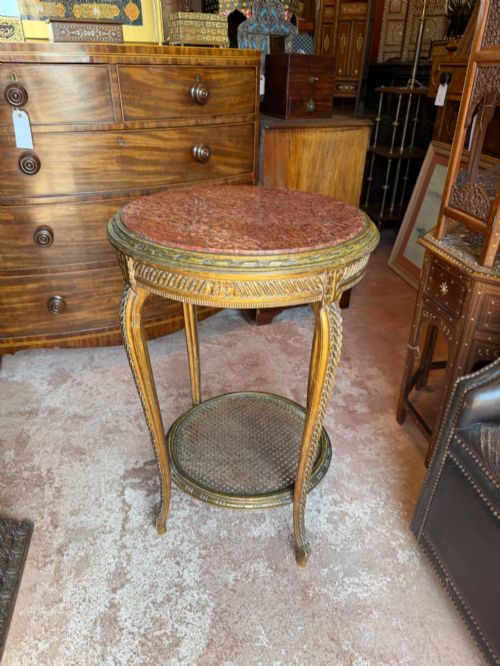
A centre table stands freestanding in the middle of a room rather than against a wall, finished with decoration on all sides. These pieces served as display surfaces for decorative objects or books.
They frequently feature circular or octagonal tops supported by a central column or a robust tripod base.