


19th Century Floor Standing Lamp
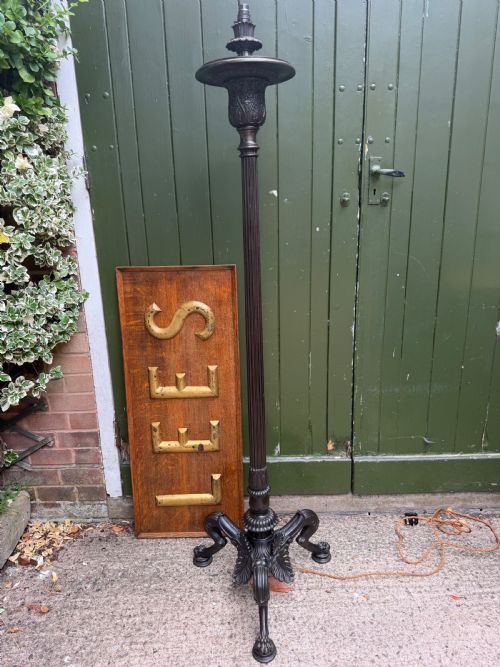
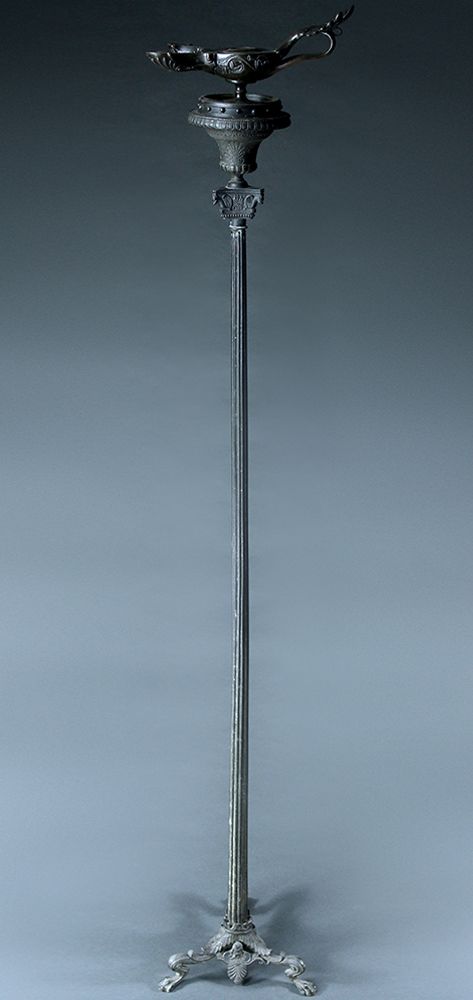
A 19th century floor standing lamp brings height and presence to a room, offering both sculptural form and period lighting.
19th Century Floor Standing Lamp
When you search for a 19th century floor standing lamp, you encounter tall lighting fixtures, standard lamps, and torcheres designed to illuminate large interiors. The pieces on this page span the Victorian era alongside French Neoclassical, Venetian Baroque, and Tibetan styles.
Forms vary significantly, encompassing cast brass columns, elaborate figural supports, wrought iron lantern stands, and carved wood figures with polychrome finishes. You are most likely to meet standard oil lamps in brass or bronze, often with telescopic mechanisms or cranberry glass reservoirs.
Origins range widely across European workshops, including Parisian foundries and Venetian studios, alongside singular ceremonial pieces. Each object combines utilitarian lighting with the heavy decorative weight characteristic of nineteenth-century interiors.
Materials and Construction
Makers utilised cast brass, bronze, copper, and wrought iron to construct the heavy vertical shafts and weighted bases necessary to support tall lamps. Metal components were frequently cast, chased, or patinated to achieve classical Grecian and Neo-Pompeian finishes.
Carved wood and marble appear frequently, often combined with gold leaf or original gilt polychrome paint on figural bases such as Venetian figures and blackamoor standards. Glass components, including cranberry glass oil reservoirs, introduce colour and translucency to the heavier metal structures.
A Tibetan ceremonial copper horn found a second life as a standard lamp, proving nineteenth-century households embraced eclectic conversions.
Distinctions in Quality
The standard of a 19th century floor standing lamp rests upon the crispness of the metal casting, the depth of the chasing, and the originality of the surface decoration. Superior examples display finely articulated Corinthian capitals, intricate figural carving, or signed bronze work by makers such as Coutan.
Mechanical complexity also elevates a piece, notably in rise and fall telescopic mechanisms that operate smoothly. Originality of components, from gilt polychrome paint to glass oil fonts, separates works that retain their intended visual harmony from those with replaced elements.
The 19th Century Floor Standing Lamp Glossary
- Standard Lamp
- A tall floor-standing lamp designed to support an oil burner or electric fitting. They provide ambient lighting and substantial decorative height in a room.
- Torchere
- A tall ornamental stand or candlestick, often adapted as a floor lamp. These pieces typically feature classical figures or slender columns.
- Rise And Fall
- A mechanical adjustment system allowing the height of the lamp standard to be raised or lowered. This telescopic function was particularly useful for standard oil lamps.
- Gilt Polychrome
- A surface finish combining gold leaf with multiple colours of paint. It is frequently found on carved Venetian figures and decorative stands from the mid-nineteenth century.
- Cranberry Glass
- A deep red glass created by adding gold chloride to the molten metal. This material is characteristic of nineteenth-century oil lamp reservoirs.
19th Century Floor Standing Lamp: Frequently Asked Questions
How were these tall lamps originally used?
These lamps stood in principal reception rooms to provide functional illumination before electricity was common. They were positioned near seating areas or corners to cast light downward from oil reservoirs.
Over time, many were subsequently converted to electricity while retaining their original heavy bases and decorative standards.
Can I use standard modern light bulbs with them?
Most pieces that have undergone conversion will accept standard modern bulbs and contemporary wiring. Any electrical adaptation should be inspected by a qualified professional to ensure safety.
Unconverted oil lamps retain their original burners and reservoirs, requiring further adaptation if electrical illumination is desired.
How do I distinguish Victorian brass from later reproductions?
Nineteenth-century brass displays natural weight, hand-finished surfaces, and components assembled with threaded or pegged joints rather than modern welds. Patina accumulates naturally over decades of handling and polishing.
Examine the casting quality around decorative details like Corinthian columns and base mouldings for the crispness typical of period foundry work.
Where should I place a floor standing lamp?
Their height makes them ideal for filling empty corners or framing large pieces of furniture in drawing rooms and studies. Ensure the heavy metal or marble base rests on stable, level flooring.
Consider the scale of the shade and the ceiling height of your room to let the vertical proportions of the stand register clearly.