

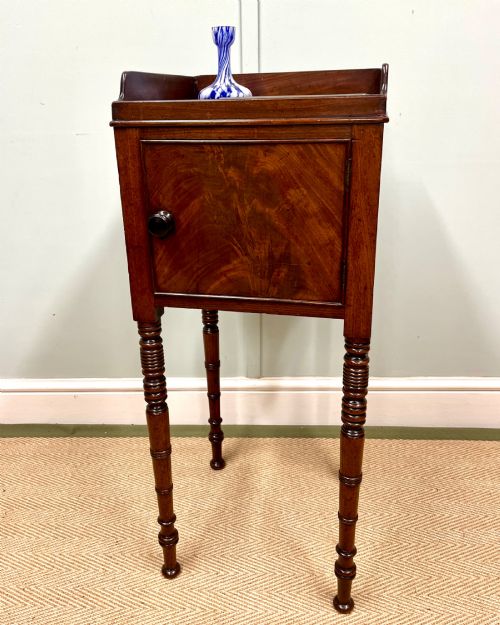
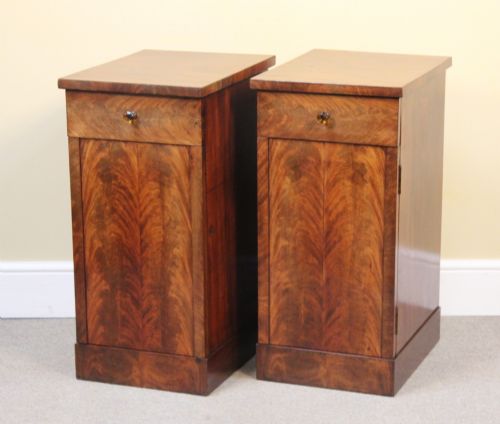
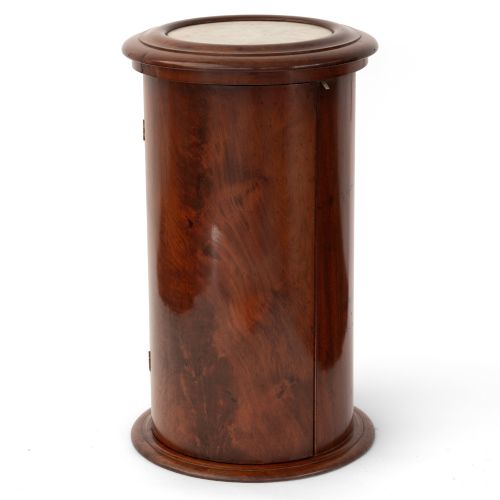
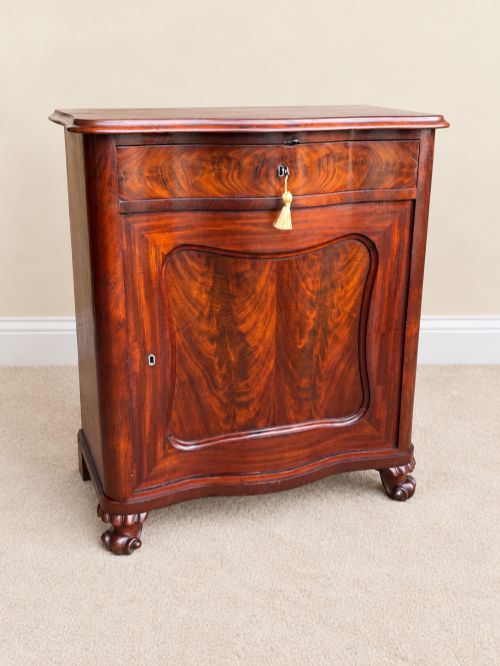
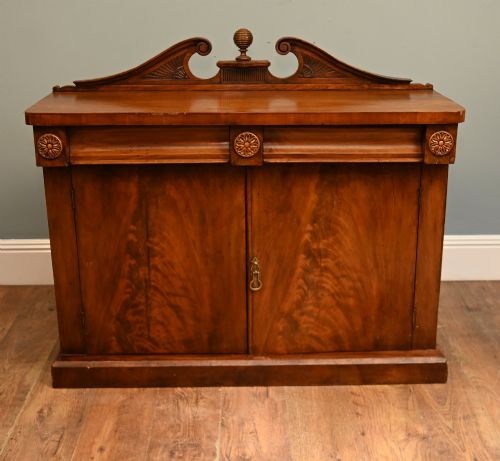
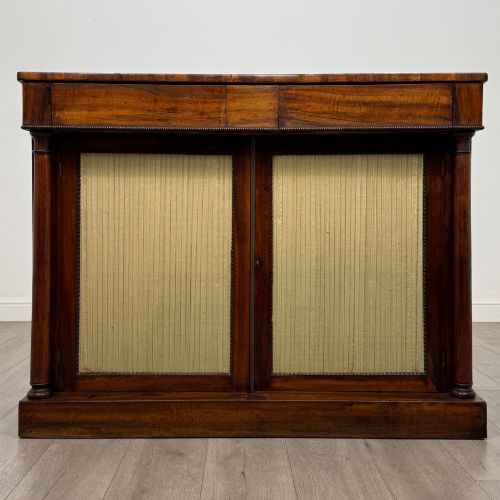
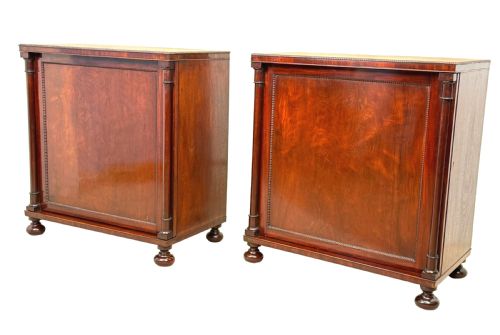

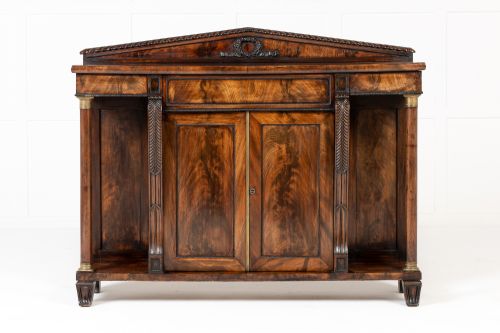


19th Century Flame Mahogany Side Cabinet
A 19th century flame mahogany side cabinet brings deep figured grain and rich colour to a room, offering practical storage with distinct architectural presence.
19th Century Flame Mahogany Side Cabinet
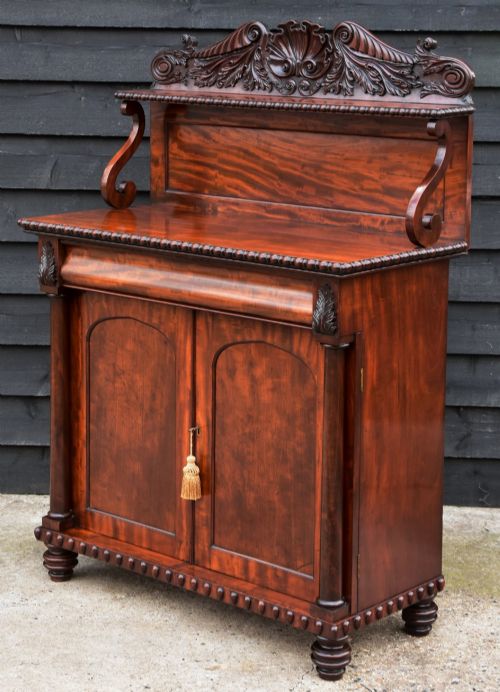
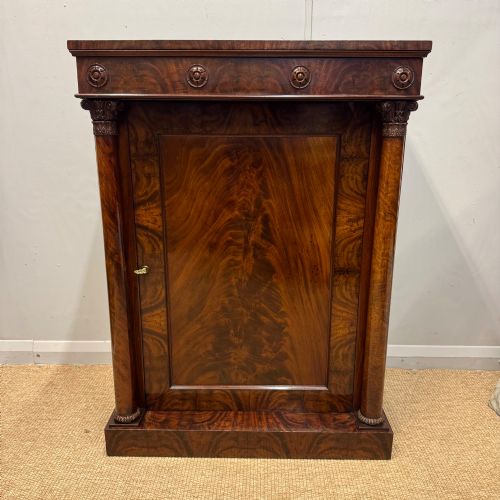
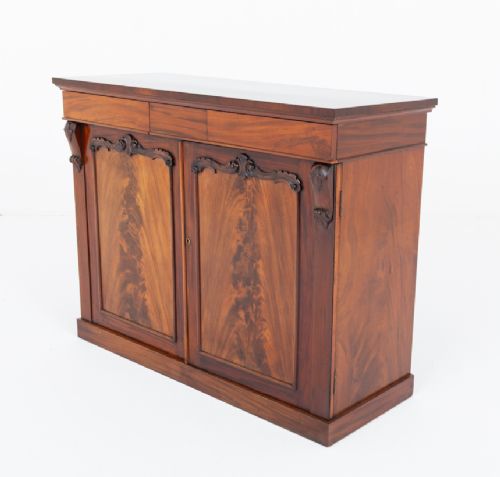
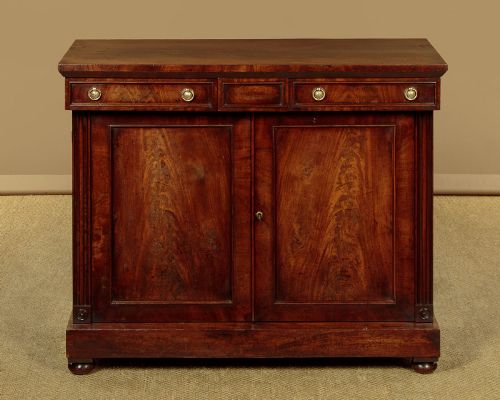
When searching for a 19th century flame mahogany side cabinet, buyers encounter a diverse selection of storage furniture originating from the Regency, William IV, and Victorian periods. These pieces include chiffoniers, pedestal cupboards, and two-door side cabinets shaped by influences ranging from French Empire to Scandinavian Biedermeier design.
The most common examples on this page are compact side cupboards and chiffoniers dating across the 19th century, constructed in mahogany and flame mahogany veneer. Makers of the era utilised these forms in libraries, dining rooms, and parlours to provide enclosed shelving and display surfaces.
Objects span from small bedside cabinets to larger three-door sideboards and credenzas, reflecting the varied domestic needs of the period. Pieces frequently incorporate architectural details such as serpentine shapes, columns, and enclosed lower compartments.
Assessing Quality and Execution
Quality in these cabinets rests upon the depth and symmetry of the flame mahogany veneer selection across the main facade. Superior examples display carefully matched grain patterns that flow continuously across drawers and doors, indicating deliberate planning by the maker.
The refinement of secondary details, such as the integration of marble tops, cast brass mounts, or ormolu accents, distinguishes finer pieces. Structural integrity in the joinery and the preservation of original polished wood surfaces further separate standard utility cupboards from distinguished specimens.
19th Century Flame Mahogany Side Cabinet Retail Price Guide 2026
Typical asking prices for 19th century flame mahogany side cabinet among the pieces listed under this phrase on Sellingantiques today, from the lower quarter to the upper quarter. They describe what is for sale here now, not the wider market.
Listings feature 19th-century pieces spanning the Regency, Victorian, and Edwardian eras, constructed in mahogany, flame mahogany veneer, marble, and ormolu.
The 19th Century Flame Mahogany Side Cabinet Glossary
- Flame mahogany veneer
- A thin slice of wood cut from where branches join the main trunk, producing a distinctive rippled, flame-like grain pattern used on high-status cabinet doors.
- Chiffonier
- A low cabinet originating in the 19th century, typically featuring enclosed shelving below and sometimes a raised tier or gallery on top.
- Ormolu
- Gilt-bronze ornamentation applied to furniture, frequently found on French Empire influenced pieces of this period.
- Pedestal cupboard
- A single-door cabinet with a vertical, column-like proportion, often found in pairs flanking a fireplace or sideboard.
- Serpentine
- A gently undulating curved shape applied to the front outline of a cabinet or sideboard, popular in Scandinavian and English design.
19th Century Flame Mahogany Side Cabinet: Frequently Asked Questions
Where were these cabinets used?
These cabinets were primarily placed in dining rooms, libraries, and parlours to store linens, silver, or books while providing a surface for display.
Smaller versions functioned as bedside storage or intimate side tables in private chambers.
How do I identify a chiffonier?
A chiffonier is typically recognised by its low enclosed cupboard base, often surmounted by a raised shelf or gallery supported on small pillars.
They emerged strongly during the Regency period as compact alternatives to larger sideboards.
What is flame mahogany?
Flame mahogany is a highly figured wood veneer derived from the fork of the mahogany tree, creating a dramatic, flickering grain pattern.
Cabinet makers reserved this material for the most prominent exterior surfaces, such as drawer fronts and doors.
How do I care for the wood?
Maintain the polished mahogany surfaces by keeping them away from direct sunlight and extreme temperature fluctuations to prevent veneer splitting.
Regular dusting with a soft, dry cloth preserves the natural lustre of the historical timber without heavy chemical polishes.