


19th Century Extendable Table
These dining pieces provide the flexibility needed for large gatherings through mechanisms designed to receive extra leaves.
19th Century Extendable Table
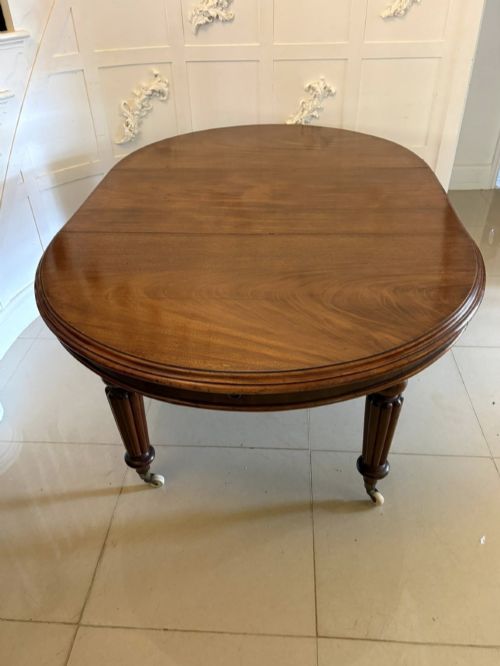
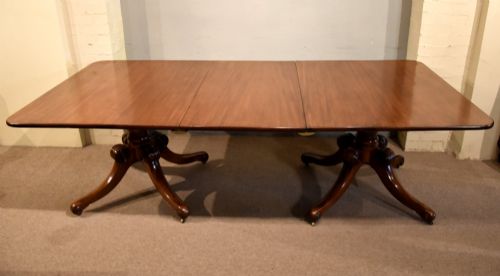
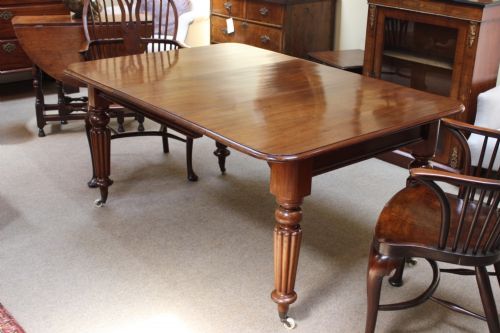
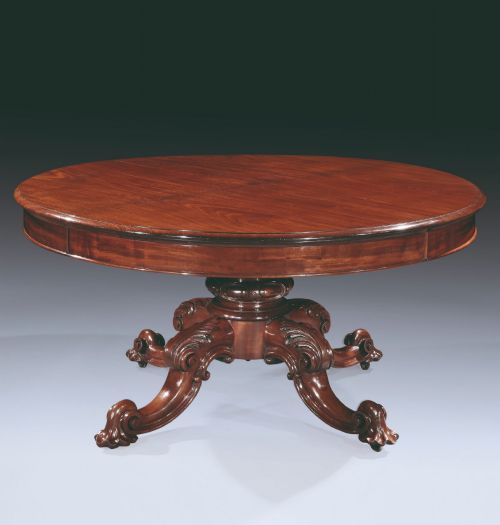
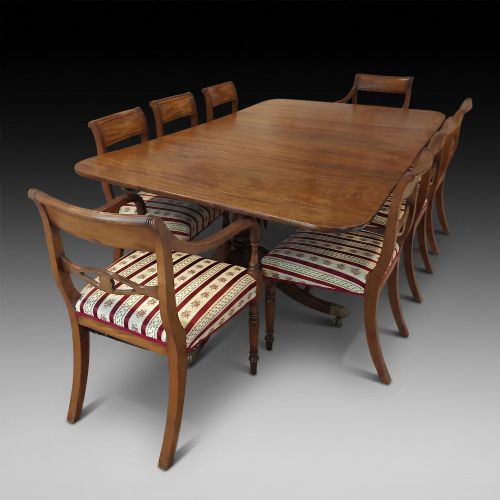
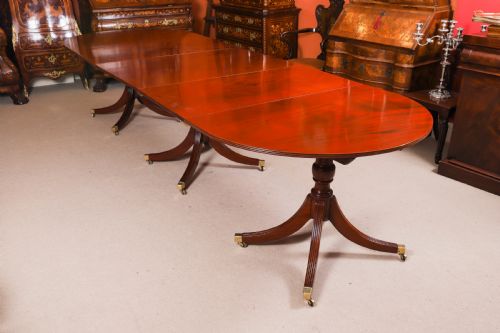
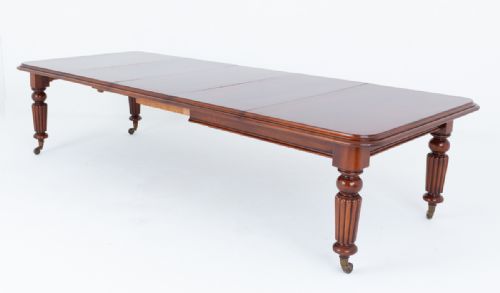
A 19th century extendable table is a practical dining piece built to adapt its length for guests, commonly appearing in mahogany across periods such as Regency, Victorian, William IV, and Georgian.
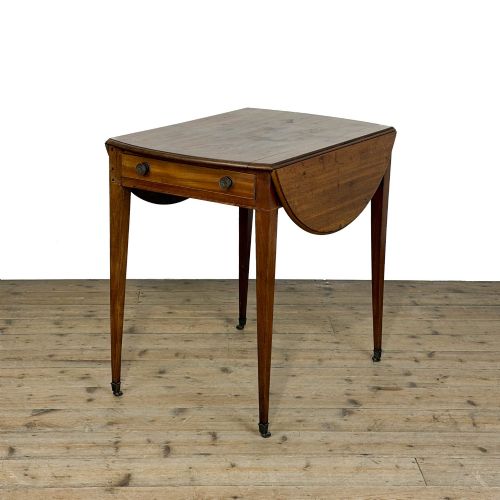
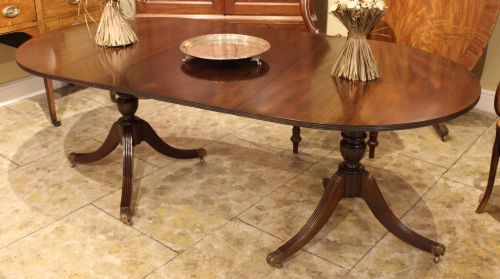
The selections available here range from multi-pillar pedestal designs and wind-out variants to drop-leaf and Pembroke formats, reflecting the domestic requirements of nineteenth-century households.
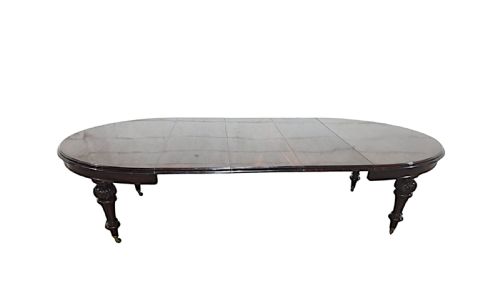
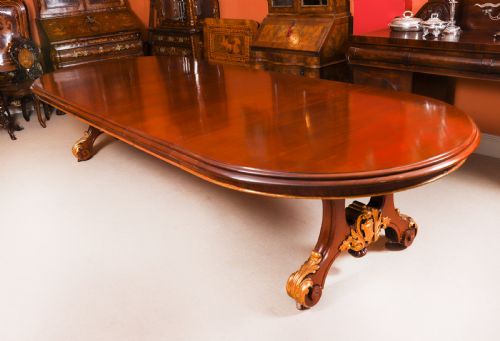
Buyers seeking this phrase encounter solid timbers, clever mechanical extensions, and modular sections like D-ends that expand to accommodate extensive dining parties.
Materials and Construction
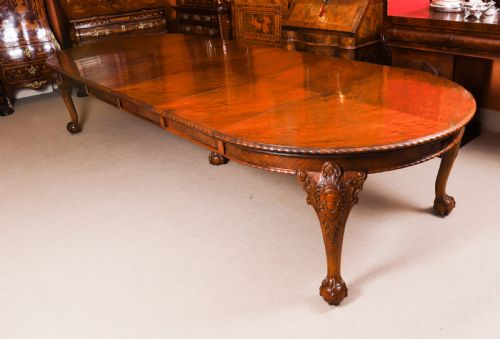
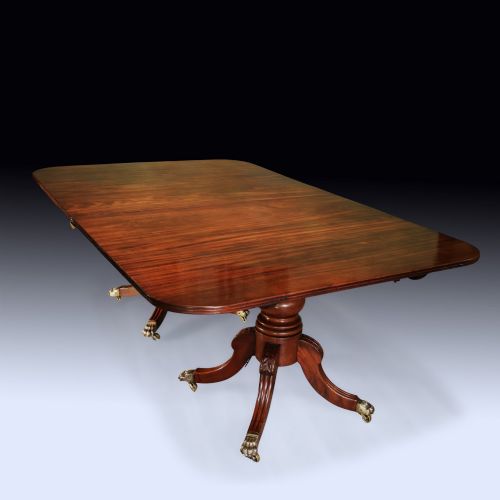
Cabinetmakers built these tables primarily from solid and veneered mahogany, alongside burr walnut, oak, and flame mahogany, often incorporating brass castors to aid movement across floors.
Extension systems utilised mechanical wind-out screws, drop leaves, removable extra leaves, and pillar bases to distribute weight and maintain stability when fully expanded.
Evaluating Craftsmanship
Quality rests in the precision of the timber matching across inserted leaves and the smooth operation of internal wooden runners or metal wind-out mechanisms.
Superior examples demonstrate careful selection of figured or flame mahogany veneers, robust pillar supports, and original brass hardware that secures firmly during extension.
Wylie and Lochead·Maple and Co·Gillows
The 19th Century Extendable Table Glossary
- Wind-out mechanism
- A mechanical system operated by a handle that expands the frame of a table to receive drop-in leaves.
- D-end
- A semi-circular table end section that detaches or opens to form part of a larger dining surface.
- Extra leaf
- A removable board inserted into the centre of an extended table to increase seating capacity.
- Pedestal base
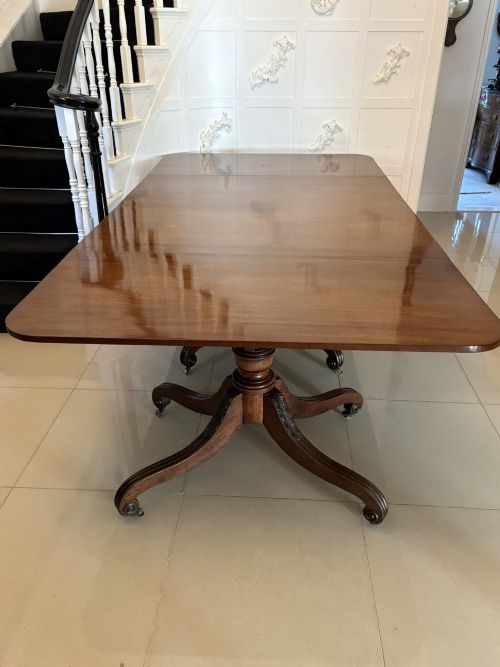
- A central column support resting on splayed legs, commonly fitted with brass castors.
- Pembroke table
- A small table with hinged drop leaves on two opposing sides.
19th Century Extendable Table: Frequently Asked Questions
How do wind-out mechanisms operate?
A detachable handle turns an internal screw thread that pulls the table halves apart evenly.
This reveals a central gap where additional wooden leaves drop securely into place.
What woods were commonly used?
Makers relied heavily on mahogany, including figured, flame, and solid variants, for its durability and rich grain.
Walnut, burr walnut, and oak also appear frequently across Victorian and Georgian pieces.
How are extra leaves stored?
Extra leaves are separate boards that require independent storage away from the main table when not in use.
Keeping them in a stable environment prevents warping and ensures they fit the mechanism properly.
How do pedestal and pillar tables differ?
Pedestal tables use a single or multiple central columns to support the top, often terminating in brass castors.
Pillar formats distribute weight across sturdy bases, allowing ample legroom around the dining perimeter.