



19th Century Desk Set
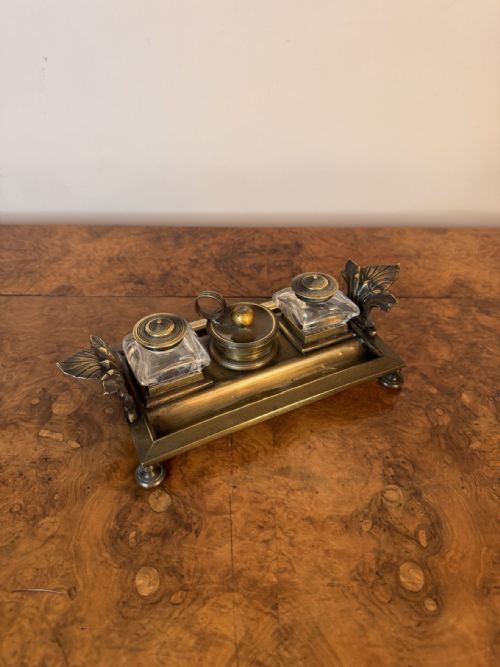
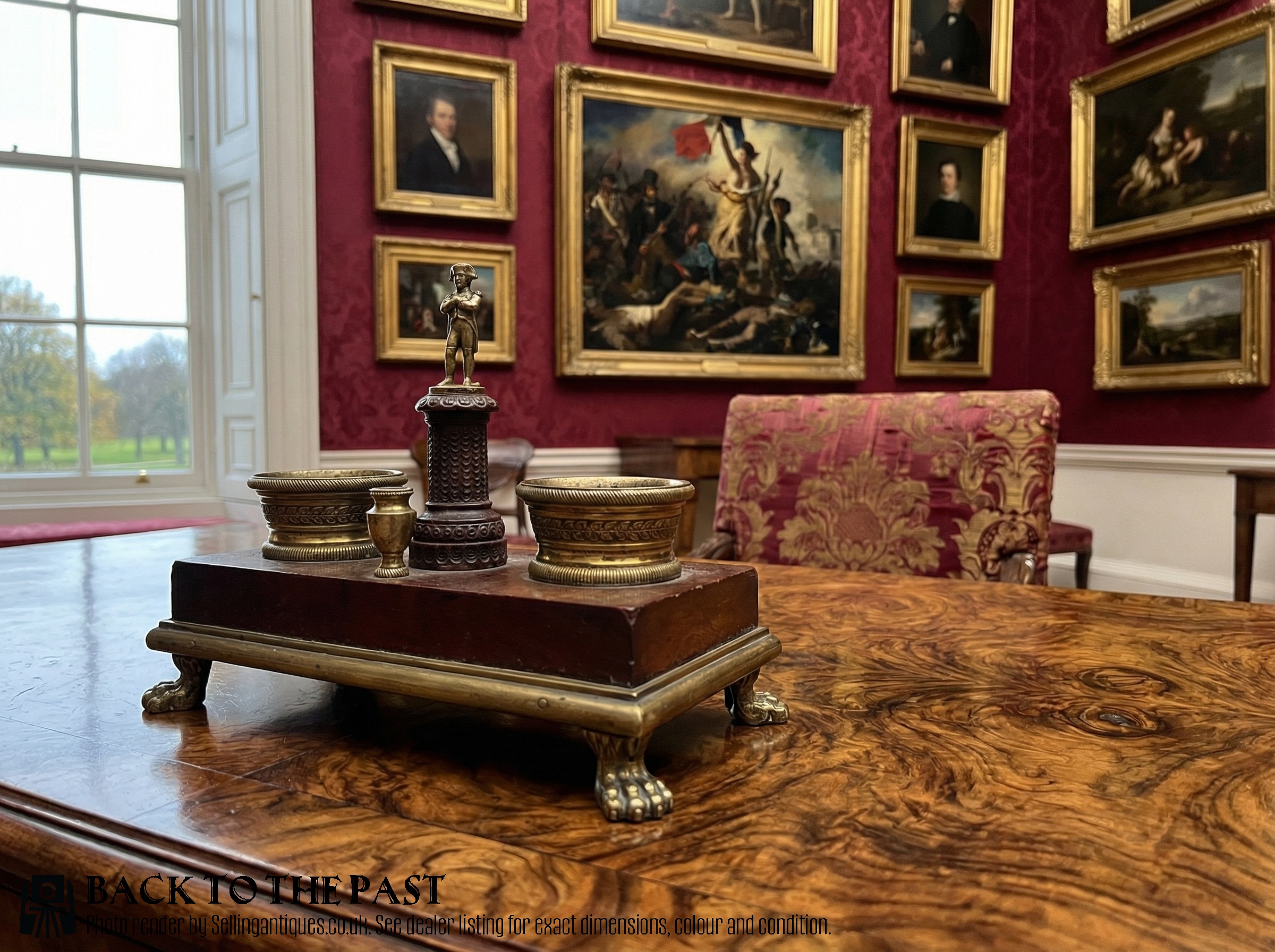
A 19th century desk set brings functional elegance to a study through period craftsmanship in brass, marble and mahogany.
19th Century Desk Set
A 19th century desk set encompasses portable writing implements, inkstands, and standishes designed for Victorian and Regency writing desks. Buyers find matching inkwells, pen trays, and candlestands shaped from metals and fine timbers.
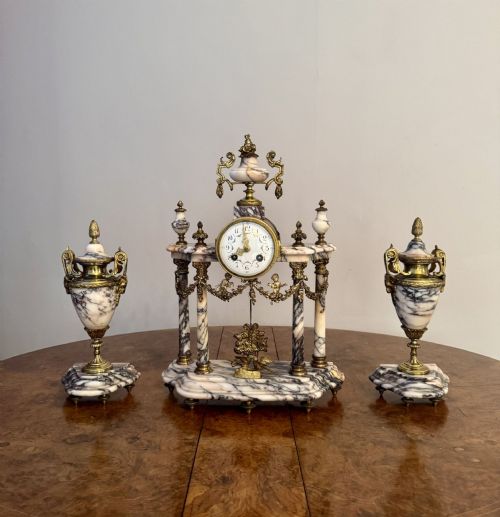
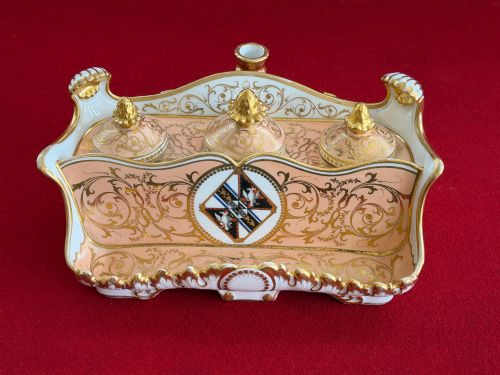
The objects appearing most frequently on this page combine glass, brass, and ceramics into unified writing accessories. These pieces range from modest walnut stands to ornate French ormolu and marble garnitures.
Originating across English, French, and German workshops, these desk accessories reflect the shifting tastes of the nineteenth century. Makers applied styles spanning from Regency classicism to Egyptian Revival and Black Forest carving.
Materials and Construction
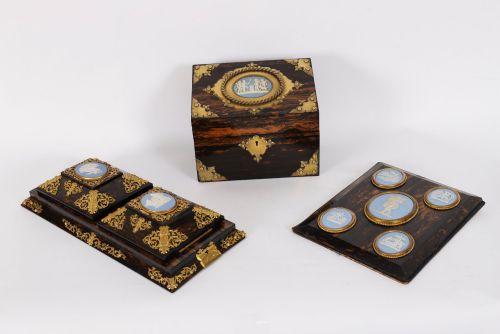
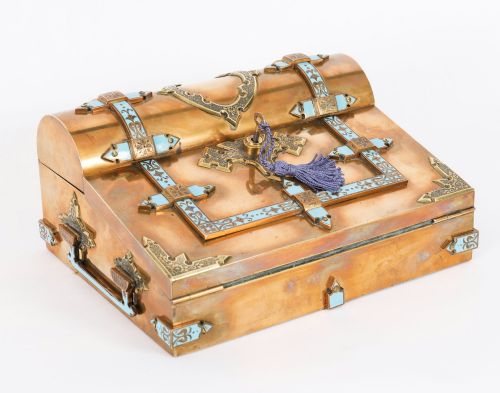
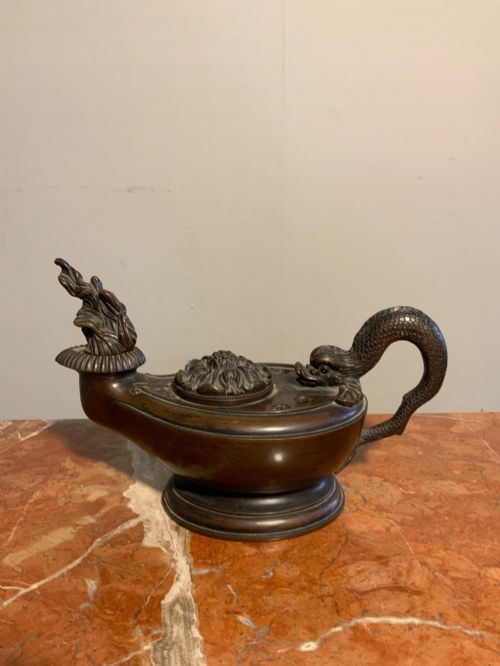
Metals form the structural core of many pieces, utilising cast bronze, gilt ormolu, and brass mounted with agate cabochons or champlevé enamel. Artisans combined these metallic elements with heavy stone bases such as Sienna and Ashford marble.
Cabinetmakers utilised rich timbers including mahogany, walnut, maplewood, coromandel, and burr walnut for wooden stands and pigeon holes. Papier-mâché also appears, often decorated with hand-painted Kashmiri motifs or inlaid brass details.
Ceramic and glass components provide the inkwells and compartments within the metal or wooden frames. Porcelain factories like Worcester and Spode supplied fitted liners and decorated containers for these portable writing outfits.
19th Century Desk Set Retail Price Guide 2026
Typical asking prices for 19th century desk set among the pieces listed under this phrase on Sellingantiques today, from the lower quarter to the upper quarter. They describe what is for sale here now, not the wider market.
An inquisitive carved owl watches over the ink supply in a Black Forest desk set.
Measures of Quality
The standard of chasing and casting in the bronze or ormolu mounts determines the crispness of decorative detail. Sharp, deeply defined foliage and figures separate superior metalwork from softer, commercial production.
Material selection and integration dictate the weight and balance of the object. Heavy marble bases combined with thick-walled glass inserts and unblemished veneers indicate a higher grade of manufacture.
Signed works bearing identifiable maker marks or specific retailer attributions carry distinct weight. The precision of inlay work in tortoiseshell, brass, or exotic woods further elevates the standing of an individual piece.
Edmé Samson·Wilkinson and Co·Robert Garrard·Flight Barr and Barr·Gillows
The 19th Century Desk Set Glossary
- Inkstand
- A portable tray or stand holding inkwells, sanders, and pen holders. These accessories sat atop writing tables to keep writing materials organised.
- Ormolu
- Gilded bronze produced by applying a mercury-gilded finish to a cast bronze object. This technique imparts a rich golden lustre popular in French Empire and Victorian decorative metalwork.
- Standish
- An alternative term for an inkstand, often denoting a more elaborate or footed metal container. They frequently incorporated bell pushes or small drawer compartments alongside the ink reservoirs.
- Champlevé
- An enamelling technique where troughs are dug into a metal surface and filled with vitreous enamel. The piece is then fired and polished smooth to create patterned colour fields.
- Ashford Marble
- A dark, fossiliferous limestone inlaid with colourful minerals to form floral motifs. Originating in Derbyshire, it was frequently utilised for nineteenth-century desk ornaments and inkwells.
19th Century Desk Set: Frequently Asked Questions
How do I identify Victorian desk accessories?
Victorian desk accessories often display heavier ornamentation, utilising materials like brass, walnut, and papier-mâché. Stylistic markers include Gothic revival motifs, elaborate cast bronze, and inlaid brass stringing.
Examining the construction methods of the internal wooden frames or checking for registry marks helps confirm a nineteenth-century date of origin.
Were all desk sets made in England?
No, desk sets originated across various European workshops during the nineteenth century. French makers produced heavy ormolu and marble pieces in the Empire and Napoleon III styles.
German and Austrian makers also contributed specialised items, such as Black Forest carved wooden inkwells, alongside traditional English mahogany and brass designs.
How were antique inkwells used?
Antique inkwells held liquid ink for use with dip pens before the invention of the fountain pen. They typically featured a lidded glass or ceramic insert to prevent the ink from drying out quickly.
Many sets included a matching sander to sprinkle fine sand over freshly written text to absorb excess moisture.