


19th Century Cross Stitch
These 19th century cross stitch pieces are tactile historical records, offering intimate glimpses into domestic life through worked thread and linen.
19th Century Cross Stitch
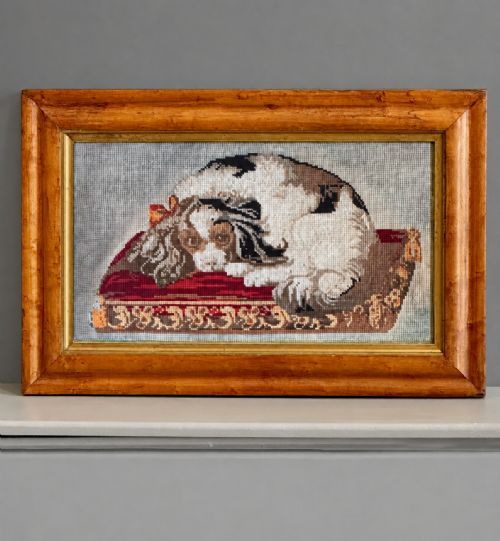
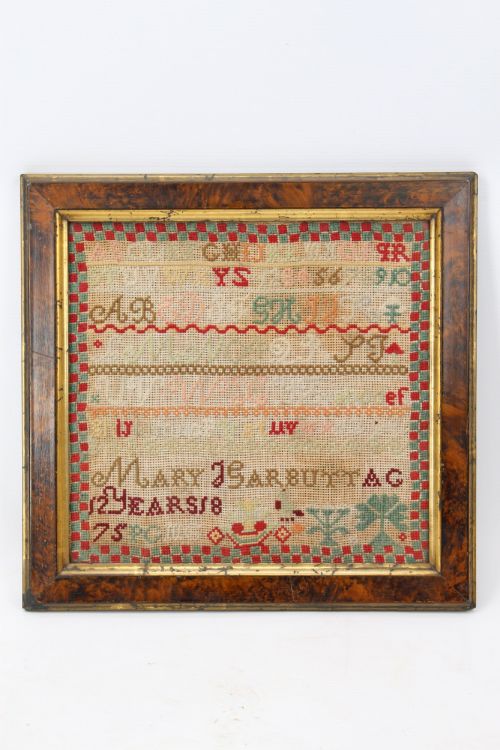
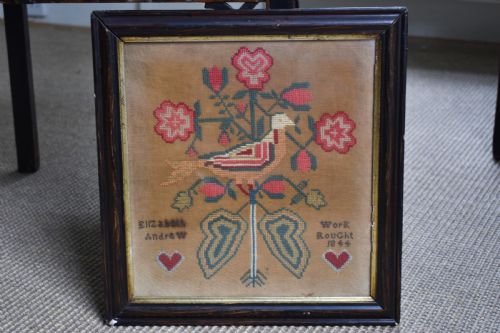
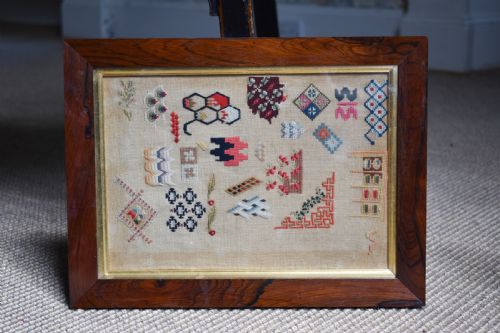
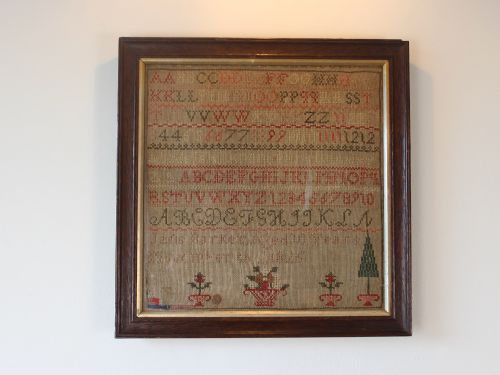
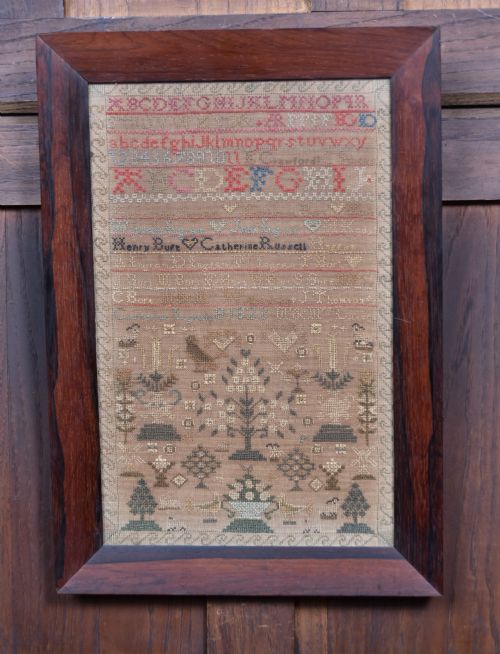
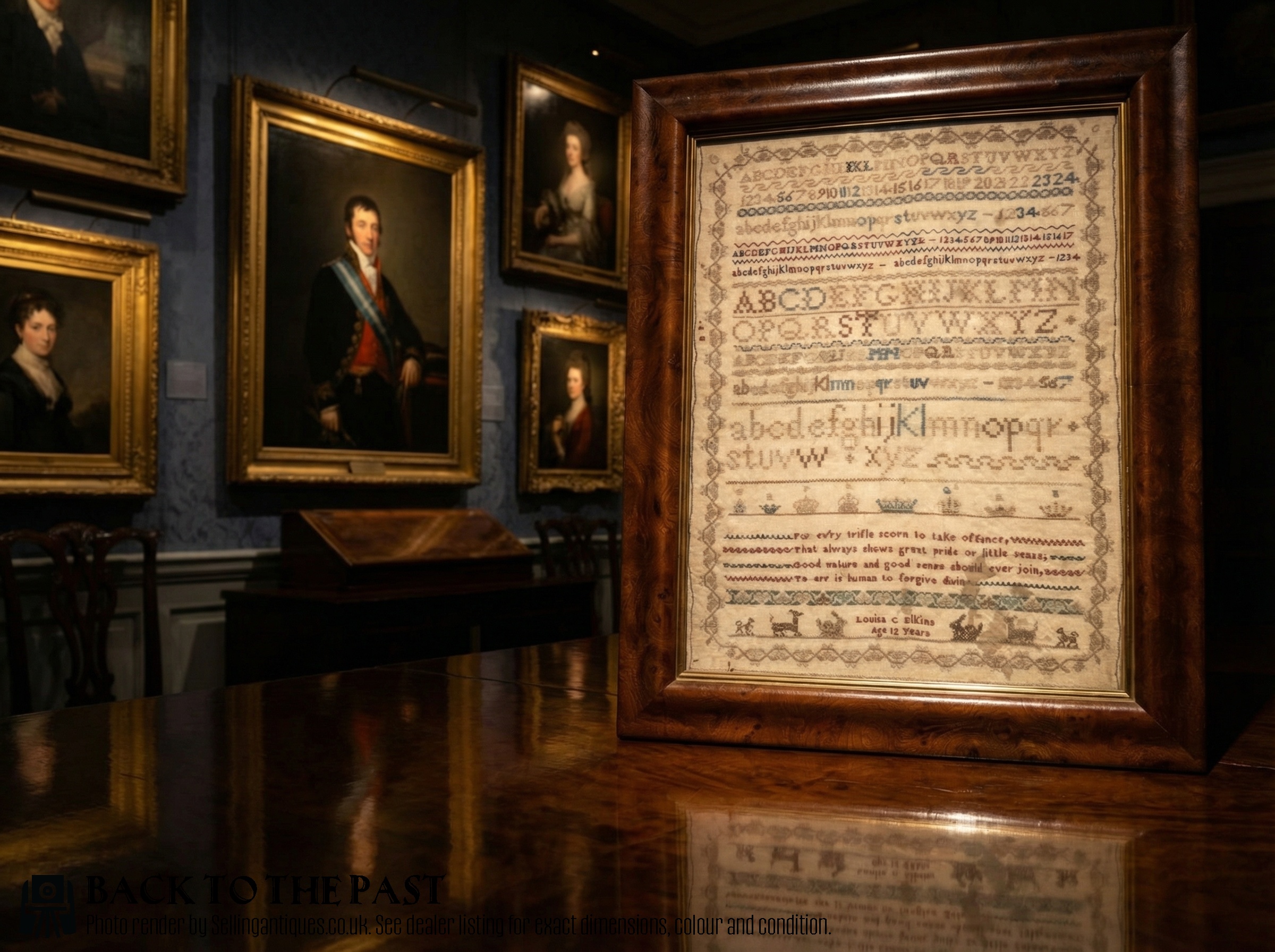
When you search for 19th century cross stitch, you encounter needlework samplers, framed textile art, and wool work pieces spanning the Georgian and Victorian eras. The selection on this page centres heavily on needlework samplers worked by young girls, alongside framed Berlin work depicting subjects such as King Charles spaniels and horses.
Makers recorded in the listings include young girls and scholars such as Mary J Garbutt, Jane Wettmore, and Margaret Ann Blackow, who stitched alphabets, religious texts, and educational verses. These textiles take the form of wall art, often housed in original wood frames including burr maple.
The periods represented stretch from the early decades through to the late nineteenth century, encompassing Regency and William IV eras as well as Victorian folk art. Scottish examples also appear, reflecting regional variations in border design and lettering styles.
Materials and construction
These works rely upon a foundation of plain-woven linen, upon which makers applied wool, silk thread, and standard thread using counted-thread embroidery techniques. The density of the linen weave dictated the scale of the stitches, while the juxtaposition of wool and silk created textural contrast within the same composition.
Framing materials play a significant role in presentation, with wood frames - specifically burr maple - protecting the textiles behind glass. The stitching itself demonstrates disciplined execution of alphabets, numerals, pictorial motifs, and moral verses, occasionally incorporating deliberate or accidental stitch errors by youthful hands.
Maggie Muir stitched a documented stitch error into her Scottish sampler at age eleven.
Assessing quality and preservation
Quality rests upon the regularity of the stitching, the complexity of the composition, and the legibility of the lettering. Pieces featuring detailed pictorial elements, such as animals or architectural motifs, alongside complete alphabets and verse, generally demonstrate higher skill than basic alphabet grids.
Preservation of the original materials also determines standing, particularly the stability of the silk thread and wool against fading or moth damage, and the retention of the original wood frame and glass.
Mary J Garbutt·Jane Wettmore·Louiss Elkins·Ann Hodson·Margaret Ann Blackow·Maggie Muir·Sarah Baker·Mary Mason·Ann B Gilies·Martha Hall·Mary Street·Rachel·Emma and Hannah Barnes·Jane Pattinson·Eleanor Grady
The 19th Century Cross Stitch Glossary
- Sampler
- A piece of needlework produced as a demonstration or test of skill in various stitches, frequently featuring alphabets and numerals.
- Berlin work
- A type of coloured needlework, often executed in wool on canvas from printed pattern charts, popular for pictorial subjects like spaniels.
- Linen
- A strong, durable textile woven from flax fibres, serving as the traditional canvas ground for nineteenth-century needlework.
- Burr maple
- A decorative wood veneer showing knotted growths, commonly utilised for nineteenth-century picture frames.
- Alphabet sampler
- A specific needlework format dedicated to displaying rows of letters and numbers, used by children to master typography in thread.
19th Century Cross Stitch: Frequently Asked Questions
How do I date a sampler?
Many samplers include embroidered dates alongside the maker's name and age, providing a clear point of origin.
Stylistic shifts in lettering and framing materials also help narrow down the decade of production.
Who made these needlework pieces?
The majority were worked by young girls and school pupils as part of their domestic education.
Signatures, ages, and school names often appear stitched directly into the textile.
How should I display antique samplers?
Keep framed textiles away from direct sunlight to prevent the silk and wool threads from fading.
Ensure they remain behind glass in stable indoor humidity conditions to protect the historic linen.