
19th Century Coat Rack
These 19th century coat rack designs bring heavy timber and intricate carving straight from the hallway into daily use.
19th Century Coat Rack
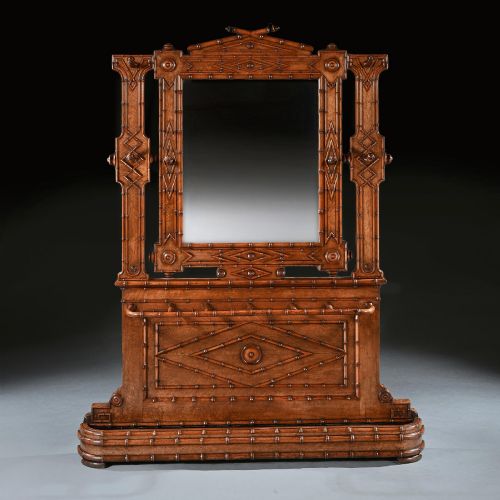
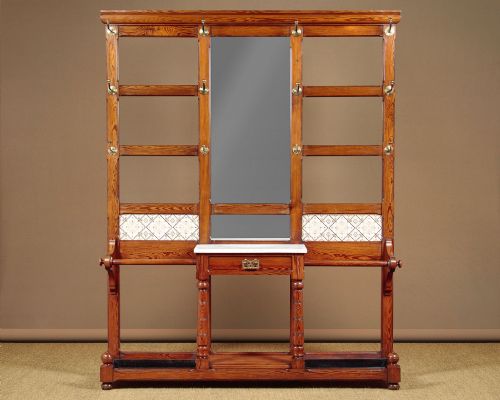
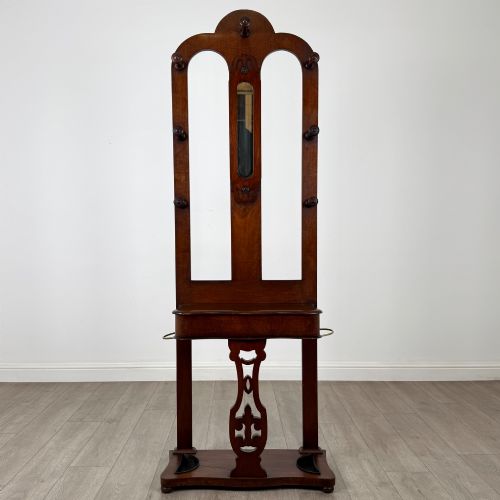
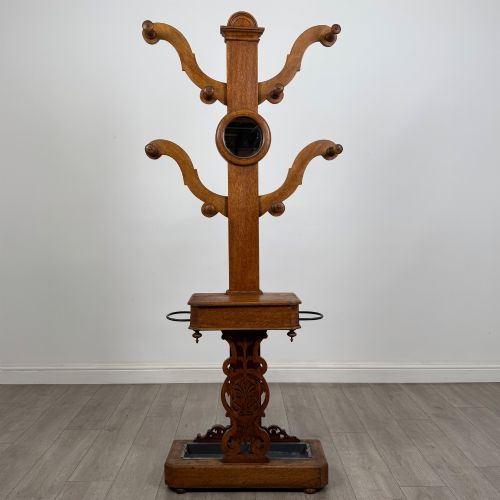
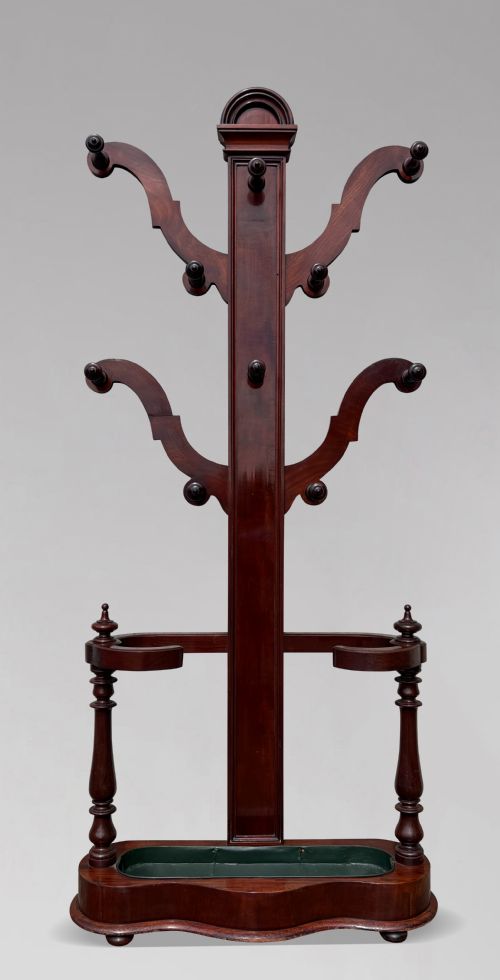
A 19th century coat rack encompasses everything from simple wall-mounted hooks to large freestanding hall stands incorporating mirrors, marble shelves and stick holders. The most frequent forms encountered on this page are substantial Victorian mahogany hall stands and elaborate carved wood pieces.
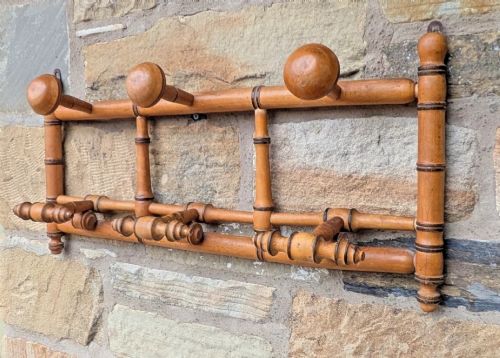
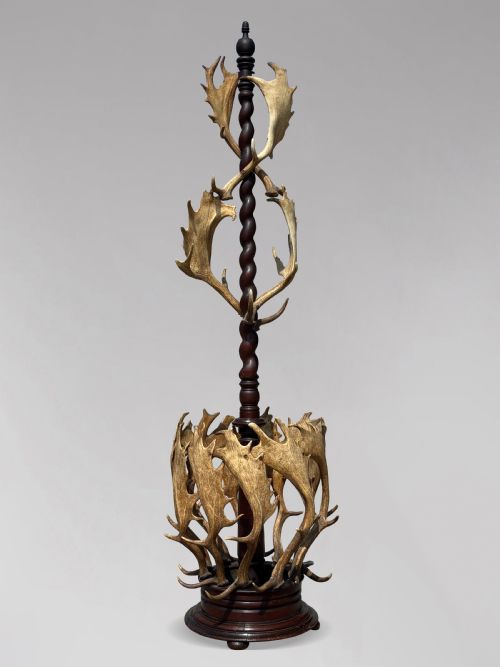
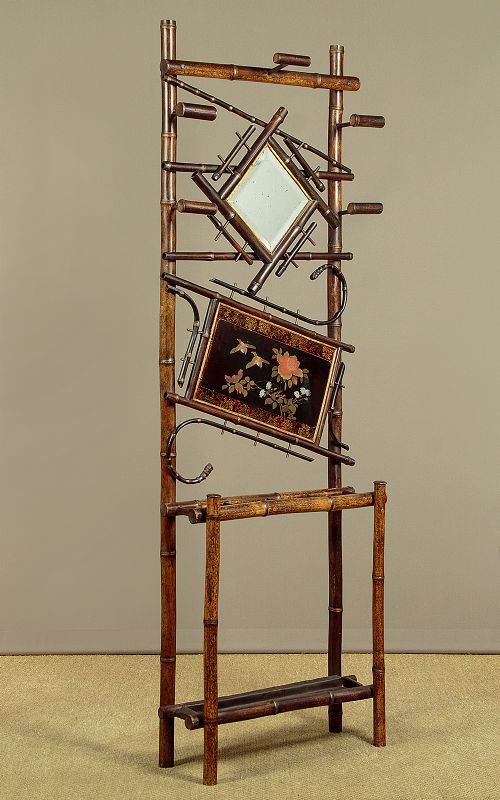
Makers utilised various domestic and imported woods alongside cast iron and brass to suit both modest country houses and grand Victorian entrance halls. Regional styles range from French faux bamboo and English Gothic Revival to Swiss Black Forest carvings featuring bears and deer antlers.
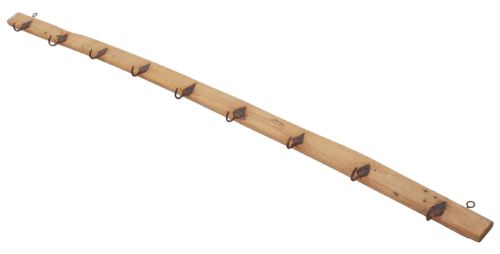
Functionality dictated design, with many pieces combining hat hooks, umbrella wells and central mirrors to serve the busy Victorian household. Wall-mounted racks and folding bentwood options provided practical storage for smaller entryways.
Materials and Technique
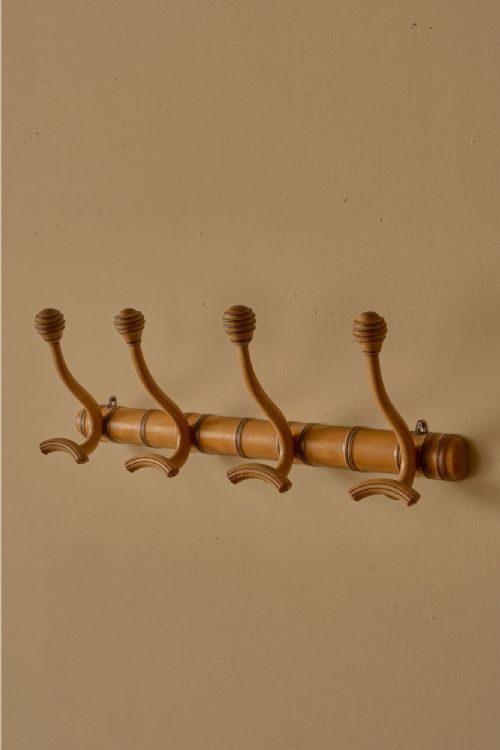
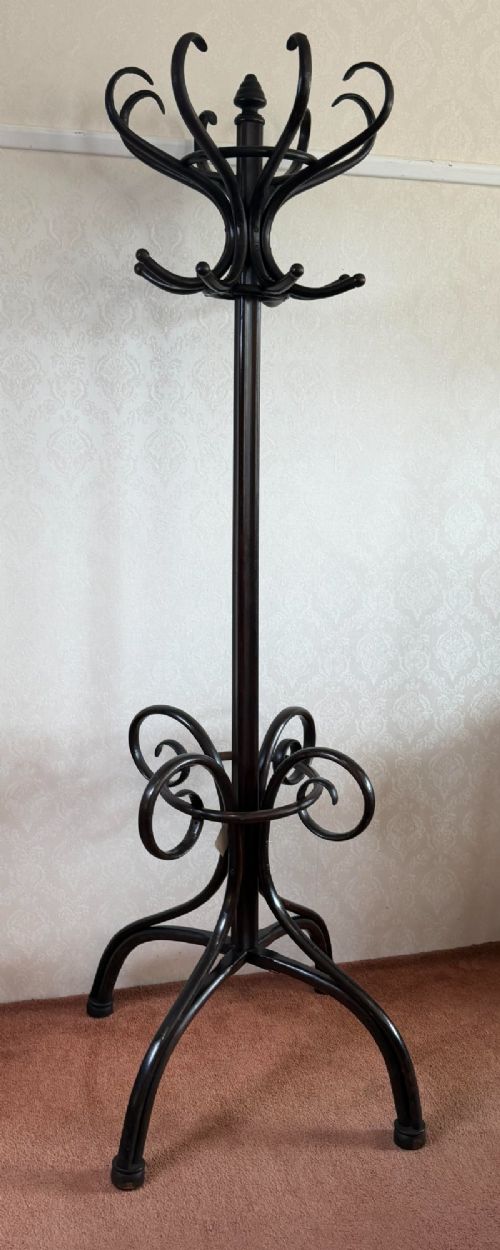
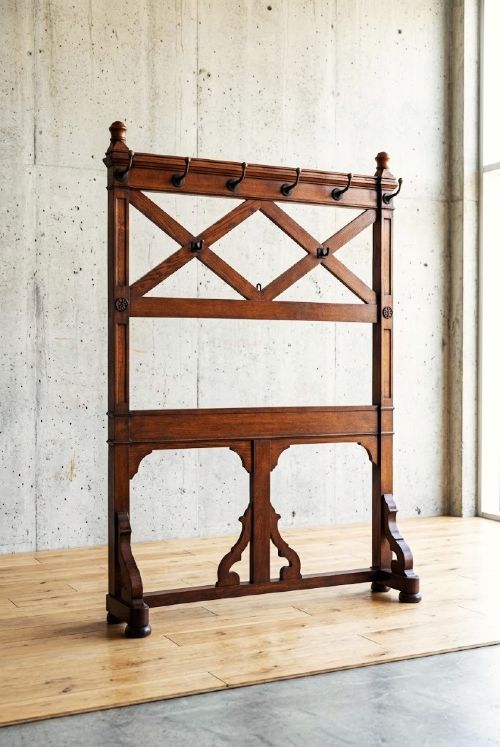
Cabinetmakers relied heavily on solid mahogany, oak and pine for the main structures of hall stands, often incorporating steam-bent beech or bamboo for lighter wall racks. Turning, mortise and tenon joinery, and steam bending formed the structural backbone of these items.
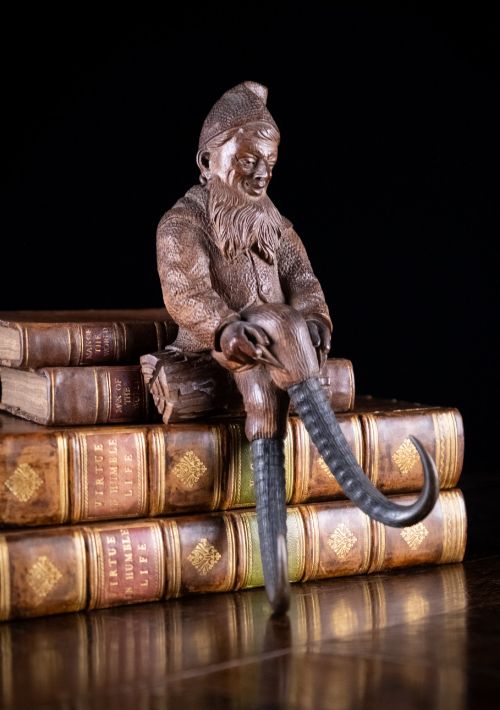
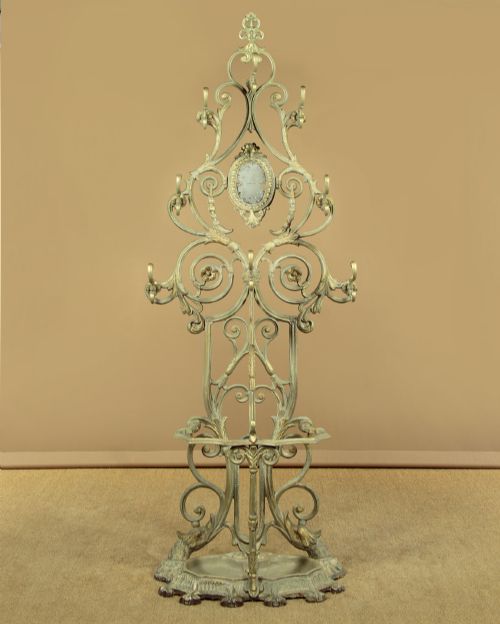
Carving defines the more elaborate pieces, particularly the Swiss and German Black Forest works featuring detailed animal heads, gnomes and foliage cut into linden wood. Cast iron and brass served for sturdy structural frames, heavy portmanteaus and durable wall hooks.
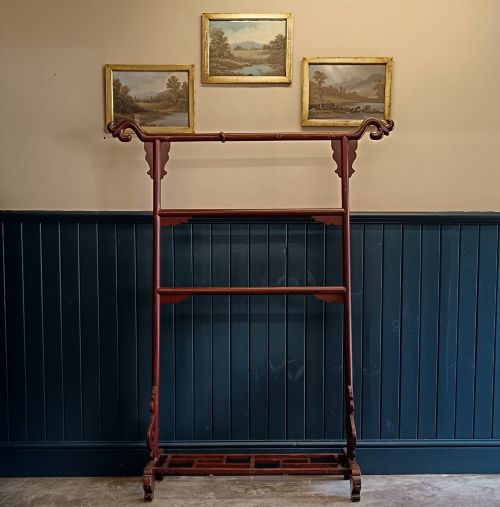
Surface treatments included deep French polishing on mahogany, lacquering on Chinese robe stands, and simulated bamboo finishes that painted plain wood to mimic exotic cane. Glass mirrors and marble inserts were integrated securely into timber frames to add utility and light.
A gnome peers out from a whip hook, proving that 19th-century hallways took their mischief as seriously as their hats.
Evaluating the Pieces
Depth and precision of hand carving separate standard commercial items from exhibition-grade pieces, especially within Black Forest and Gothic Revival styles. Crisp execution in animal forms, foliage and heraldic motifs indicates skilled workshop production.
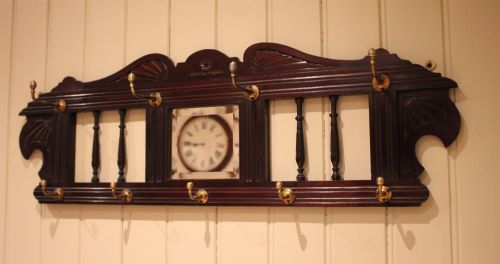
Material selection dictates the grade of a piece, with dense, well-figured mahogany, heavy cast iron and thick brass mounts outlasting softer pine or lesser metals. Original components, including matching drip pans, intact mirrors and authentic hooks, preserve the integrity of the design.
J. Parker of Woodstock·The Falkirk Foundry
The 19th Century Coat Rack Glossary
- Hall Stand
- A large freestanding entrance furniture piece combining coat hooks, a mirror, umbrella storage and frequently a marble or wood shelf. They dominated 19th-century domestic hallways.
- Bentwood
- Wood softened by steam and bent into curved shapes, commonly utilised by makers like Thonet for lightweight coat and hat stands. This technique allowed for graceful, flowing structural lines.
- Faux Bamboo
- Wood turned and carved to resemble natural bamboo stalks, popular in French and Aesthetic Movement furniture. It brought an exotic aesthetic to European domestic interiors.
- Black Forest
- Carved wooden items originating from Switzerland and Germany, typically depicting woodland animals, bears and foliage. These pieces often incorporated real antlers or horns.
- Portmanteau
- A heavy, substantial coat and hat stand, often constructed from brass or iron for institutional or grand domestic use. The term denotes a robust framework designed to hold heavy outdoor garments.
19th Century Coat Rack: Frequently Asked Questions
How do I identify a Victorian hall stand?
Victorian pieces typically feature dense timbers like mahogany or oak, often incorporating central bevelled mirrors and carved scrollwork.
They frequently combine multiple functions into one heavy unit, including umbrella wells, drip pans and dedicated hat hooks.
What is Black Forest carving?
Black Forest carving refers to highly detailed woodwork originating from Switzerland and Germany during the 19th century.
These pieces commonly depict naturalistic animals such as bears, chamois or deer, frequently incorporating real horns and antlers into the design.
Are bentwood coat racks sturdy?
Bentwood racks utilise steam-treated beech to create surprisingly resilient and flexible frames that handle daily loads well.
Their lightweight construction made them popular across late 19th-century commercial and domestic spaces alike.
Where should I place a hall stand?
These pieces function best in entrance halls and large corridors where their original purpose of holding outdoor wear remains practical.
Ensure adequate wall clearance and floor space, as freestanding models require room for umbrella trays and protruding coat hooks.