

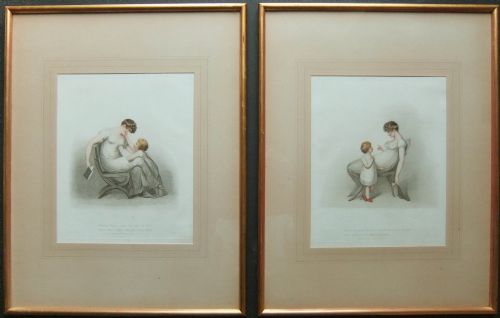


19th Century Children Print
These 19th century children print pieces capture Victorian domestic life and sentiment, offering collectors charming depictions of youth framed in period wood and gilt.
19th Century Children Print
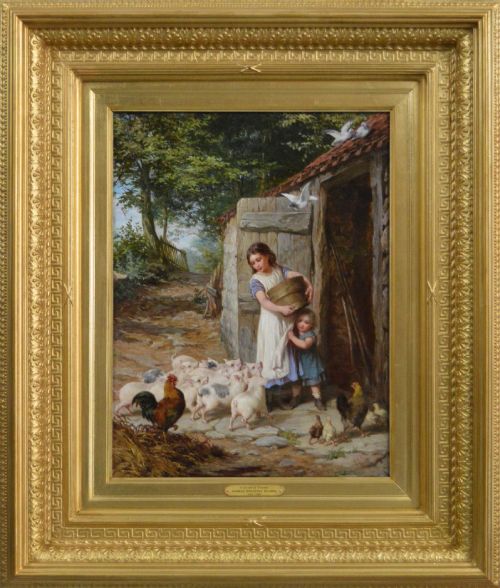
When you search for 19th century children print, you encounter a selection of framed engravings, oleographs, and painted works depicting youths in domestic or pastoral settings. These works span the Regency era through to the Victorian period, reflecting changing sentiments toward childhood.
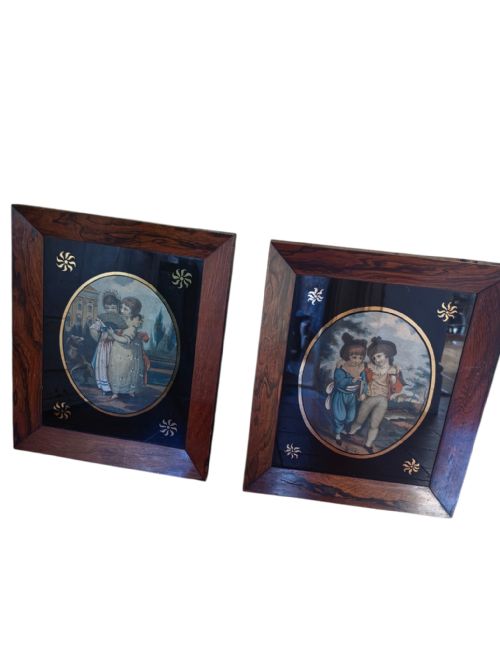
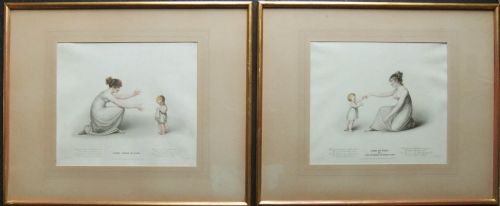
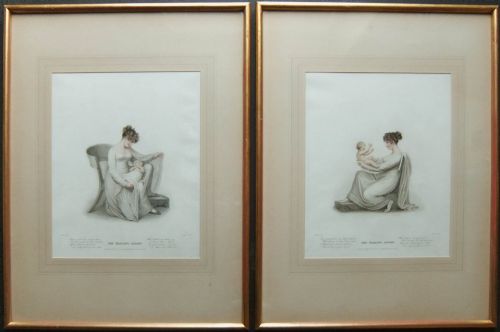
You are most likely to meet pairs of engraved plates by artists such as Adam Buck, alongside Victorian prints and crystoleoms housed in rosewood or gilt wood frames. The subjects range from playful domestic scenes to formal portraits.
The offerings also include oil paintings and wall art capturing young subjects, demonstrating the broad scope of 19th-century visual culture dedicated to children. Each piece offers a window into the period's domestic ideals and artistic output.
How they were made
The works utilise paper prints, stipple engravings, and oil on canvas, paired with frames shaped from rosewood, wood, and gilt wood. Gold leaf often enhances the frames, adding a decorative border to the paper or oil works within.
Techniques range from traditional engraving and oil painting to oleographs and crystoleoms, showing the diverse reproductive and primary media of the century. Framed art prints rely on careful mounting behind glass to protect the paper surfaces.
19th Century Children Print Retail Price Guide 2026
Typical asking prices for 19th century children print among the pieces listed under this phrase on Sellingantiques today, from the lower quarter to the upper quarter. They describe what is for sale here now, not the wider market.
What varies in quality
Quality separates through the crispness of the impression on paper engravings and the depth of the framing materials, such as solid rosewood or heavy gilt wood. Earlier works from 1800 often show sharper detail in stipple engraving compared to later mass reproductions.
The preservation of the original glass and the integrity of the frame significantly influence the standing of a piece. Pairs that retain their matched frames and clear imagery command greater attention from collectors.
George Augustus Holmes·Adam Buck·Sir Thomas Lawrence
The 19th Century Children Print Glossary
- Oleograph
- A type of chromolithography textured to imitate an oil painting. It gained popularity in the Victorian era as an affordable way to produce colourful domestic pictures.
- Crystoleom
- A photograph applied to convex glass, hand-painted from behind, and then cleared of its paper backing. This technique creates a luminous, three-dimensional effect.
- Stipple engraving
- A method of printing that uses dots rather than lines to create tonal gradations and soft shadows. It was widely employed for portraiture and sentimental subjects.
- Regency
- A period of British history spanning from 1811 to 1820, though the style often extends to cover the broader aesthetic of the early nineteenth century. It is characterised by classical elegance and refined decorative arts.
19th Century Children Print: Frequently Asked Questions
What is a crystoleom painting?
A crystoleom is a photograph printed on glass, coloured by hand from the reverse side, and mounted to give a translucent depth. This Victorian technique produced vibrant cabinet pictures that resembled miniature oils.
They require careful handling because the painted layer sits delicately behind the convex glass. Collectors prize them for their unusual optical qualities and period charm.
How do I date an engraving?
Dating relies on publisher imprints, paper watermarks, and the stylistic conventions of the dress and hair depicted. Engravings from around 1800 often feature classical Regency styling in the subjects' clothing.
Comparing the plate mark and the quality of the stipple work against known publication dates helps narrow the timeline. Matched pairs frequently bear original publication dates along the lower margin.
Are these works usually found in pairs?
Many 19th-century domestic prints and engravings were published and framed as companion pieces, such as Adam Buck's complementary studies of children. These pairs were designed to hang together on a drawing room wall.
Finding them intact as a matched set in their original rosewood or gilt frames remains a notable advantage for collectors. Single plates do turn up, but pairs offer a complete narrative composition.
How should I care for framed paper prints?
Paper works from the nineteenth century require protection from direct sunlight to prevent the fading of inks and watercolours. Maintaining stable indoor humidity prevents the paper from cockling within the frame.
Original glass should be cleaned gently with a dry or barely damp cloth, avoiding moisture seepage around the rabbet. Rosewood and gilt frames benefit from occasional dusting without modern chemical polishes.