


19th Century Chesterfield Sofa
A 19th century chesterfield sofa brings deep buttoned comfort and historic presence to a room, offering unmatched seating depth and timeless character.
19th Century Chesterfield Sofa
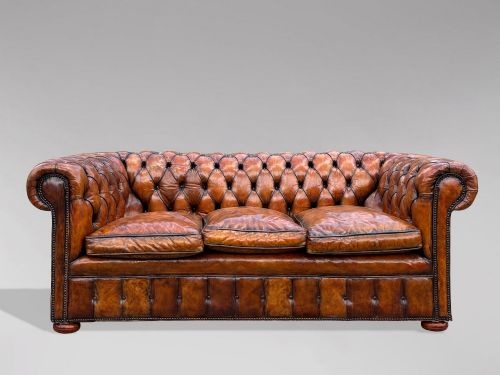
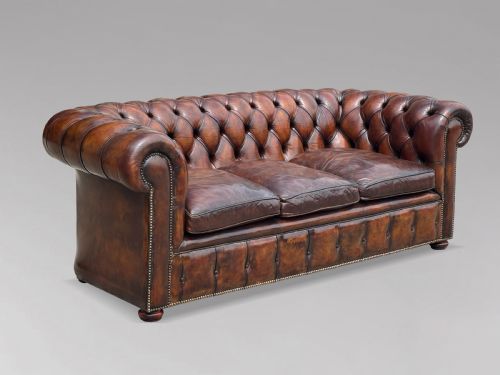
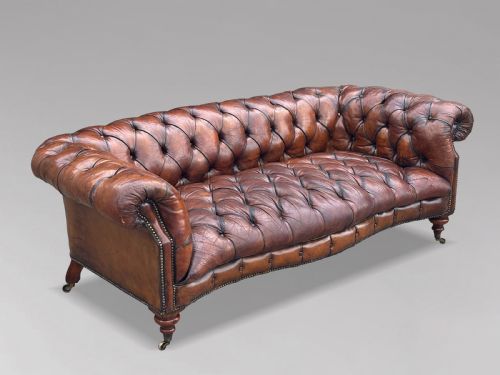
A 19th century chesterfield sofa stands as the definitive deep-buttoned lounge seat of the Victorian era, shaped by generous proportions and rolled arms. The version most frequently met on this page is the brown leather Victorian example, often bearing the marks of country house use or maker stamps.
Makers such as Howard and Sons, Hampton and Sons, and Gillows shaped these pieces with low backs and sprung seats designed for long hours of repose. Alongside standard sofas, the archive reveals variants including chaise longues, show frame walnut settees, and drop arm designs.
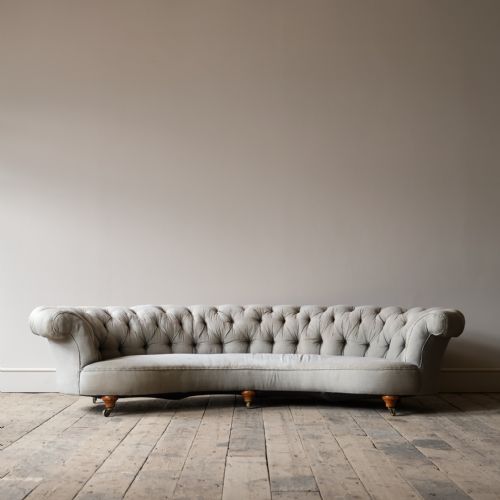
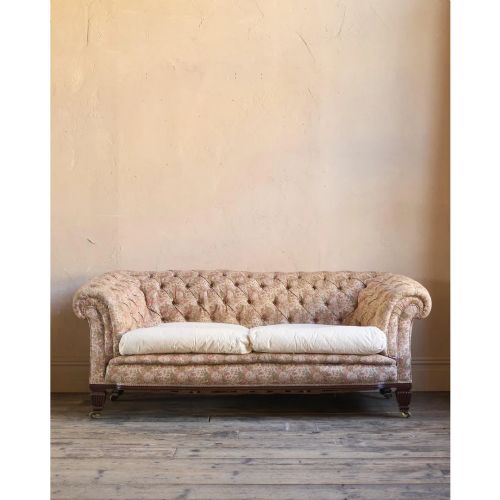
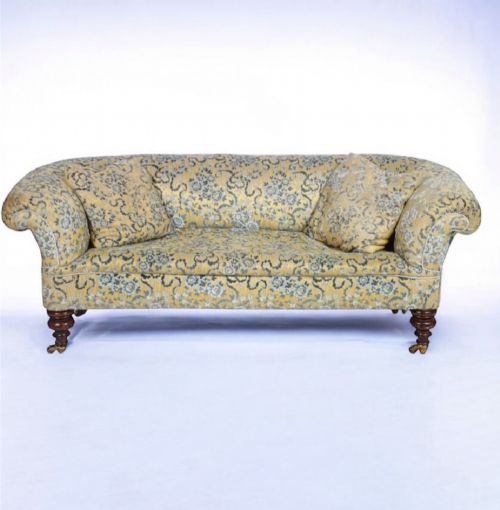
The aesthetic movement also left its mark on these forms, introducing distinct decorative treatments alongside traditional country house upholstery. Buyers searching for a 19th century chesterfield sofa will encounter pieces upholstered in both hand-dyed leathers and traditional fabrics like velvet and calico.
How they were made
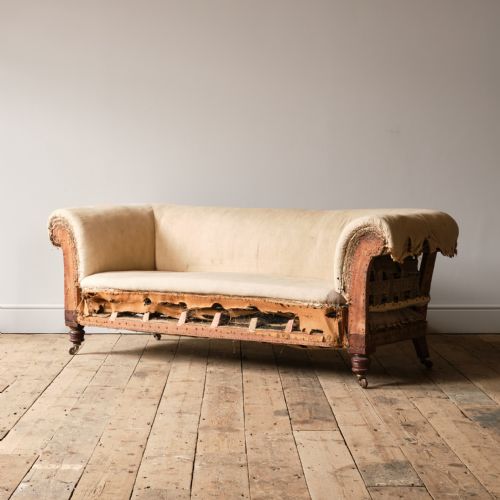
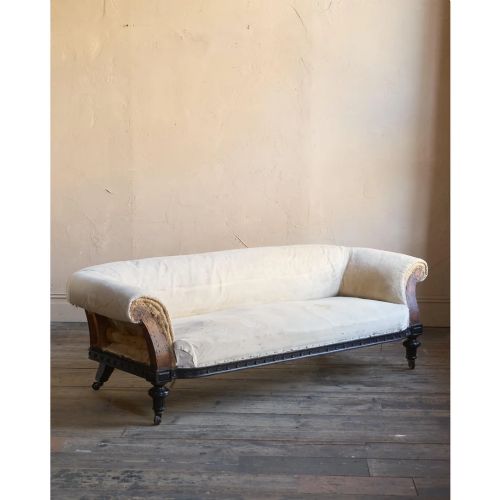
The foundational structure relies on dense timbers such as mahogany and walnut, providing a rigid chassis for complex internal springing. Wood frameworks support the deep coil springs that give the seat its resilient bounce.
Upholstery techniques combined horsehair stuffing with calico under-layers, secured through meticulous deep buttoning that created the characteristic diamond tufting. Leather hides, often hand-dyed in shades ranging from rich brown to amethyst and green, were then hand-tacked using brass nails.
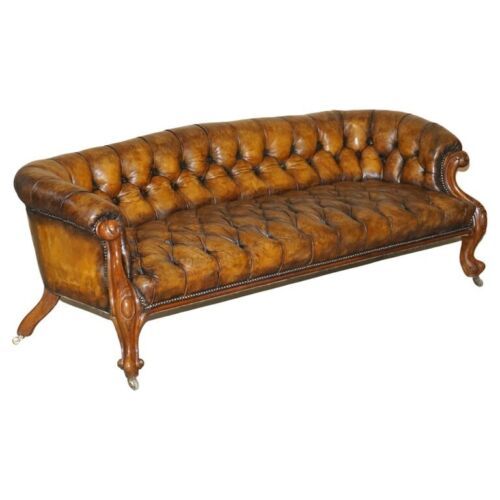
Show frame models integrated carved walnut or mahogany directly into the external silhouette, exposing polished timber borders around the padded upholstery. Makers utilised brass castors on the feet to allow movement of these heavy timber frames across heavy carpets.
What varies in quality
The integrity of the internal beech or mahogany frame and the quality of the original coil springing dictate the foundational worth of each piece. Frames that retain their original bracing and tight joinery separate high workshop standards from ordinary production.
The treatment and grade of the leather hide significantly influence the tactile character and visual depth of the upholstery. Hand-dyed leathers applied over traditional horsehair stuffing achieve a richer patina than modern replacement skins.
The distinction of the maker's stamp, whether from notable firms like Howard and Sons or Gillows, elevates the historical significance of the piece. Proportion and scale also vary, with larger country house proportions commanding greater presence than standard domestic variants.
Howard and Sons·Hampton and Sons·Jas Shoolbred·Robert Strahan and Co·Holland and Sons·Gregor and Co·Gillows·Sopwith·C Hindley and Sons·Cornelius V Smith
The 19th Century Chesterfield Sofa Glossary
- Chesterfield
- A large upholstered sofa characterised by equal height arms and back, traditionally featuring deep button tufting. This form became the standard for British club and drawing room seating.
- Show frame
- A wooden structural skeleton left exposed around the upholstered elements of a chair or sofa. Carved walnut and mahogany show frames mark higher status Victorian seating.
- Calico
- A plain-woven cotton fabric used historically as the underlying inner cover for stuffing and springs before final upholstery. It provides a stable foundation for hair stuffing.
- Chaise longue
- An upholstered couch with one raised armrest, designed for reclining. Mid to late-century examples often share the deep-buttoned upholstery of standard chesterfields.
- Drop arm
- A mechanical sofa arm that can be lowered via a ratchet mechanism. This innovation allowed the seat to double as a day bed.
19th Century Chesterfield Sofa: Frequently Asked Questions
What is a 19th century chesterfield sofa?
A 19th century chesterfield sofa is a fully upholstered Victorian seat featuring rolled arms of the same height as the back and traditional deep button tufting. These pieces were built on sturdy timber frames with internal coil springs.
They served as principal lounging furniture in country houses and town residences alike, prized for their durable construction and deep seating comfort.
How do I identify a Howard and Sons chesterfield?
Howard and Sons pieces often feature stamped wood frames, specific paper labels, or characteristic castors bearing the firm's name. Their construction utilised superior stuffing and spring work.
Examining the underside webbing and interior timber marks typically reveals the workshop identity on pieces from this maker.
Were all chesterfields originally upholstered in leather?
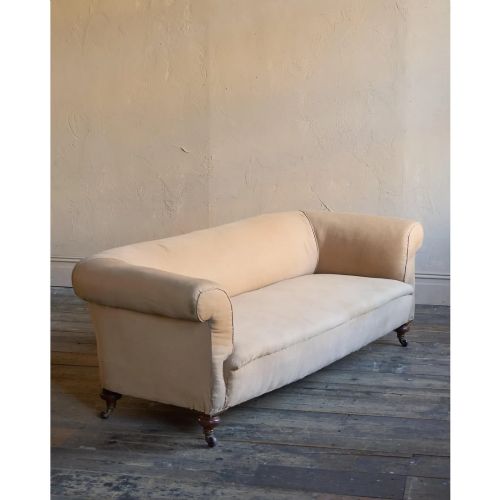
While leather is the most common survival on the market today, many period pieces were originally upholstered in velvet, wool damask, or heavy fabrics. Calico served as the standard inner lining beneath these decorative textiles.
Surviving examples in fabric demonstrate the wider range of interior schemes deployed in Victorian drawing rooms.
How should I care for a vintage leather chesterfield?
Historic leather requires gentle cleaning with appropriate saddle soaps and regular application of specialist leather balms to prevent drying and cracking. Avoiding direct sunlight preserves the hand-dyed colour.
Maintaining stable room humidity protects both the leather hide and the underlying timber frame from warping.