



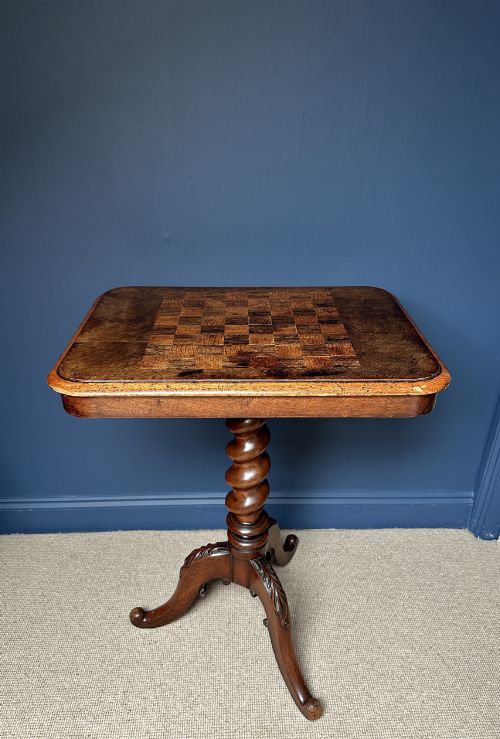

19th Century Chess
Nineteenth century chess brings together rosewood tables, carved boxwood sets and inlaid boards designed for play and display.
19th Century Chess
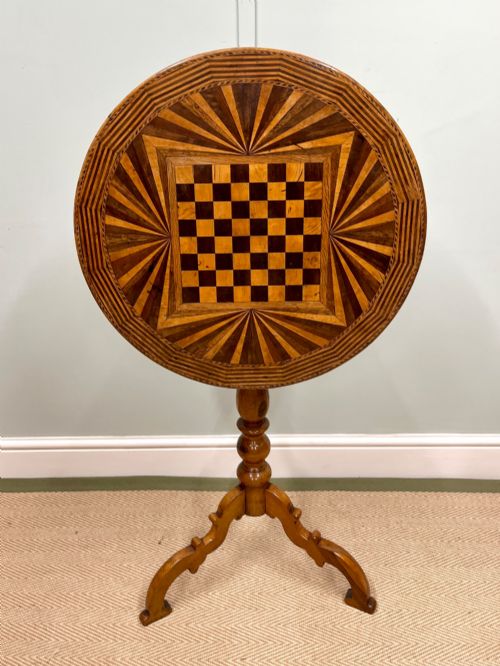
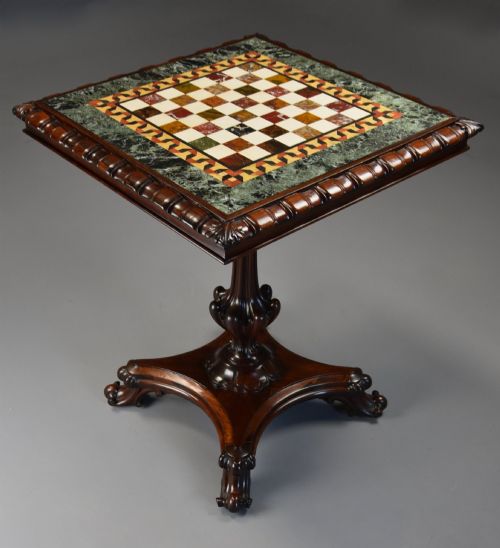
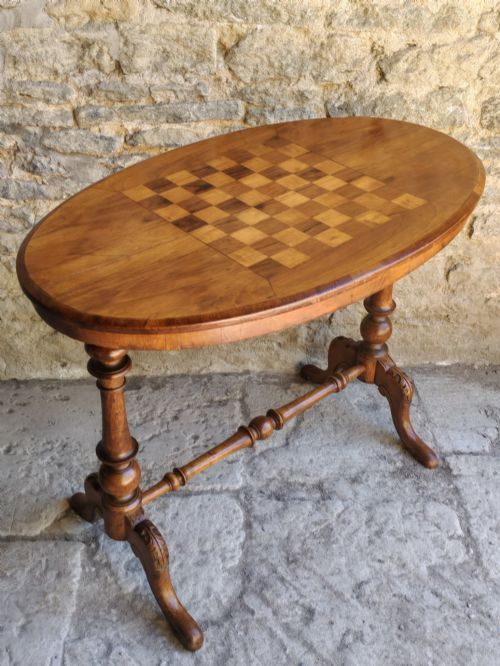
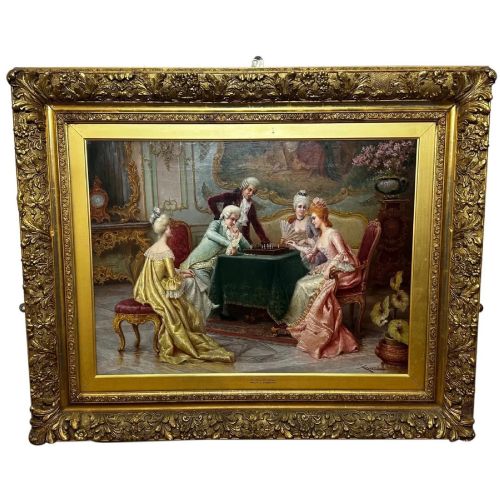
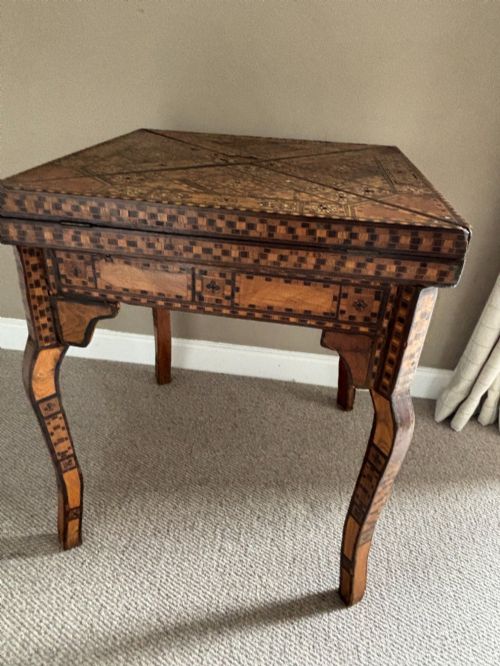
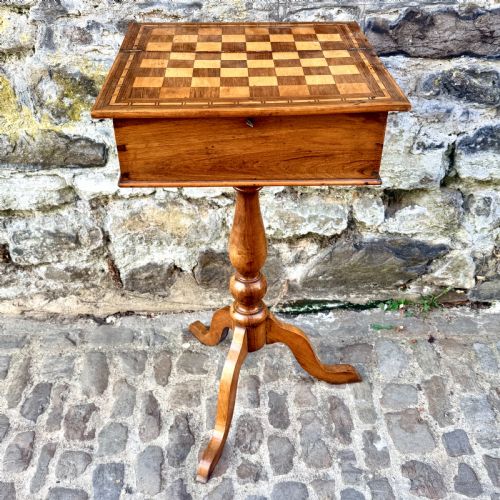
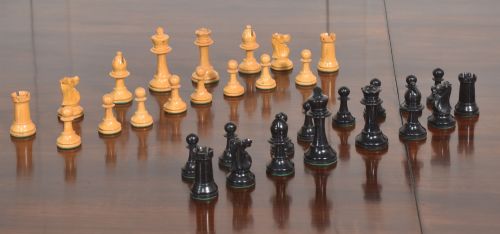
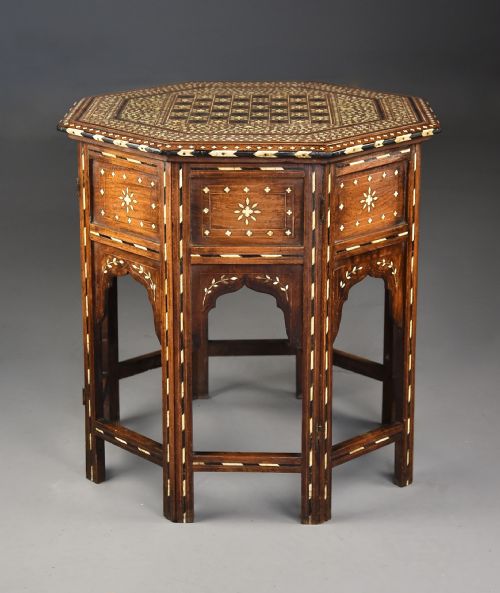
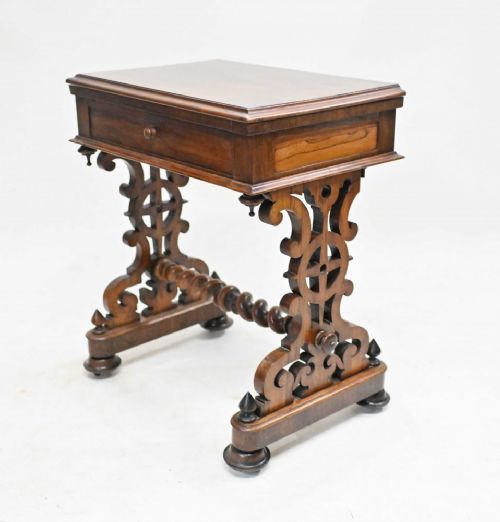
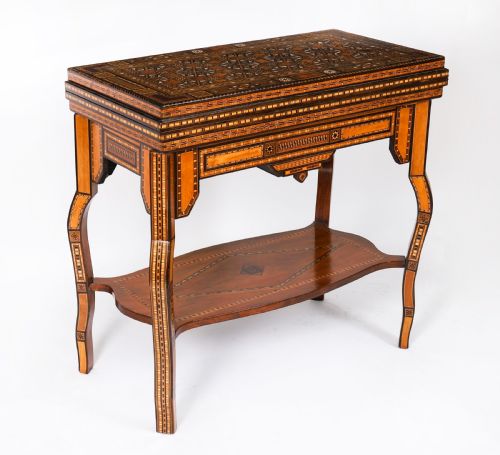
When you search for 19th century chess, you encounter items ranging from complete sets in boxwood and ebony to folding boards and multipurpose games tables. The tables often combine chess with backgammon or card playing, serving multiple functions in a period interior.
You are most likely to meet rosewood or mahogany games tables alongside Staunton pattern sets turned from boxwood and ebonised wood. These pieces reflect the Victorian and Regency periods when parlour games held a central place in domestic social life.
How they were made
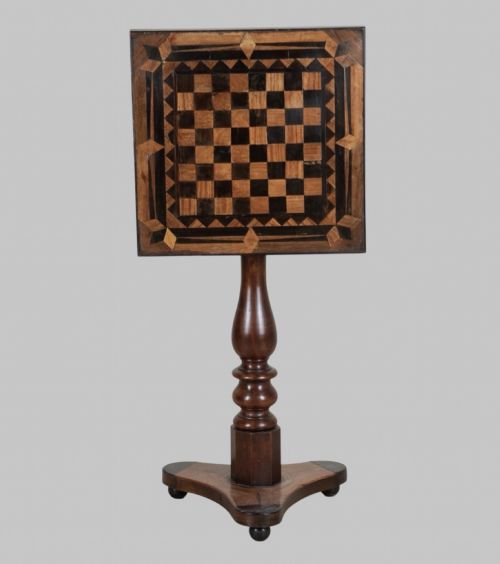
Craftsmen built tables from timbers such as rosewood, walnut, and mahogany, frequently incorporating intricate parquetry or marquetry for the playing surfaces. Boxwood and ebony provided the contrasting light and dark tones essential for chess sets and inlaid boards.
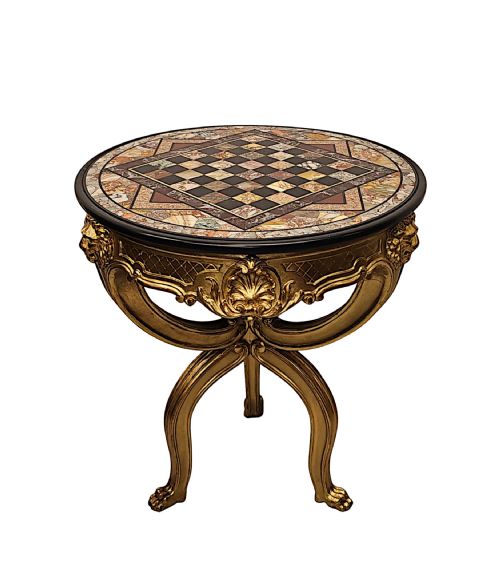
Specialised techniques included penwork decoration on Regency tables, reverse glass painting on boards, and precise turning for weighted Staunton pieces. Makers also utilised brass detailing and marble tops for grander specimens.
19th Century Chess Retail Price Guide 2026
Typical asking prices for 19th century chess among the pieces listed under this phrase on Sellingantiques today, from the lower quarter to the upper quarter. They describe what is for sale here now, not the wider market.
Several tables manage to serve as writing desks, sewing boxes, and chess arenas all at once.
What varies in quality
Quality depends on the precision of the timber inlays and the stability of the turning on chess pieces. Finer examples display tight joints in multi-timber parquetry and well-balanced proportions in pedestals and chessmen.
The sophistication of the secondary functions, such as swivelling folding tops and integrated sewing drawers, marks the distinction between standard production and superior workshop output.
Gillows·Jaques·George Merrifield·F. H. Ayres
The 19th Century Chess Glossary
- Staunton chess set
- The standard design of chess pieces introduced in the mid-19th century, featuring weighted bases and realistic proportions that became the tournament standard. This style remains the most recognisable form for collectors today.
- Parquetry
- Geometric mosaic woodwork used to create patterned surfaces on tables and boards. Craftsmen arranged contrasting timbers like boxwood and rosewood to form the squares of chess boards.
- Penwork
- A Regency decorative technique using ink to draw intricate motifs onto light wood surfaces before sealing them. This method often adorned the borders of tables designed for games.
- Quartetto tables
- A set of four graduating occasional tables that nest beneath one another. Regency makers produced these in rosewood and mahogany for flexible use in entertaining.
- Calvert pattern
- A distinct style of 19th-century chess set produced by the Calvert workshop in London. These sets are known for their sturdy proportions and characteristic knight carvings.
19th Century Chess: Frequently Asked Questions
How do I identify a Staunton chess set?
Staunton sets are characterised by heavily weighted bases and standard architectural motifs, such as coronets on rooks and defined manes on knights.
They emerged during the Victorian era to standardise competitive play, moving away from older ornamental designs like the St George pattern.
Were these games tables used daily?
Parlour games formed a major part of 19th-century domestic leisure, leading to the creation of multifunctional tables that served for sewing, writing and chess.
Reversible tops and hidden compartments allowed households to transition quickly from card games to chess or backgammon.
How should I care for rosewood tables?
Rosewood surfaces respond best to stable indoor humidity and protection from direct sunlight to prevent the rich timber tones from fading.
Applying a light wax occasionally maintains the polish without building up residue on the intricate parquetry.
What is the difference between a compendium and a games table?
A compendium is a portable box housing multiple board games, counters and cards within fitted compartments.
A games table is a piece of furniture with a dedicated or reversible playing surface built into the structure itself.