



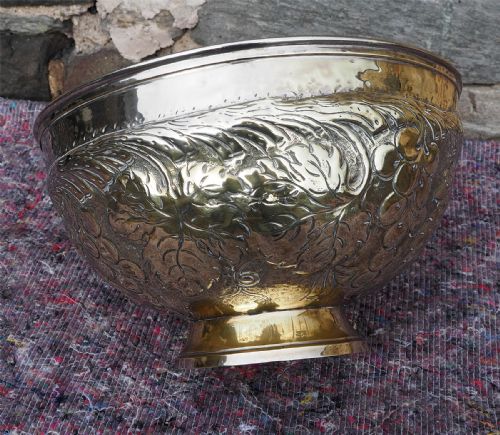


19th Century Champagne Bucket
A 19th century champagne bucket brings heavy silver plate and warm coopered timber straight from grand dining rooms onto the modern table.
19th Century Champagne Bucket
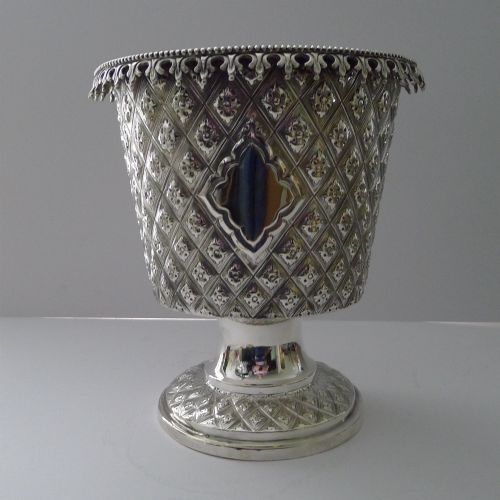
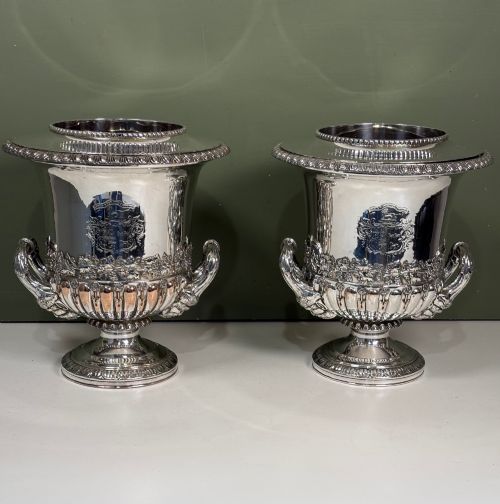
A 19th century champagne bucket covers a broad family of vessels built for chilling wine and serving at table during the Georgian, Regency, and Victorian eras. These range from heavy silver-plated campana coolers to coopered mahogany and oak log baskets and oyster buckets adapted for ice.
The pieces most frequently met on this page include silver-plated wine coolers from the mid-nineteenth century alongside timber vessels bound in brass. Makers shaped them for formal dining as well as country house hospitality, utilising metals and woods that survive in daily use.
How they were made
Silversmiths constructed many of these pieces using silver plate on copper or early Old Sheffield Plate, fusing thin sheets of silver to a copper base before shaping them into classical forms. Others utilised electroplated nickel silver as manufacturing techniques shifted during the Victorian period.
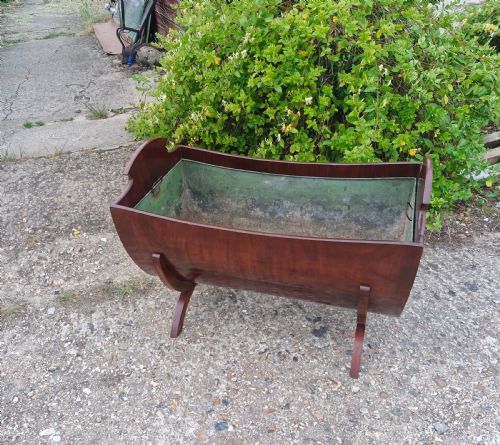
Timber vessels relied on traditional cooperage, binding staves of mahogany or oak with strong brass hoops to hold ice and water securely. Metal pieces often featured applied cast mounts, handles, and borders in styles ranging from Regency campana to Victorian Rococo revival.
19th Century Champagne Bucket Retail Price Guide 2026
Typical asking prices for 19th century champagne bucket among the pieces listed under this phrase on Sellingantiques today, from the lower quarter to the upper quarter. They describe what is for sale here now, not the wider market.
What varies in quality
Quality rests primarily on the crispness of the cast ornament and the thickness of the original plating over the copper or base metal. Pieces by notable makers show superior weight, balanced proportions, and clean chasing that marks them out from plainer commercial production.
For wooden vessels, the integrity of the cooperage, the warmth of the timber grain, and the quality of the brass fittings determine the overall standard. Examples that retain their original liners or display careful hand-finishing stand apart from ordinary utilitarian ware.
Elkington, Mason & Co·Hawksworth, Eyre & Co
The 19th Century Champagne Bucket Glossary
- Campana
- A bell-shaped vessel form popular during the Regency and Georgian periods, frequently utilised for wine coolers and ice pails. This classical silhouette allows ample room for ice and bottles.
- Old Sheffield Plate
- An early method of fusing a thin sheet of silver to a thick copper base before fabrication. This technique creates a distinctive edge where the underlying copper shows through wear.
- Coopered
- Built from wooden staves joined edge to edge and bound with metal hoops, much like a barrel. This method ensures waterproof strength in items like oyster buckets and log baskets.
- Electroplated Nickel Silver
- A base alloy of copper, nickel, and zinc coated with a layer of pure silver using an electrical current. This process largely replaced older plating methods by the mid-nineteenth century.
19th Century Champagne Bucket: Frequently Asked Questions
Can I use an antique wine cooler for modern bottles?
Most standard nineteenth-century coolers comfortably accommodate modern champagne and wine bottles packed with ice. The generous proportions designed for historical glass work well for contemporary entertaining.
Check the interior depth and diameter if you prefer particularly large or oversized bottles. Many buyers use them on sideboards or drinks trolleys during dinners.
What is the difference between Old Sheffield Plate and later plating?
Old Sheffield Plate involves physically fusing silver and copper sheets together under heat before hammering and shaping the metal. This older method often reveals a thin reddish copper line along high-wear edges.
Later electroplating deposits a uniform coating of silver onto a nickel alloy using electricity. This Victorian innovation created a very even surface without the telltale edge lines of fused plate.
How do I tell a Regency cooler from a Victorian one?
Regency pieces tend to favour clean classical lines, such as campana shapes and minimal restrained ornament reflecting ancient Greek and Roman influence. They often utilise Old Sheffield Plate.
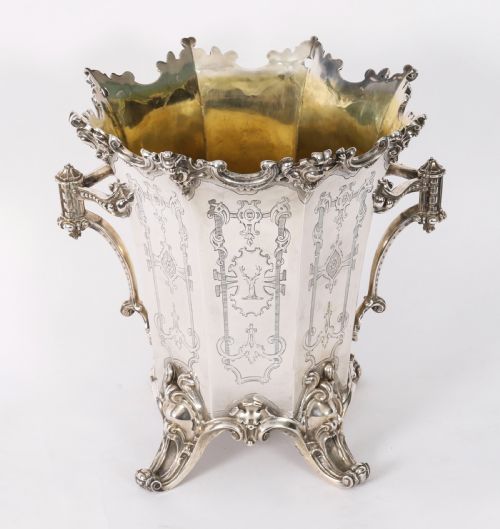
Victorian coolers frequently embrace heavier revival styles, including Rococo ornamentation with lavish scrolling foliage and cast handles. These later pieces more commonly employ electroplated nickel silver.