
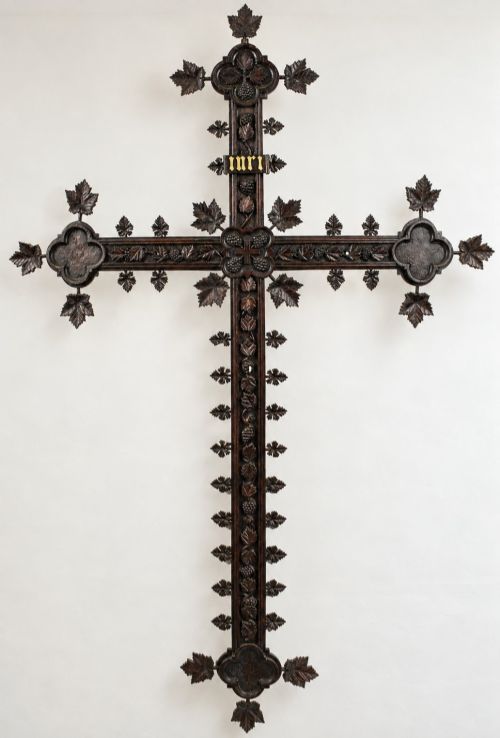


19th Century Carved Cross
These 19th century carved cross pieces bring traditional devotion and fine woodworking into modern rooms, offering genuine period character for any interior.
19th Century Carved Cross
When buyers search for a 19th century carved cross, they encounter devotional wall hangings and crucifixes created during the Victorian and earlier periods. These objects serve both spiritual and decorative roles, shaped by hand to reflect the religious sensibilities of the era.
Makers utilised traditional woodworking methods to shape these crosses, incorporating carved details that range from simple geometric patterns to elaborate figural scenes. Such craftsmanship ensures that each surviving cross retains a unique sculptural presence.
How They Were Made
Woodworking forms the foundation of these pieces, with artisans employing dense hardwoods like mahogany, rosewood, oak, and ebonised wood. These timbers were selected for their durability and grain, allowing deep relief carving without splitting.
Surface decoration frequently involves manual carving techniques complemented by gilt metal mounts or gilding. Skilled hands shaped the timber into complex profiles, often integrating contrasting materials such as glass or textiles to enhance the visual impact.
What Varies in Quality
The standard of carving distinguishes superior examples from simpler workshop output, with crisp undercut details and expressive figural rendering marking out the best work. Artisans who invested time in achieving naturalistic drapery and anatomical proportion produced pieces of higher artistic merit.
Material selection also dictates overall quality, as dense timbers like rosewood and mahogany support sharper chisel work than softer woods. Furthermore, the integration of original gilt metal elements and textile components influences the cohesive appearance of the finished object.
The 19th Century Carved Cross Glossary
- Crucifix
- A cross bearing the figure of Christ, designed for devotional focus. These objects range in scale from small personal items to large wall-mounted sculptures.
- Gothic Revival
- An architectural and decorative style popular during the nineteenth century that revived medieval forms. This aesthetic heavily influences the pointed arches and tracery found on many religious carvings.
- Ebonised
- Wood treated with a chemical stain or finish to imitate ebony. This technique was frequently utilised on nineteenth-century devotional furniture and frames to create a sombre, formal appearance.
- Relief carving
- A sculptural technique where figures or patterns project from a flat background. This method gives depth to wooden panels and wall crosses without requiring full three-dimensional sculpture.
19th Century Carved Cross: Frequently Asked Questions
What are 19th century carved cross pieces made from?
These items are constructed primarily from various woods such as oak, mahogany, and rosewood, occasionally enhanced with gilt metal and textile elements. The choice of timber often reflects the regional origin and period style of the object.
Craftsmen utilised these durable materials to support intricate hand carving, ensuring the structural integrity of wall crosses and devotional panels over generations.
How do I hang a wall cross?
Wall crosses generally feature integrated hanging loops or brackets affixed to the reverse timber structure. It is important to select a wall fixing appropriate for the weight of the dense hardwood.
Ensure the mounting point supports the vertical load securely, keeping the piece away from direct heat sources to protect the aged wood and any applied gilding.
How do I date a 19th century cross?
Dating relies on examining the timber species, tool marks left by the carver, and stylistic indicators such as Gothic Revival motifs or Victorian ornamentation. Comparative analysis of regional woodworking traditions also aids in establishing an approximate decade.
Documented examples from specific decades like the 1850s or 1880s provide useful benchmarks for evaluating construction methods and decorative trends.
How do I care for antique wooden carvings?
Maintain a stable indoor environment away from rapid humidity fluctuations and direct sunlight to prevent the timber from splitting or warping. Dust gently with a dry, soft cloth rather than using liquid polishes.
Periodic inspection of the surface finish helps preserve the natural patina developed on the wood and any metallic or textile components over the past two centuries.