



19th Century Canterbury Stand
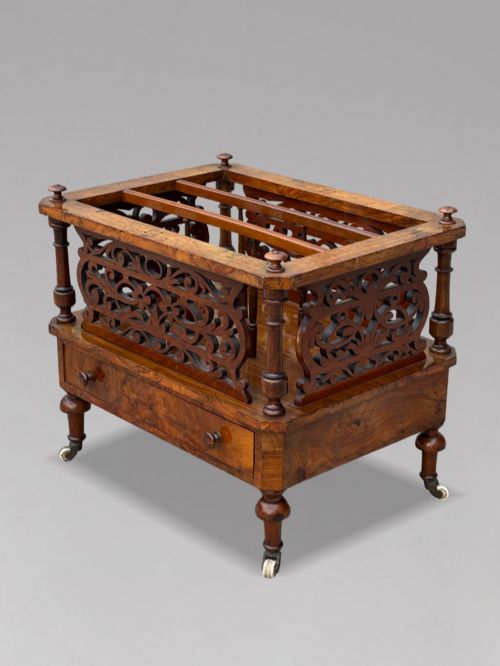
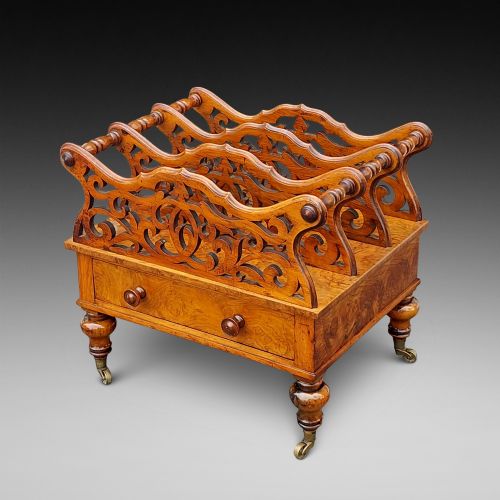
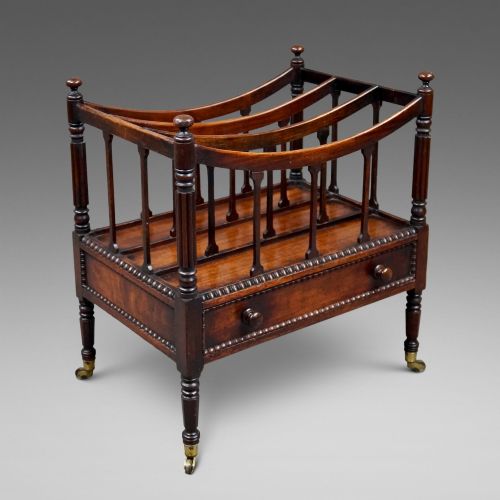
A 19th century canterbury stand organises folios and sheet music with partitioned sections above low castors.
19th Century Canterbury Stand
A 19th century canterbury stand functions primarily to hold sheet music, magazines, and folios within domestic sitting rooms. Buyers examining this page encounter pieces originating across the Victorian, Regency, and Georgian periods.
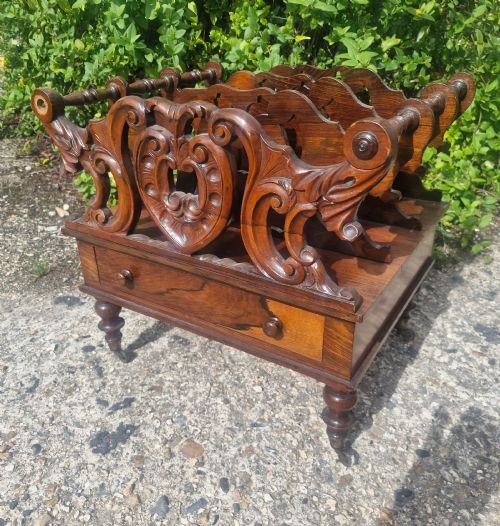
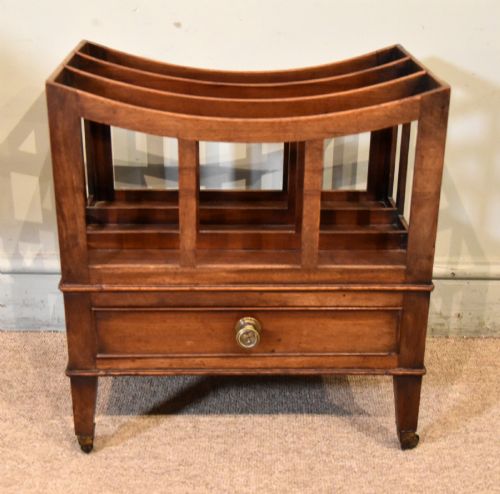
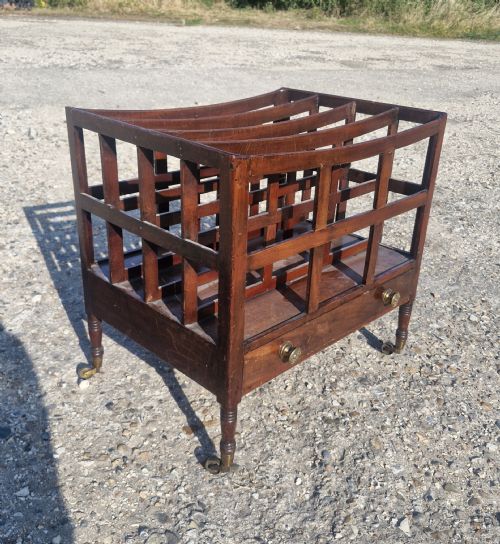
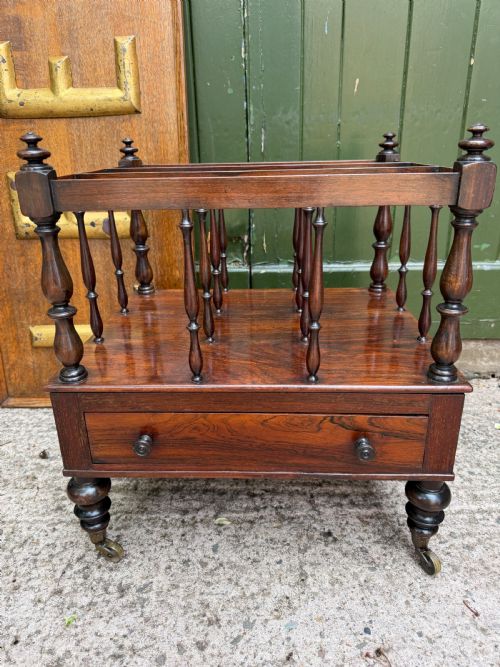
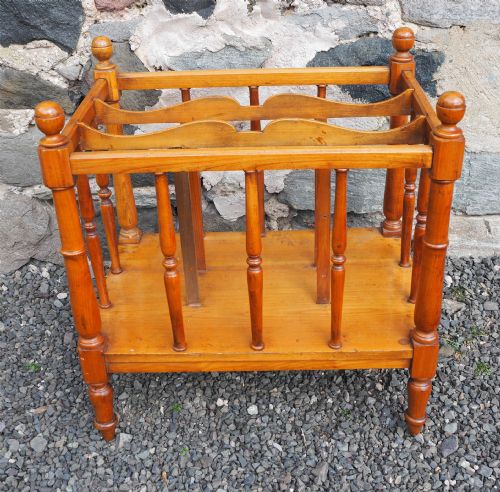
The most frequent examples on this page are constructed from timbers like mahogany and rosewood, often featuring slatted partitions or open dividers. Many incorporate low drawers or combine the rack format with a small whatnot or table top.
Makers designed these stands to sit beside pianos and seating areas, utilising compact footprints that suited nineteenth-century drawing rooms. Variations range from simple utility racks to grander scaled pieces with intricate carving.
Distinguishing quality
The choice of timber and veneer figuring sets apart standard production items from finer workshop pieces. Figured walnut, rich rosewood, and carefully matched grains indicate superior material selection by the maker.
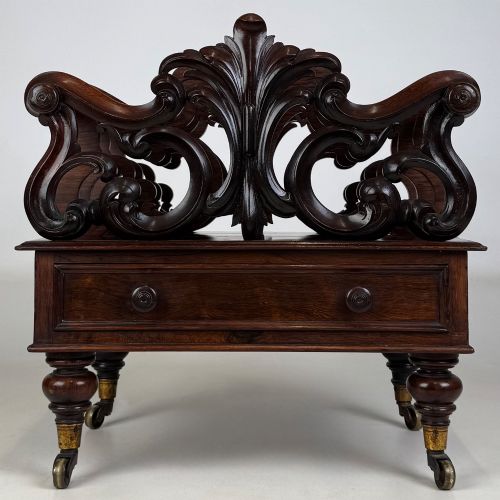
Design complexity and hardware integration differentiate output across the range. Finely turned spindles, hand-carved details like Prince of Wales feathers, and the inclusion of dovetailed drawers or fitted whatnot tops elevate the execution of the stand.
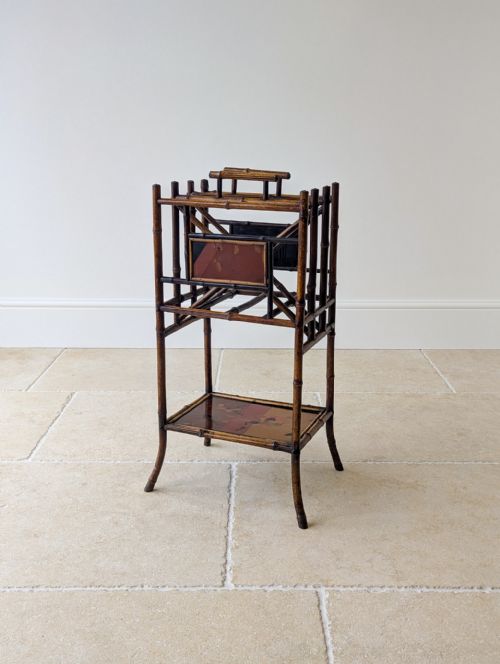
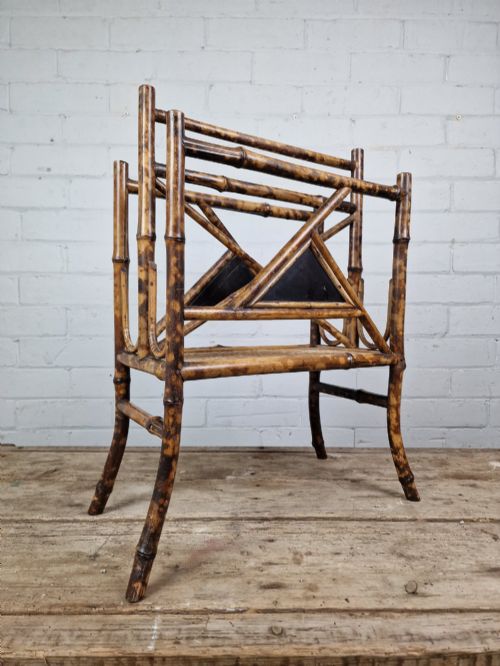
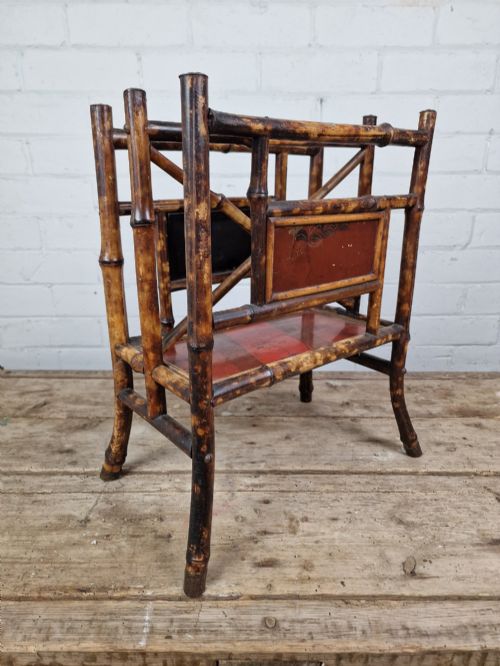
The listings show diverse periods spanning from George III through to late Victorian Aesthetic bamboo designs, utilising mahogany, rosewood, walnut, and ceramic elements.
Henry Ogden and Son
The 19th Century Canterbury Stand Glossary
- Canterbury
- A stand designed for holding music sheets, books, and newspapers, typically featuring partitioned vertical sections.
- Whatnot
- A set of open display shelves supported by slender pillars, often combined with a lower canterbury base.
- Folio
- A large-format sheet of paper or bound volume for music, prints, and drawings stored within the rack.
- Castor
- A small wheel mounted on a swivel assembly at the base of the legs to allow easy movement across carpets and floors.
19th Century Canterbury Stand: Frequently Asked Questions
What is a 19th century canterbury stand used for?
These pieces served as dedicated holders for sheet music, folios, newspapers, and books in period drawing rooms. They kept reading and musical materials organised and within reach of seating areas.
Today, they function similarly in modern interiors as practical magazine racks or side tables for living spaces.
How do I identify a Regency canterbury?
Regency examples often display classical proportions, boat-shaped divisions, or sabre legs typical of the early nineteenth century. Cabinet makers frequently utilised dark figured rosewood or mahogany during this period.
They also tended to feature simpler, cleaner lines compared to the heavier carved ornamentation seen later under Victorian production.
Where should I place a music stand in my home?
These stands suit sitting rooms, studies, and music rooms where their compact size allows placement beside armchairs, sofas, or pianos. Their open partitions keep publications accessible while taking up minimal floor space.
Avoid positioning them in direct sunlight or beside heat sources to protect the polished wood surfaces and veneers.
What materials are common on Victorian canterburys?
Walnut, burr walnut, and rosewood dominate Victorian examples, often enhanced by marquetry inlay, turned columns, and brass castors. Late-century pieces also introduce bamboo and lacquer finishes following Aesthetic Movement tastes.
Construction quality generally reflects the period of manufacture, moving from geometric rosewood designs to heavily figured walnut tables with lower drawers.