





19th Century Bronze Decor
These nineteenth century bronze decor pieces bring sculptural weight and classical proportion into a room, spanning candlesticks, animals and mantel ornaments.
19th Century Bronze Decor
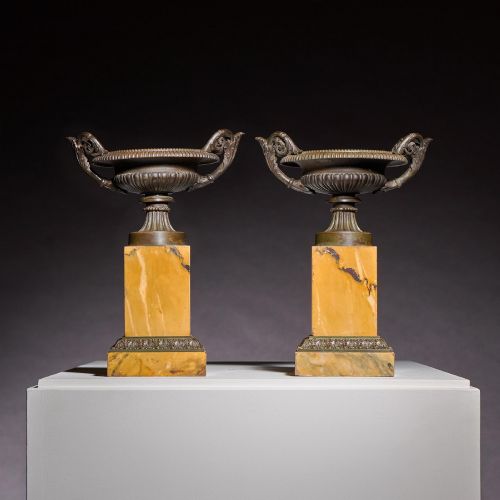
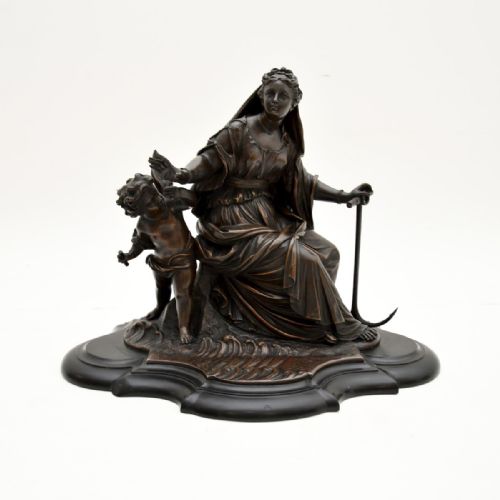
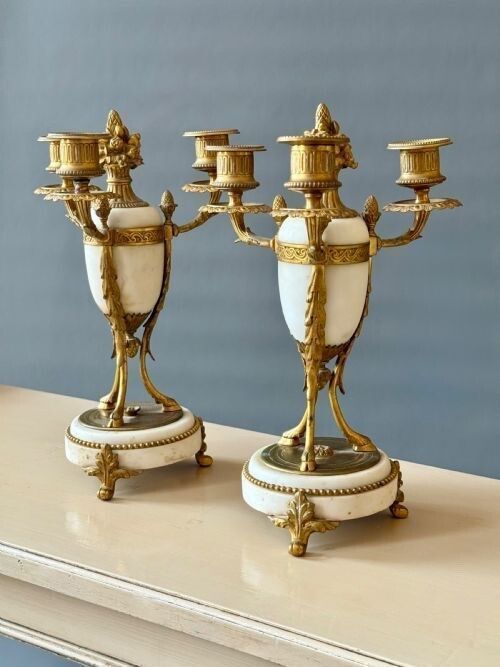
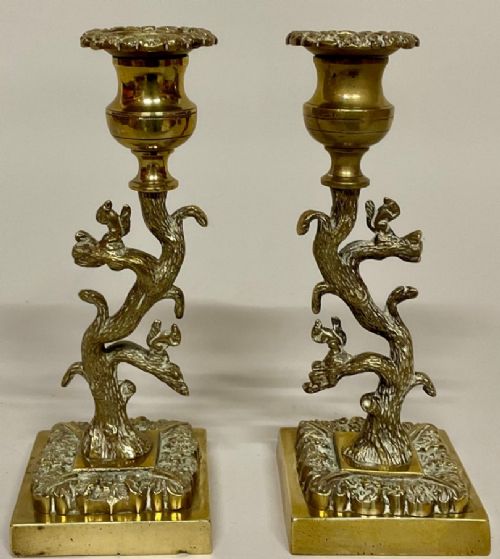
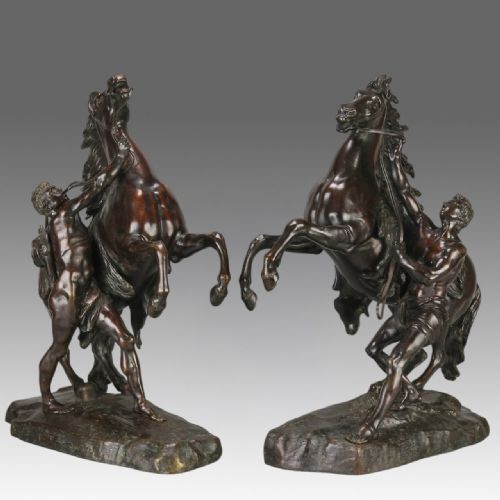
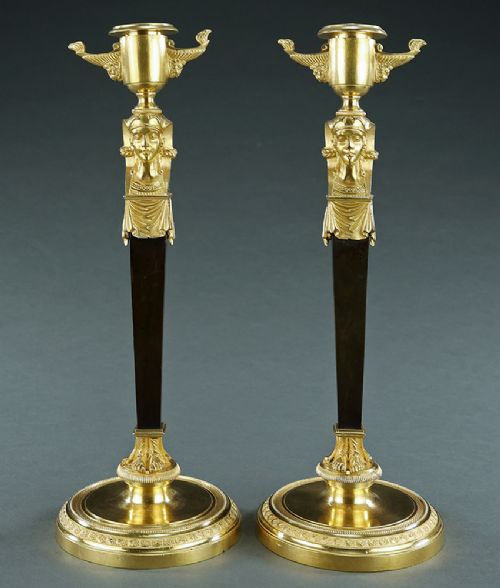
When you search for 19th century bronze decor, you encounter everything from French Empire candelabra and Grand Tour vases to animalier sculptures and fireplace chenets. The offerings lean heavily toward matched pairs of candlesticks, figural groups, and decorative urns cast during the Victorian and Regency periods.
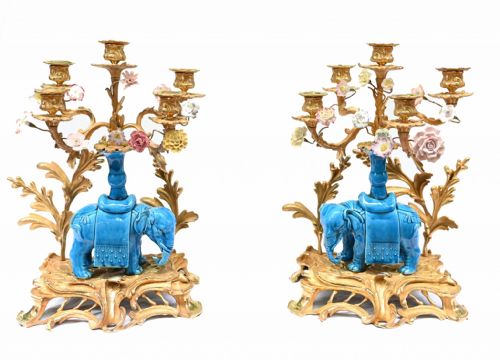
Many of these objects served functional roles in period interiors, illuminating rooms or supporting hearth fires, while others were purely ornamental souvenirs brought back from European travels. You will find pieces incorporating white marble bases, onyx plinths, and porcelain details alongside the heavy metalwork.
Continental workshops, particularly in France, produced the majority of these domestic ornaments, translating neoclassical, rococo and Egyptian revival tastes into enduring metal forms. The selection captures a century of shifting historicism, moving from strict Regency lines through ornate nineteenth century revival styles.
Materials and Working Methods
Foundries utilised lost-wax and sand-casting techniques to shape bronze, brass, and spelter into intricate figures, mounts, and vessels. Molten metal poured into multi-part moulds captured fine details like fur, foliage, and classical drapery before cooling.
Surface treatments define the visual character of these objects, combining bright fire-gilding known as ormolu with dark chemical patination. Artisans frequently mounted the completed metal sculptures onto turned bases of sienna marble, olive wood, or slate.
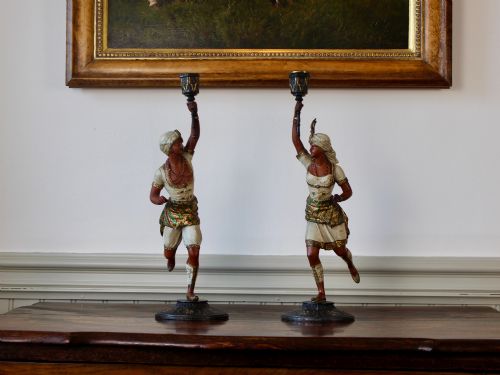
Cold-painted finishes and champlevé enamel occasionally added colour to specific figures and decorative desk accessories. Seamed construction methods appear on functional items like candlesticks and signal cannons, where multiple cast components join together.
19th Century Bronze Decor Retail Price Guide 2026
Typical asking prices for 19th century bronze decor among the pieces listed under this phrase on Sellingantiques today, from the lower quarter to the upper quarter. They describe what is for sale here now, not the wider market.
The listings on this page span the 19th century, incorporating Victorian, Regency, and French Empire periods through materials like ormolu, marble, and patinated bronze.
Markers of Quality and Execution
The precision of the chasing work separates superior castings from coarser production, as skilled artisans hand-tooled the cooled metal to sharpen feathering, facial expressions, and architectural mouldings. Softer, blurred details indicate a worn mould or a hurried secondary cast.
The choice and integration of secondary materials reveal the ambition of the piece, where solid marble plinths, heavy fire-gilding, and secure mechanical joinery elevate a decorative object. Castings that balance cleanly on their original bases demonstrate superior structural planning from the foundry.
Poix Blin·Pierre Lenordez·Charles Crozatier
The 19th Century Bronze Decor Glossary
- Ormolu
- Gilt bronze produced by applying a mercury and gold amalgam to the metal surface before heating. This technique creates a durable, luminous golden finish characteristic of French decorative arts.
- Patinated bronze
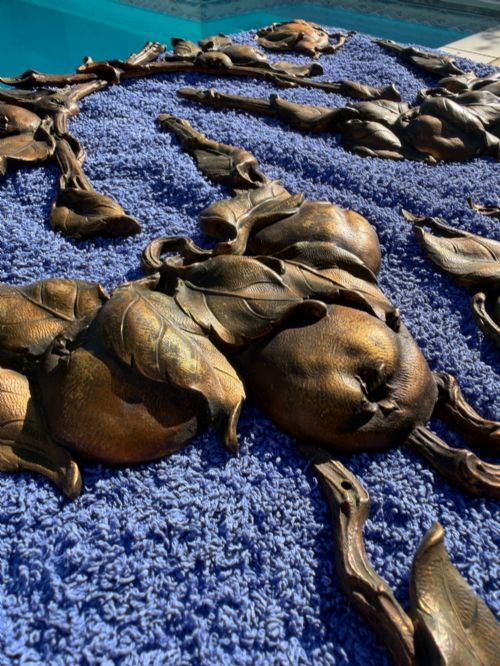
- Metal treated with chemical solutions to produce a controlled surface colour, usually deep brown, green, or near-black. The treatment protects the alloy while enhancing the sculptural contours.
- Animalier
- A nineteenth-century artistic style focusing on realistic depictions of animals, particularly in motion or combat. Sculptors like those working in France popularised this genre in bronze figures.
- Chenets
- Decorative metal fire dogs placed on either side of a hearth to support logs. They often feature elaborate figural or architectural mounts matching the room's decorative scheme.
- Grand Tour
- The traditional journey through Europe undertaken by upper-class young men to absorb classical art and culture. Souvenirs from these trips included miniature bronzes, vases, and architectural models.
19th Century Bronze Decor: Frequently Asked Questions
What is the difference between bronze and spelter?
Bronze is a durable alloy of copper and tin that takes fine detail and holds a rich patination over generations of handling. Spelter is a softer, zinc-based substitute that was widely used for cheaper nineteenth-century figures and decorative items.
Items cast in spelter feel lighter and often show more brittle fracture lines if damaged. Bronze pieces retain sharp cast definition and carry significantly more physical weight in the hand.
How should I clean nineteenth-century bronze decor?
Dust these surfaces gently with a soft, dry brush to prevent accumulation in recessed crevices and chased details. Avoid commercial metal polishes, abrasive cloths, and liquid cleaners that strip away historic patination.
Apply a very light coat of microcrystalline wax to bare metal if protection is necessary, but leave undisturbed patinas alone. Preserving the natural ageing of the alloy maintains both the historical character and the visual depth of the object.
Where were these decorative items placed originally?
Candlesticks and candelabra sat upon mantelpieces, dining tables, and pier glasses to reflect candlelight across the room. Larger vases, animal sculptures, and urns anchored sideboards, pedestals, and entrance halls.
Fireplace accessories like chenets and door stops operated directly on the hearth or floor to manage drafts and fuel. Every object had a specific domestic function integrated into the architecture of the period interior.
How do I identify French Empire style?
French Empire pieces display strict classical symmetry, military motifs, and references to ancient Roman, Greek, and Egyptian design. Look for sphinxes, caryatids, laurel wreaths, and deep patinated bronze contrasted against gilt highlights.
This aesthetic dominated the early nineteenth century under Napoleonic influence, prioritising monumental dignity over later rococo curves. Forms remain architectural, clean-lined, and deliberately imposing.