





19th Century Boulle
These elaborate furnishings showcase 19th century boulle work, bringing intricate brass and tortoiseshell marquetry to desks, clocks, and cabinets for collectors who appreciate French design.
19th Century Boulle
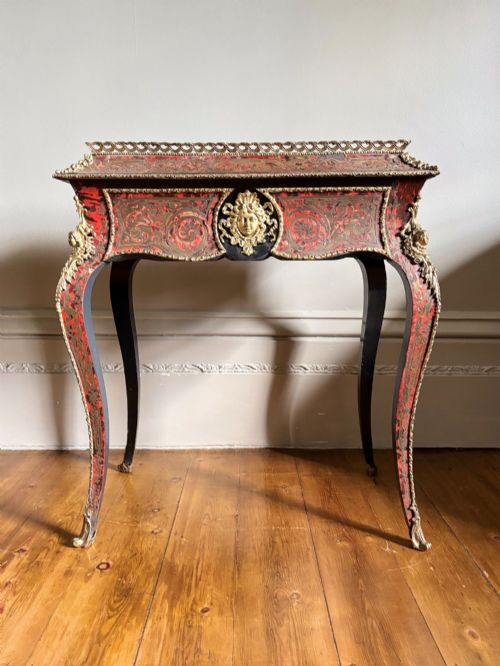
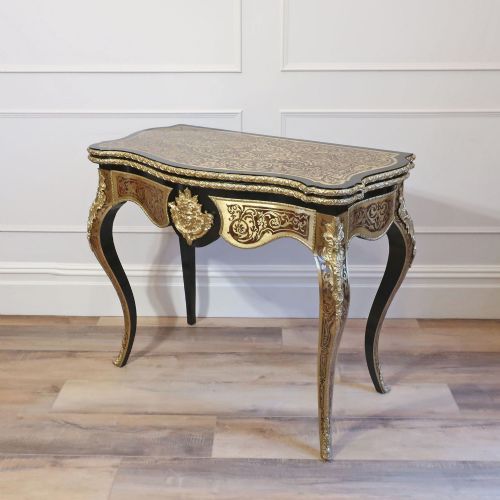
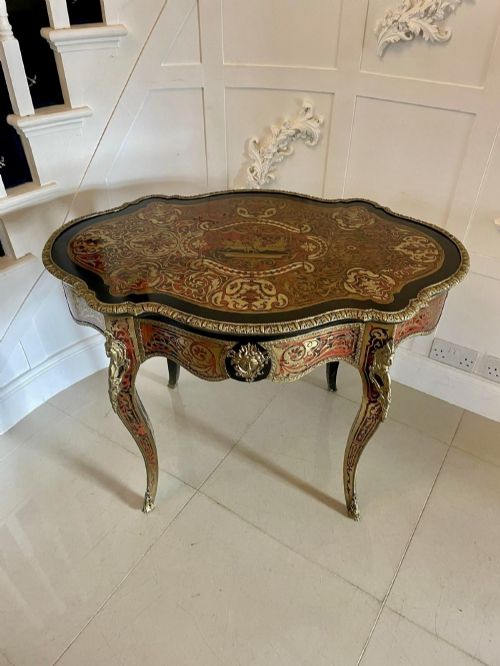
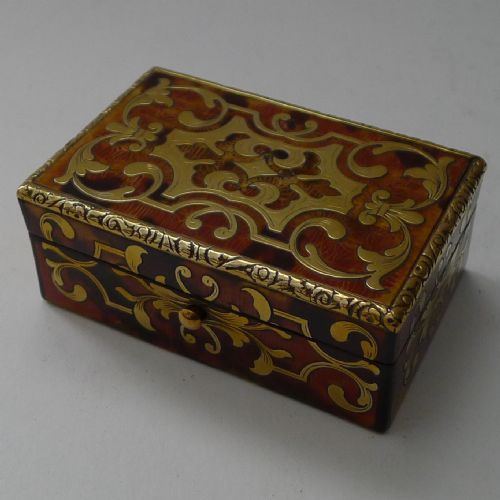
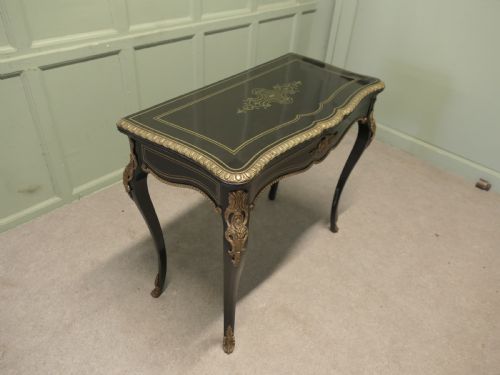
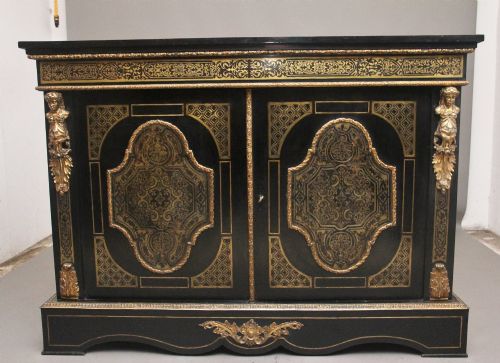
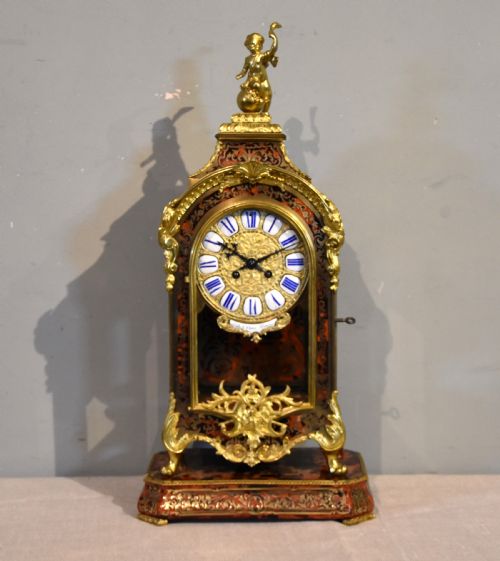
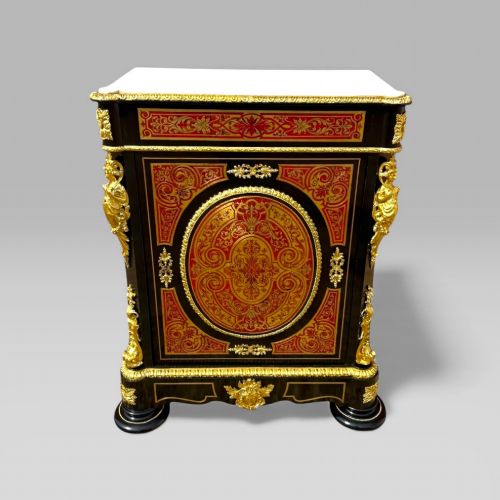
When seeking 19th century boulle, a buyer encounters a range of decorative furniture and objects finished with ornate marquetry. The listings on this page include mantel clocks, side cabinets, pier cabinets, and centre tables originating from French workshops during the Victorian era and the Napoleon III period.
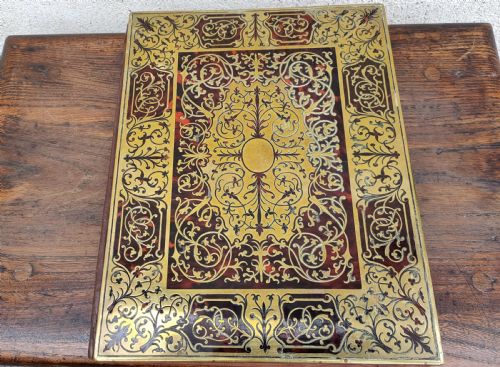
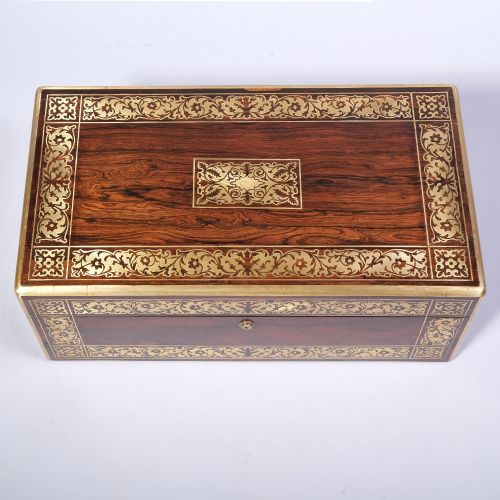
Smaller items also appear frequently within these listings, including desk blotters, writing boxes, tea caddies, and desk accessories. These pieces demonstrate the adaptation of elaborate marquetry techniques to portable domestic items.
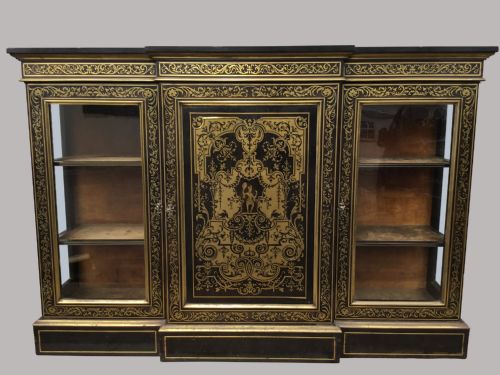
Larger case furniture such as breakfront side cabinets, credenzas, and display cabinets represent the more substantial forms available. Such pieces frequently combine ebonised wood or rosewood with extensive brass and tortoiseshell inlay set in revival styles.
Materials and construction
The technique relies on cutting contrasting sheets of tortoiseshell and brass simultaneously when stacked together, creating matching positive and negative panels known as premiere partie and contre-partie. Craftsmen set these delicate patterns into wooden carcases typically constructed from ebonised wood or rosewood.
Gilt bronze, known as ormolu, provides structural mounts, framing borders, and feet that accentuate the corners and curves of the cabinets and clocks. Glass panels feature in display cabinets and vitrines, whilst enamel dials appear on the mantel clocks housed in matching marquetry cases.
19th Century Boulle Retail Price Guide 2026
Typical asking prices for 19th century boulle among the pieces listed under this phrase on Sellingantiques today, from the lower quarter to the upper quarter. They describe what is for sale here now, not the wider market.
Listings feature ebonised wood, rosewood, brass, and tortoiseshell across various furniture forms from the nineteenth century.
Distinctions in quality
Quality rests upon the precision of the marquetry cutting and the crispness of the engraved details within the brass work. Finer examples maintain tight joints between the metal and shell elements without excessive filler, displaying a harmonious balance across the contrasting surfaces.
The choice of secondary woods and the weight of the cast ormolu mounts further differentiate standard production from superior items. Documented pieces carrying workshop signatures or attributions often exhibit a higher standard of overall execution in both the cabinetwork and the mechanical clock movements.
Louis Constantin Le Gaigneur·Henri Marc Of Paris·Edwards And Roberts·Samuel Marti
The 19th Century Boulle Glossary
- Boulle
- Marquetry technique utilising brass and tortoiseshell, named after André-Charles Boulle. The method creates ornate metallic patterns set against a dark organic background.
- Ormolu
- Gilt bronze mounts applied to furniture and clock cases. This material provides decorative highlights and protects vulnerable corners.
- Pier cabinet
- A low cabinet designed to fit against the wall space between windows. These pieces often feature glass doors and elaborate brass inlay.
- Bureau plat
- A flat-topped freestanding writing desk. These desks frequently incorporate cabriole legs and extensive marquetry across the top surface.
- Premiere partie
- The pattern layout where brass forms the dominant motif against a tortoiseshell background. It represents the primary cut of the marquetry sandwich.
19th Century Boulle: Frequently Asked Questions
What is 19th century boulle?
It is a form of decorative marquetry developed in France, using inlaid brass and tortoiseshell on wooden furniture and decorative objects.
The style experienced a major revival during the nineteenth century, producing mantel clocks, cabinets, and tables influenced by earlier Louis XIV and Louis XV designs.
How do I care for tortoiseshell?
Tortoiseshell requires stable indoor humidity and protection from direct sunlight to prevent warping and drying out.
Dusting should be done gently with a dry or slightly damp soft cloth, avoiding harsh chemical cleaning products entirely.
Where were these pieces made?
Most pieces originate from French workshops, particularly in Paris, which was the centre for fine cabinet making and clock production.
English makers also produced similar items during the Victorian period, often adopting the French Napoleon III style.
How do I identify different styles?
Revival pieces borrow motifs from earlier periods, distinguishing themselves through nineteenth-century construction methods and specific wood choices like ebonised timber.
Napoleon III pieces frequently combine dark wood carcases with dense brass inlay and heavy ormolu mounts.