


19th Century Bedroom Furniture
These pieces of 19th century bedroom furniture provide practical storage and period character through solid construction and rich timber grains.
19th Century Bedroom Furniture
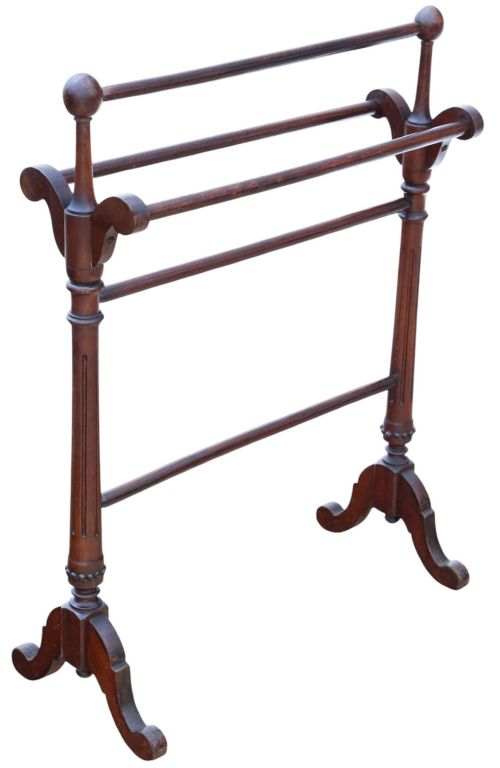
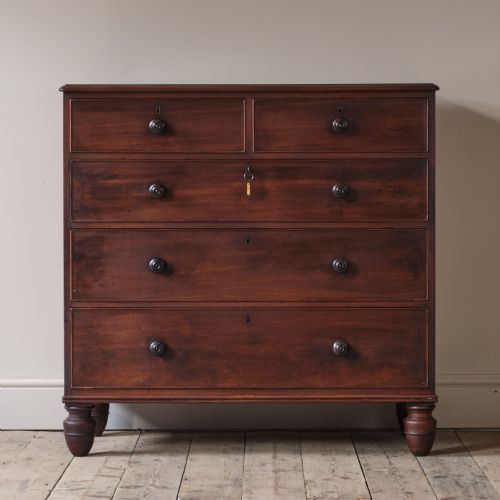
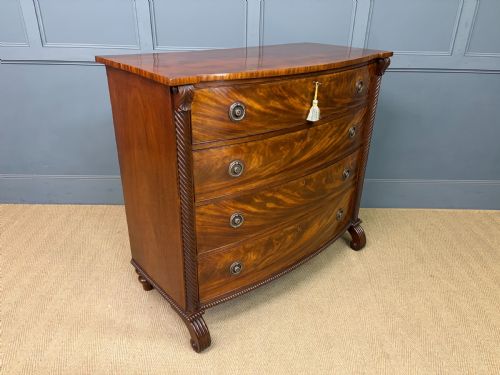
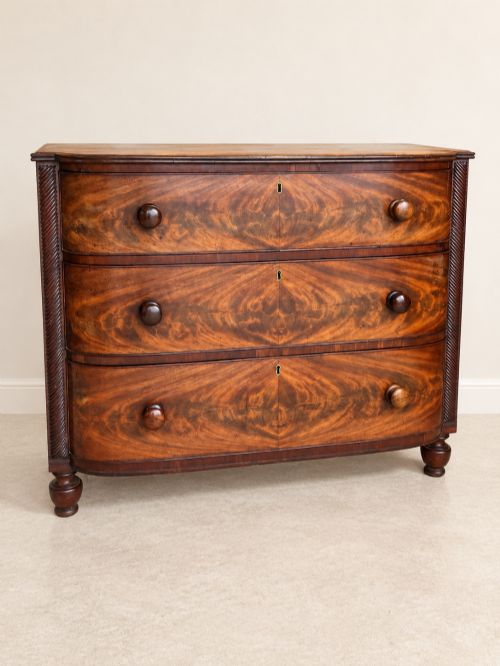
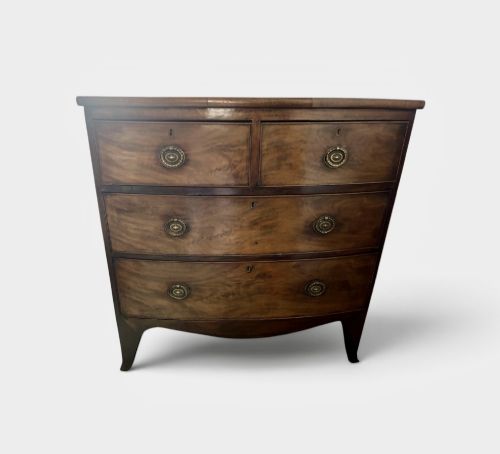
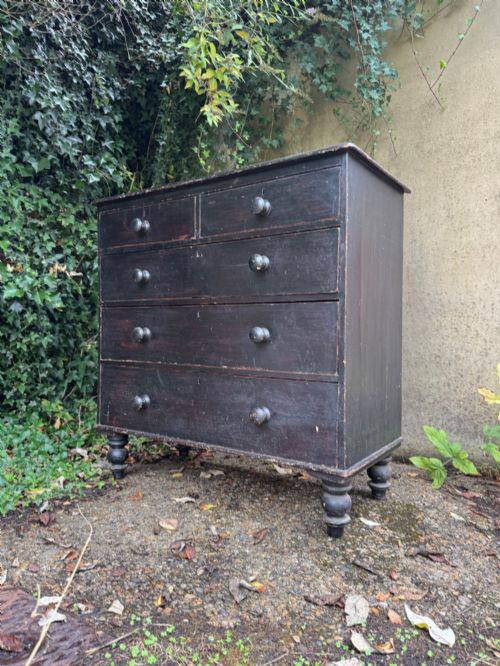
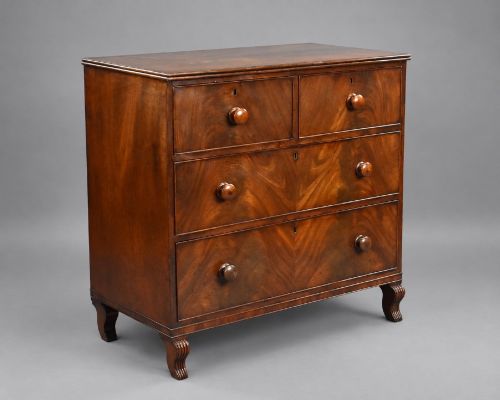
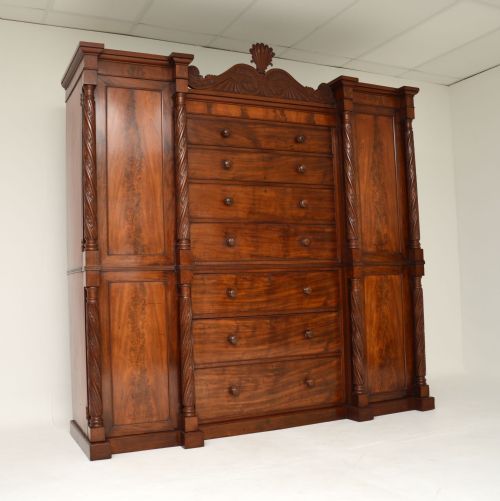
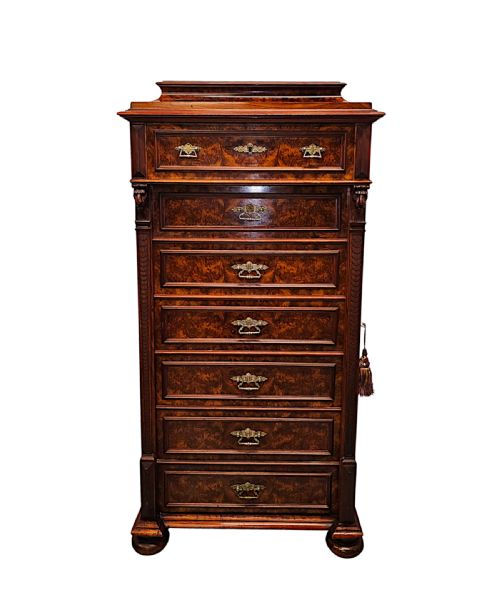
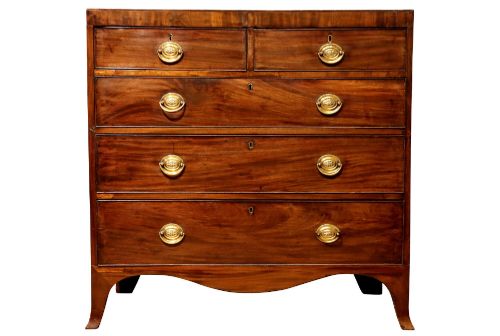
When you search for 19th century bedroom furniture, you encounter a variety of storage and dressing pieces spanning the Georgian, Regency, William IV, and Victorian periods. The selection focuses heavily on chests of drawers, from compact bow front examples to tall Wellington chests, alongside larger wardrobes, linen presses, and washstands.
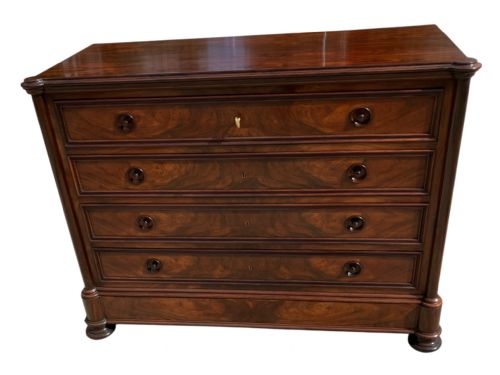
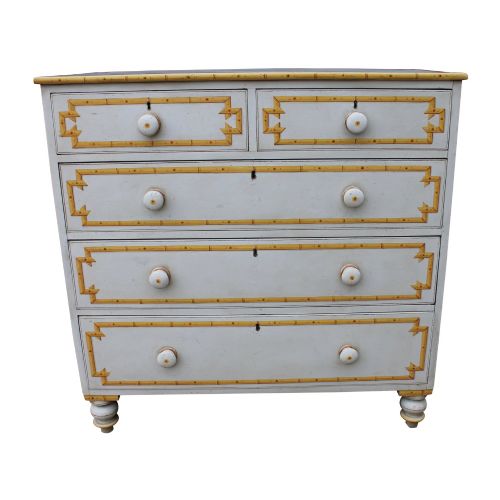
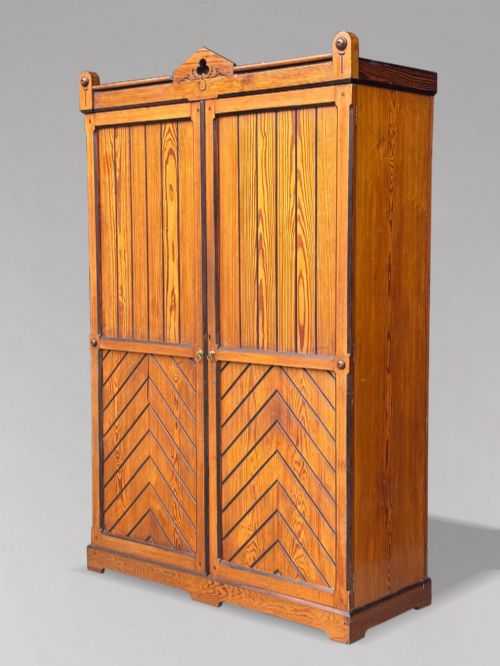
Mahogany remains the dominant timber across these forms, frequently appearing in figured, flame, or blonde variations, while pine, oak, burr walnut, and rosewood also shape the category. Pieces range from formal metropolitan designs to vernacular country pieces in original paint, reflecting the diverse domestic interiors of the era.
Materials and construction methods
Cabinet makers relied primarily on solid mahogany, pine, and oak, often enhanced by flame mahogany veneer, burr walnut, and satin birch to create decorative surface patterns. Brass mounts, candle sconce attachments, and inlaid details frequently punctuate the darker timbers.
Joinery techniques such as tongue and groove boarding underpin the structural integrity of wardrobes and chests, while specialised forms like the Wellington chest incorporate locking mechanisms and side pilasters. Painted finishes and faux bamboo treatments demonstrate the varied surface techniques applied to softer woods like pine.
Listings feature mahogany, pine, oak, burr walnut, and rosewood across periods from the Georgian era through to late Victorian Arts and Crafts.
Distinguishing quality in period bedroom pieces
The degree of figuration in the timber veneer and the precision of the cabinet work define the upper tier of these items. Choice cuts of flame mahogany or burr walnut indicate higher workshop ambition than plain utility pine.
Proportion and decorative restraint set finer examples apart, particularly where brass hardware, secret drawers, or specialist mounts are integrated harmoniously into the design rather than applied arbitrarily.
T & G Seddon·Gillows
The 19th Century Bedroom Furniture Glossary
- Compactum
- A large fitted wardrobe or multi-compartment storage cabinet designed to hold various garments and linen efficiently. These pieces often combine hanging space with sliding trays and internal drawers.
- Linen press
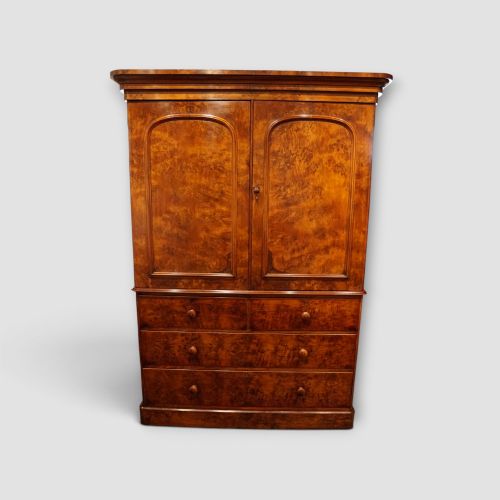
- A tall storage piece comprising upper shelving enclosed by doors and lower drawers for folded textiles. They frequently make use of figured veneers on the principal doors.
- Bow front
- A convex curved cabinet front that swells outward in the centre. This curved profile requires skilled carpentry to shape the timber and drawers accurately.
- Flame mahogany
- A veneer cut from the fork of the mahogany tree to create a distinctive flickering flame pattern. Cabinet makers used this grain effect to adorn the drawer fronts of formal chests.
19th Century Bedroom Furniture: Frequently Asked Questions
What is a Wellington chest?
A Wellington chest is a tall, narrow set of drawers distinguished by a locking side flap that secures all the drawers at once. They were designed to maximise vertical storage space in nineteenth-century bedrooms.
These pieces often feature sturdy timber construction in mahogany or walnut, sometimes enhanced by mounting hardware or candle sconces for bedside utility.
How do I identify a linen press?
A linen press consists of a large upper section with panelled doors enclosing sliding trays, placed above a base fitted with wider drawers. They were built to store folded textiles and garments before fitted wardrobes became standard.
Cabinet makers frequently decorated the outer doors with matched mahogany or walnut veneers to display the natural grain.
Are these pieces made of solid wood?
Many nineteenth-century bedroom items combine solid structural framing with decorative wood veneers applied to secondary woods. Carcasses and drawer linings often utilise pine or oak, while visible surfaces display mahogany, walnut, or rosewood.
Veneering techniques allowed workshops to utilise highly figured timber grains without compromising the stability of large panels.
How do I style a Victorian chest of drawers?
Victorian chests of drawers function well as primary storage in modern bedrooms, offering deep drawer capacities and rich timber tones. Their dark wood surfaces pair easily with both contemporary and traditional interiors.
Placing smaller items like bedside chests or washstands beside modern beds introduces practical surface space and period texture.