

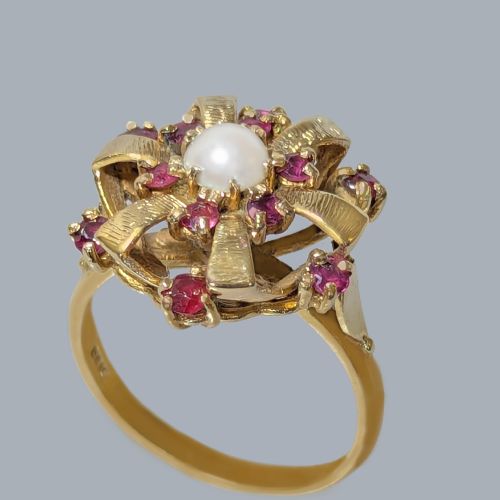


1960s Gold Cocktail Ring
A 1960s gold cocktail ring delivers bold presence and vibrant stones, offering an expressive piece of mid-century design for daily wear.
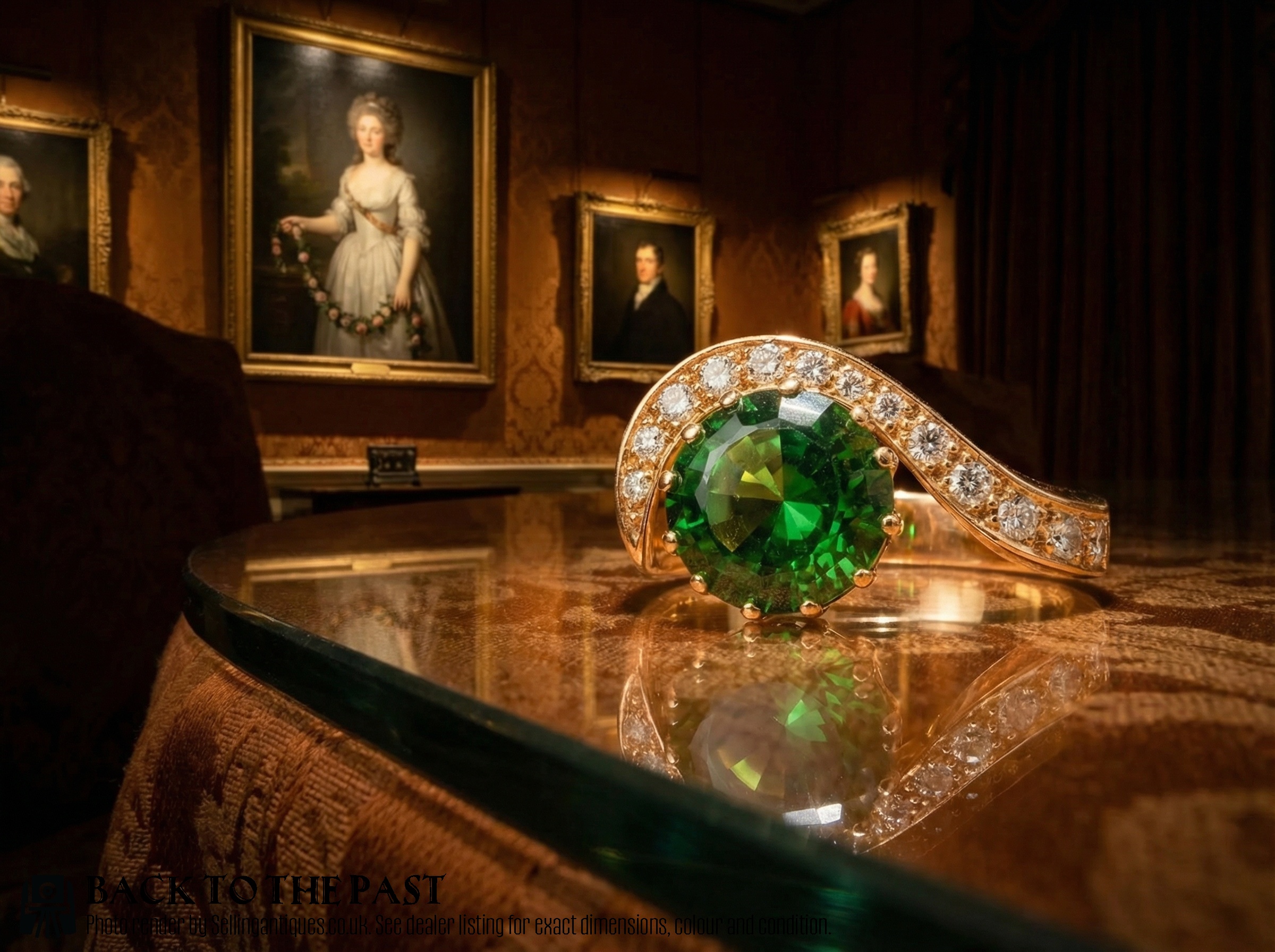
1960s Gold Cocktail Ring
A 1960s gold cocktail ring brings together substantial metalwork and sizeable centre stones, designed to draw the eye during evening gatherings. These pieces reflect the optimistic and experimental spirit of mid-century jewellery design.
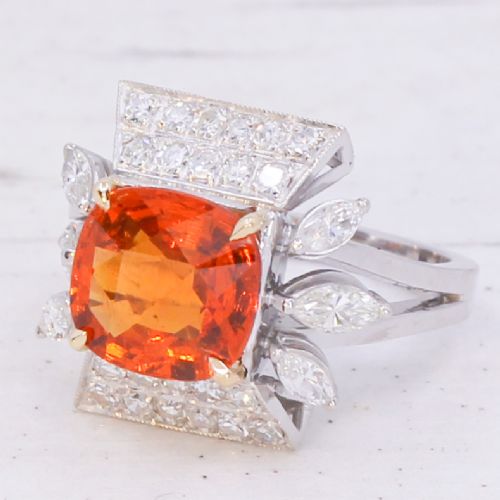
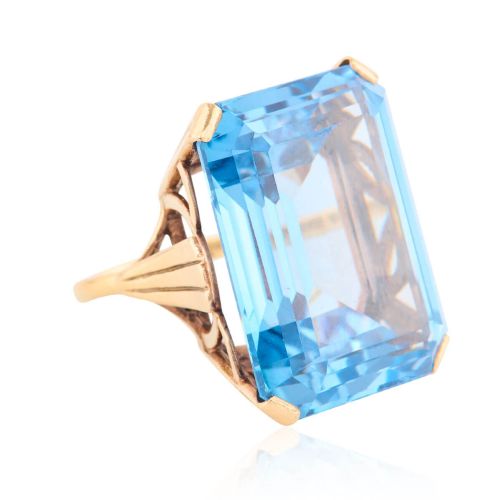
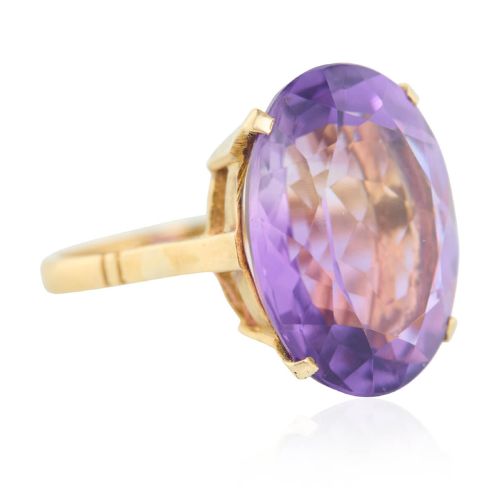
Buyers browsing this selection will encounter significant coloured gemstones, including aquamarine, amethyst, garnet, sapphire and emerald, often framed by clusters of diamonds. Forms range from structured geometric clusters to sweeping open-work and modernist lattice settings.
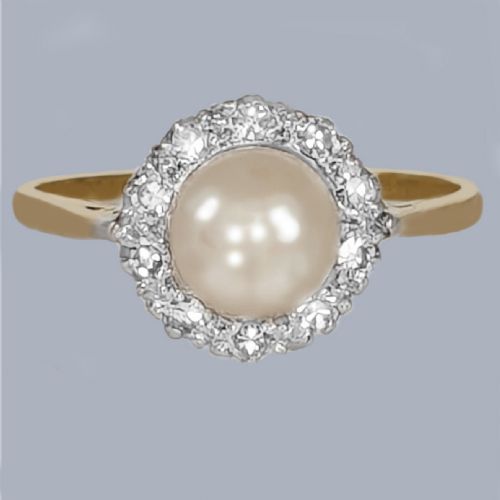
While the majority of pieces originate firmly within the nineteen-sixties and mid-century modern aesthetic, occasional earlier examples such as Edwardian items appear. The predominant metals utilised are yellow gold and white gold across varying carat weights.
How they were made
Goldsmiths of this period combined cast and fabricated components in eighteen carat and nine carat gold, alongside platinum and white gold. Stones were secured using standard claw settings as well as flush and bezel mounts that suited the sculptural lines of the decade.
The construction frequently prioritises volume and visual impact, balancing heavy central gems with intricate wirework, textured surfaces or pierced galleries. Gemstones such as diamonds, sapphires and emeralds were cut into brilliant, baguette, rose or step facets to maximise light play within the bold frames.
Listings feature yellow gold, white gold and platinum mounts, paired with diamonds, sapphires, emeralds, aquamarines, amethysts, garnets, pearls, paste and coral.
What varies in quality
The distinction between tiers rests upon the weight and natural quality of the central gemstone, alongside the complexity of the surrounding metalwork. Larger, untreated stones and heavier gold or platinum mounts elevate a piece above standard production.
Execution of design also plays a role, with hand-finished Italian open-work or distinctive modernist geometry demonstrating superior artisanal skill compared to simpler commercial cluster forms. The integrity of the original setting and the security of the primary stones dictate the overall standard.
Andrew Grima
The 1960s Gold Cocktail Ring Glossary
- Cluster ring
- A ring design featuring a prominent central gemstone surrounded by a group of smaller stones, typically diamonds. This layout maximises sparkle and visual spread on the finger.
- Ballerina ring
- A distinctive cocktail ring style featuring a central gemstone encircled by radiating rows of tapered baguette diamonds that resemble a ballerina tutu. The silhouette creates dramatic movement and depth.
- Paste
- A heavy, highly transparent lead glass utilised to imitate gemstones in historic jewellery. Skilled cutters faceted paste to achieve high brilliance.
- Open work
- Metal design incorporating pierced or open spaces rather than solid metal backing. This technique reduces weight while adding intricate geometric or floral patterns.
- Solitaire
- A ring set with a single gemstone, allowing the character, cut and clarity of the primary stone to remain the sole focus of the piece.
1960s Gold Cocktail Ring: Frequently Asked Questions
How do I style a cocktail ring?
These prominent statement rings suit being worn alone on the hand to let the central stone and metalwork remain the focal point. They pair well with simple evening attire or tailored daytime outfits.
Because of their physical size and height off the finger, consider pairing them with understated bracelets or simpler bands on adjacent fingers to maintain balance.
Were these rings worn daily in the past?
Originating primarily for evening social occasions and cocktail parties, these substantial pieces were traditionally reserved for wear outside the home. Their bold design was intended to catch the light in social settings.
Today, collectors wear them as daily signature pieces, though care should be taken with softer stones or delicate settings during manual tasks.
How can I tell a mid-century ring apart from older styles?
Mid-century rings often display asymmetrical abstract forms, textured gold finishes, or geometric modernist lines that break away from traditional Edwardian or Victorian symmetry. The use of yellow gold alongside white gold and platinum became particularly widespread.
Additionally, hallmarks and maker signatures often point directly to the nineteen-sixties, alongside specific cluster configurations like the ballerina setting that gained popularity during this era.
What is the difference between white gold and platinum?
White gold is an alloy of yellow gold mixed with white metals such as palladium or silver, often plated with rhodium to enhance brightness. It offers a crisp finish with considerable structural strength.
Platinum is a naturally white, denser and heavier precious metal that requires no plating and develops a soft patina over time. Both metals provide a secure, cool-toned backdrop for diamonds and coloured gemstones.