

1950s Gold Timepiece
A 1950s gold timepiece brings mechanical precision and mid-century elegance to the wrist or desk, offering enduring craftsmanship.
1950s Gold Timepiece
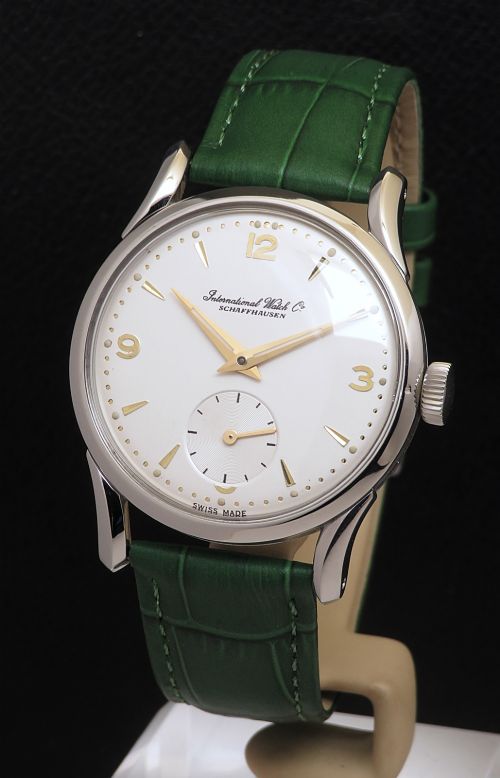
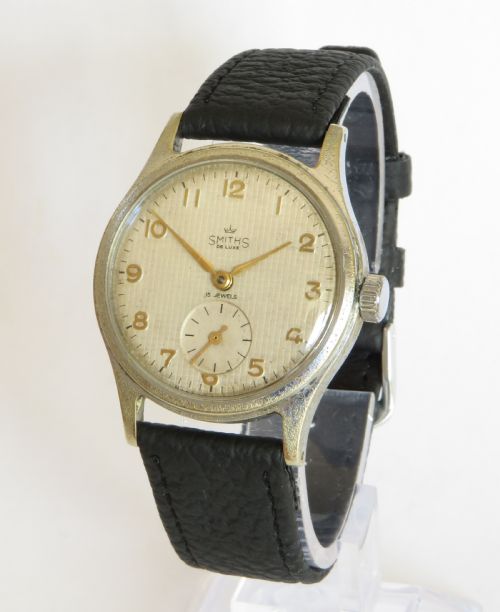
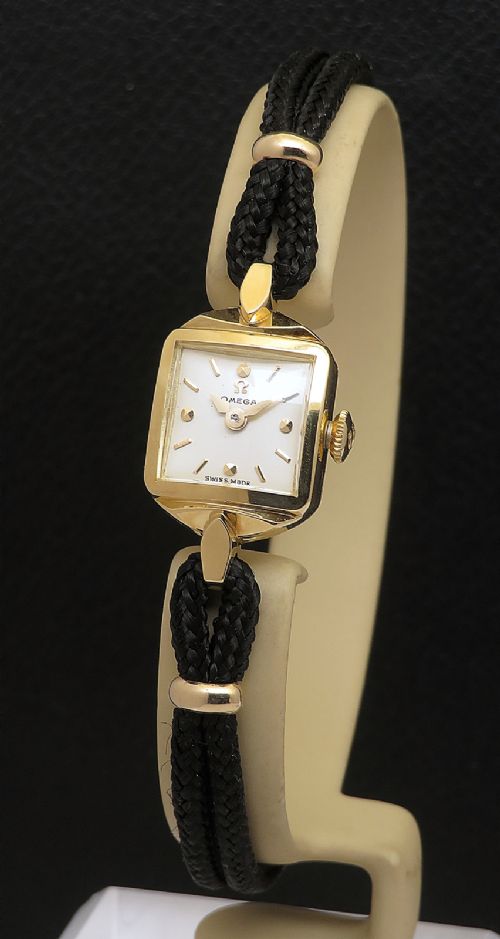
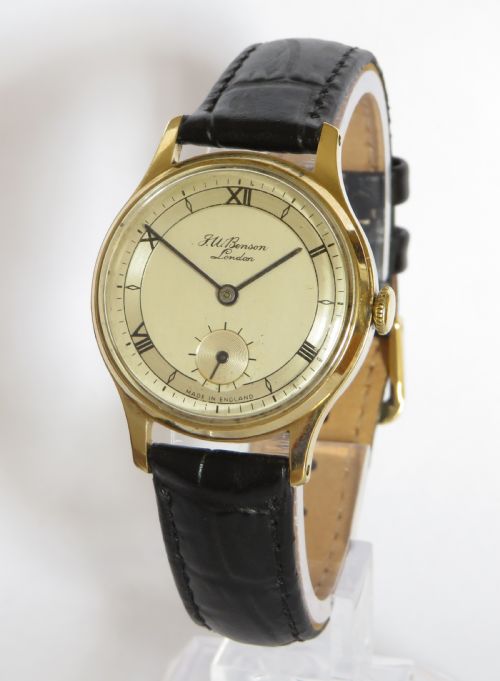
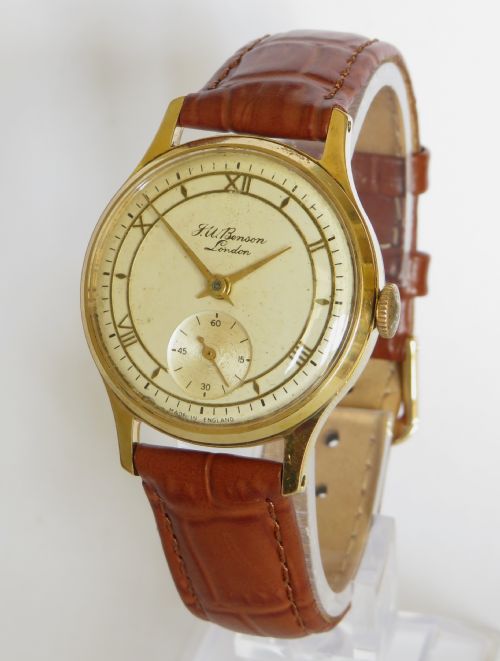
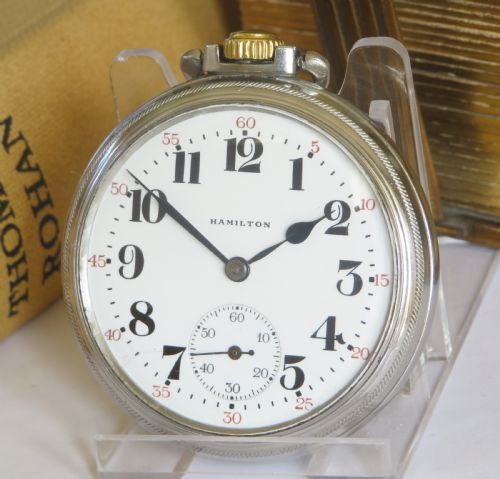
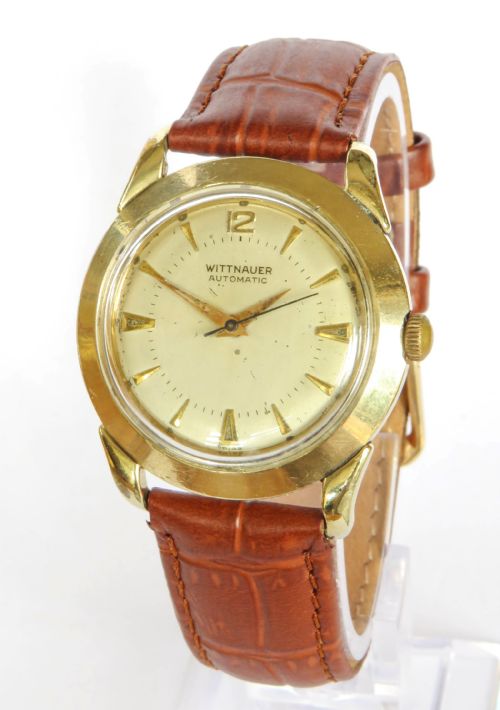
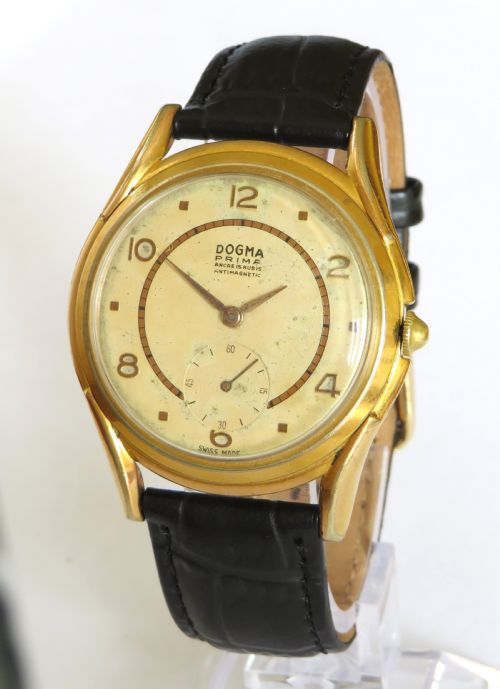
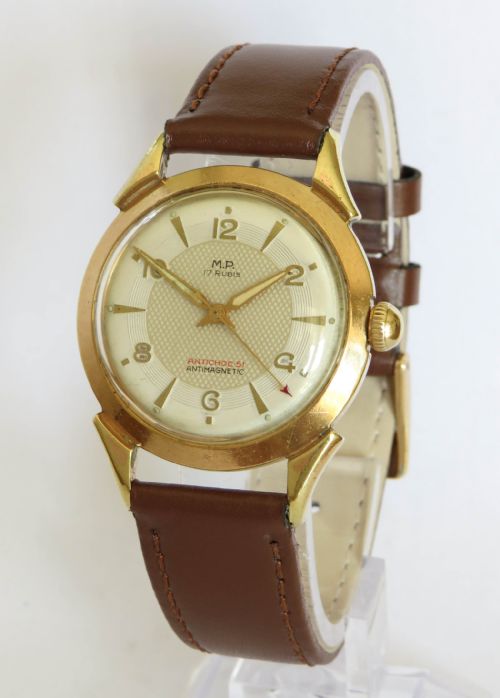
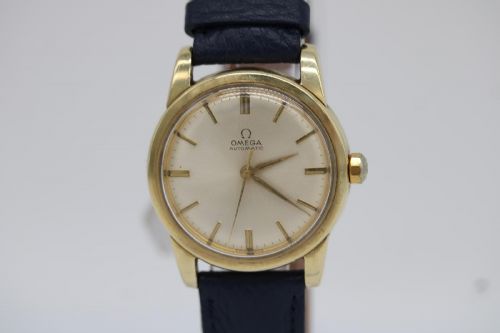
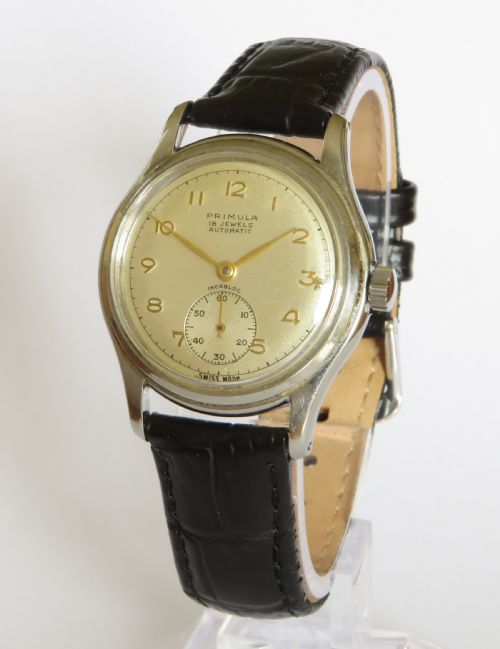
A 1950s gold timepiece encompasses wristwatches, pocket watches, and desk clocks spanning the mid-century period. These items reflect the horological designs of the 1940s, 1950s, and 1960s, drawing on Mid-Century Modern and Art Deco styles.
The selections on this page concentrate heavily on men's and women's wristwatches alongside select desk clocks and pocket watches. Pieces range from simple dress watches to complex chronographs and automatic movements housed in precious metals or plated casings.
How they were made
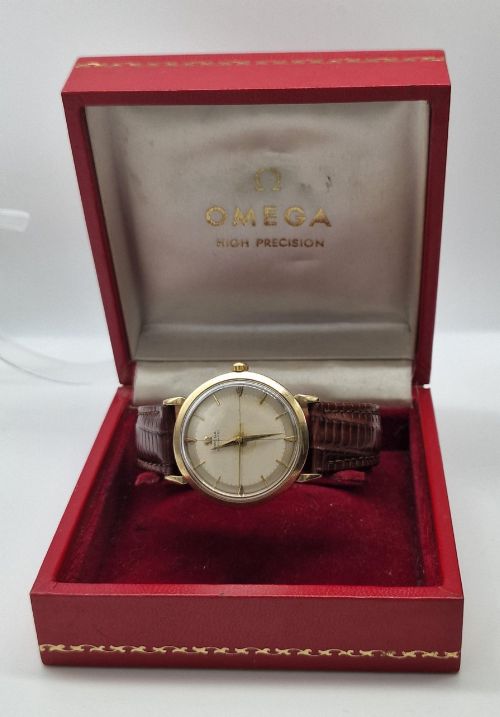
Watchmakers utilised solid 9ct gold, 18ct yellow gold, 18K rose gold, and gold plate for the exterior cases, pairing them with dials featuring glass, acrylic, and acrylic glass covers. Movements inside relied on manual wind and automatic mechanical systems.
Straps and attachments introduced contrasting textures through materials such as leather, while structural elements integrated stainless steel and various base metals alongside specialised components like Swiss movements.
1950s Gold Timepiece Retail Price Guide 2026
Typical asking prices for 1950s gold timepiece among the pieces listed under this phrase on Sellingantiques today, from the lower quarter to the upper quarter. They describe what is for sale here now, not the wider market.
Materials documented across these listings include 9ct gold, 18ct gold, gold plate, stainless steel, leather, and acrylic glass.
What varies in quality
Quality differences stem from the purity of the metal housing, separating solid 9ct and 18ct gold cases from gold-plated alternatives. The sophistication of the internal movement, such as automatic systems versus standard manual wind, further distinguishes the grade of a piece.
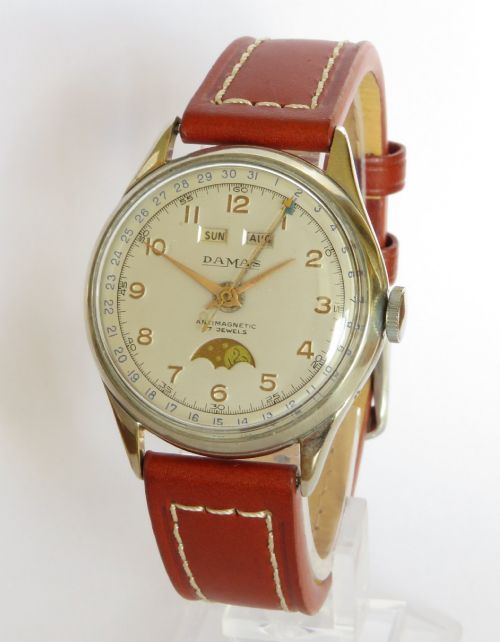
The presence of original packaging, boxes, and documented provenance elevates the standing of an item. Additionally, complicated mechanisms like moonphase displays or triple calendars represent a higher tier of mid-century horology.
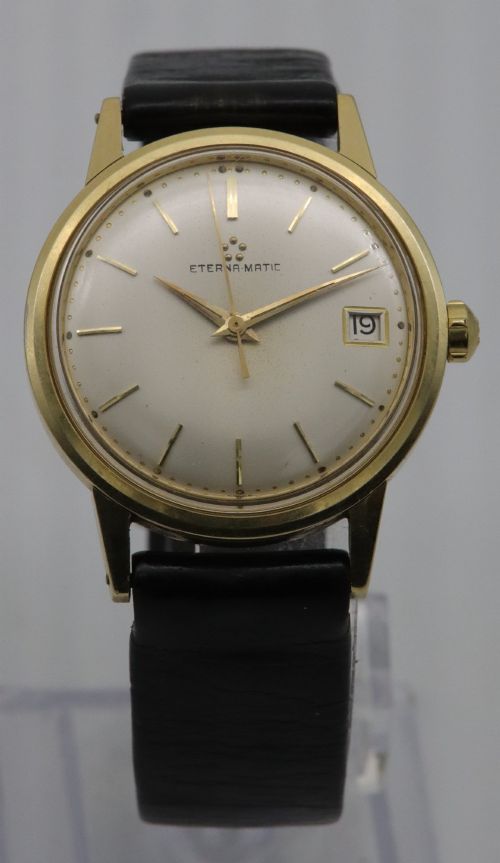
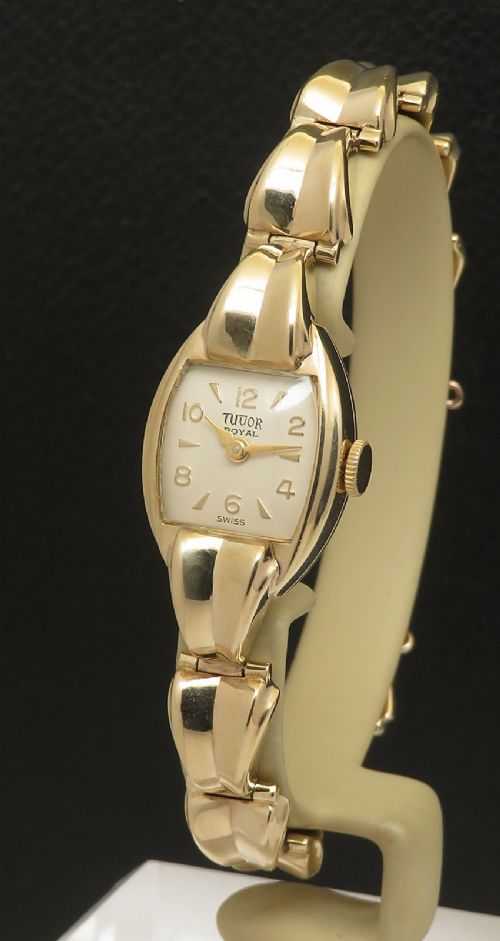
Omega·Smiths·Eterna Matic·Hamilton·Wittnauer·Lanco·Baume Mercier·Longines·Jaeger LeCoultre·Rolex·Tudor·Dogma Prima·Fludo·Ebana·Miramar
The 1950s Gold Timepiece Glossary
- Automatic
- A self-winding mechanical movement that uses the natural motion of the wearer's arm to power the watch.
- Chronograph
- A watch equipped with a display function for elapsed time, functioning as a stopwatch alongside standard timekeeping.
- Manual Wind
- A mechanical movement requiring the wearer to turn the crown by hand to tension the mainspring.
- Moonphase
- A complication on the dial that graphically depicts the current lunar phase.
- Horology
- The study and art of measuring time and making timepieces.
1950s Gold Timepiece: Frequently Asked Questions
How do I wind a manual watch?
Rotate the crown clockwise between your thumb and forefinger until you feel gentle resistance. Stop immediately to avoid damaging the mainspring.
Perform this action at the same time each day to maintain steady tension and accurate timekeeping.
Are these watches waterproof?
Vintage pieces from this era lack modern rubber gaskets and waterproof sealing standards. Exposure to moisture can easily damage the delicate internal mechanism.
Keep the watch away from water, rain, and humidity to preserve the movement and dial.
What is an automatic movement?
An internal weighted rotor spins freely with the movement of your wrist, automatically winding the mainspring throughout the day.
This mechanism removes the need for daily manual winding while the watch remains in regular use.
How should I store a desk clock?
Place the clock on a stable, level surface away from direct sunlight and sudden temperature fluctuations. Ensure it rests clear of magnetic fields generated by modern household electronics.
Wind or set the movement according to its specific eight-day specification to keep the components in working order.