



1940s Art on Paper
These 1940s art on paper works bring immediate period character to a wall through original wartime watercolours, ink sketches and satirical illustrations.
1940s Art on Paper
When you search for 1940s art on paper, you encounter original works that capture the visual culture of the decade through watercolours, ink drawings and mixed media. The pieces span mid-century modern, modern British and satirical illustration styles, reflecting wartime and post-war artistic output.
You are most likely to meet framed watercolour paintings and ink drawings on paper originating from the early and mid-1940s. These works range from harbour scenes and still life compositions to figurative studies and illustrative plates.
The selections include British and continental European creators working in varied regional traditions, from Scottish crafts to French ink drawings. Paper supports carry everything from delicate wash to bold coloured pencil and ink lines.
Materials and techniques
Artists of this period relied on paper supports combined with watercolours, ink and wash to build tone and depth quickly. Coloured pencil and mixed media additions provided texture and linear definition.
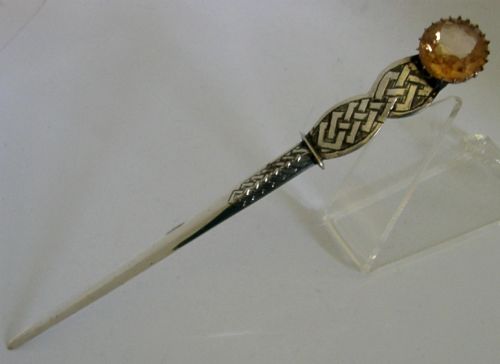
Framed presentations frequently incorporated glass and wood to protect delicate works on paper. Selected pieces also intersected with metalwork, such as sterling silver desk accessories paired with stones like citrine.
1940s Art on Paper Retail Price Guide 2026
Typical asking prices for 1940s art on paper among the pieces listed under this phrase on Sellingantiques today, from the lower quarter to the upper quarter. They describe what is for sale here now, not the wider market.
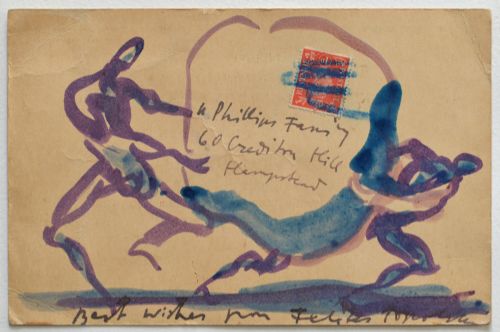
A mule shares the paper with a girl and a squirrel, captured by a Picasso student.
Distinctions in quality
The upper tier of works demonstrates confident brushwork and distinct compositional strength by documented artists and exhibited illustrators. Handling of medium, whether ink wash or watercolour, shows deliberate control and direct execution.
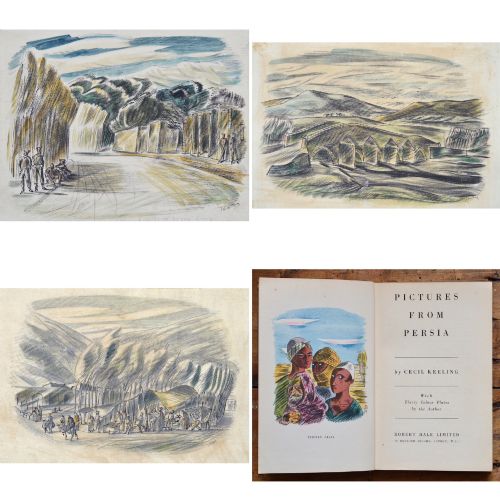
Provenance and publication history elevate certain pieces, particularly drawings reproduced in books or associated with specific literary projects. The integration of framing materials also influences the overall presentation of fragile paper items.
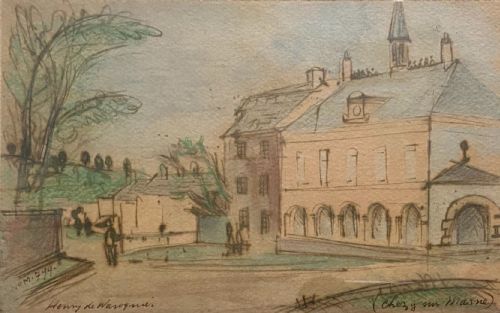
Cecil Keeling·Bruce Bairnsfather·Henry de Waroquier·James Tower·William Tuck·Mariette Lydis·Clarence Woodburn·Irene Lagut·Frank Dobson·Fred Lawson
The 1940s Art on Paper Glossary
- Watercolour
- A paint method where finely ground pigments are suspended in a water-soluble binder. It produces transparent washes that rely on the white of the paper for luminosity.
- Wash
- A thin, semi-transparent layer of diluted ink or watercolour applied across paper. Artists use it to establish background tones and atmospheric depth.
- Mixed media
- An artwork combining two or more distinct artistic materials or mediums on a single support. This approach often pairs ink lines with watercolour or coloured pencil.
- Provenance
- The documented history of ownership and exhibition of an artwork. It establishes authenticity and connects a piece to specific publications or collections.
1940s Art on Paper: Frequently Asked Questions
How should I frame art on paper?
Works on paper require conservation mounting to prevent direct contact with glass, which protects the fragile surface over time. Ultraviolet filtering glazing helps preserve watercolours and inks from fading.
Choose simple wood mouldings that complement the mid-century aesthetic without overpowering the drawing or painting inside.
What subjects appear in 1940s works?
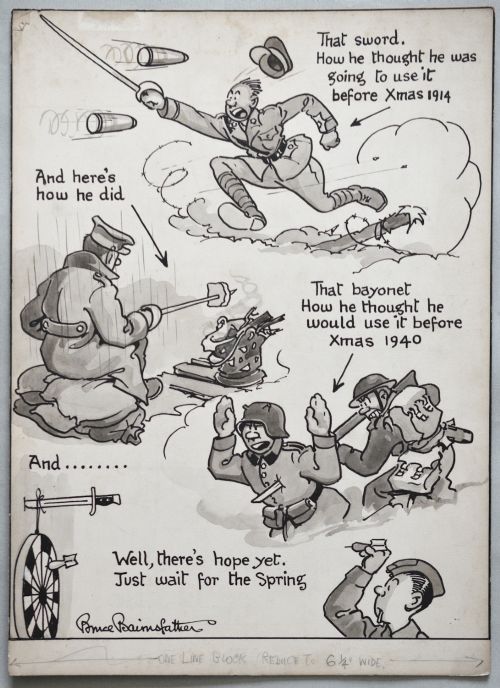
The subjects reflect both wartime conditions and traditional British scenery, ranging from coastal harbour views to domestic still lifes. Figurative studies, satirical illustrations and literary commissions also feature prominently.
Artists documented everyday scenes, rural mills and town halls alongside imaginative compositions created during the decade.
How do I care for vintage paper?
Keep works on paper away from direct sunlight and high humidity to prevent discolouration of the support and fading of pigments. Stable indoor environments prevent the paper from warping inside the frame.
Inspect the backing boards periodically to ensure the framing materials remain acid-free and structurally sound.
Are these works original pieces?
The selection consists of original hand-drawn and painted works rather than mass-produced prints. Many served as direct illustrations for books or standalone fine art pieces.
Signatures, dates and historical documentation often accompany the drawings, verifying their mid-century origins.