

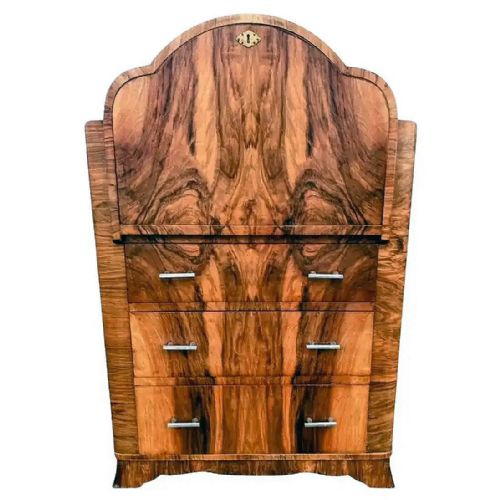


1930s Writing Bureau
A 1930s writing bureau delivers clever storage and a dedicated workspace, bringing practical charm to a study.
1930s Writing Bureau
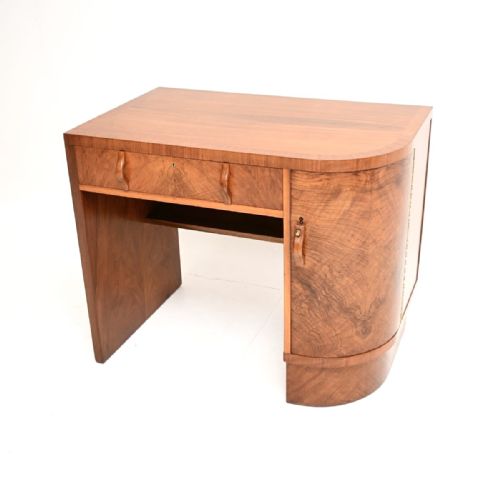
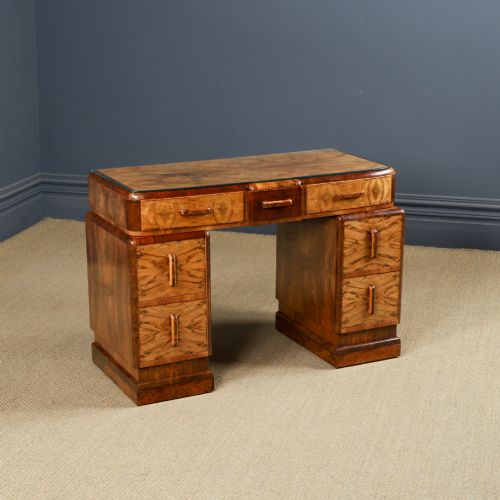
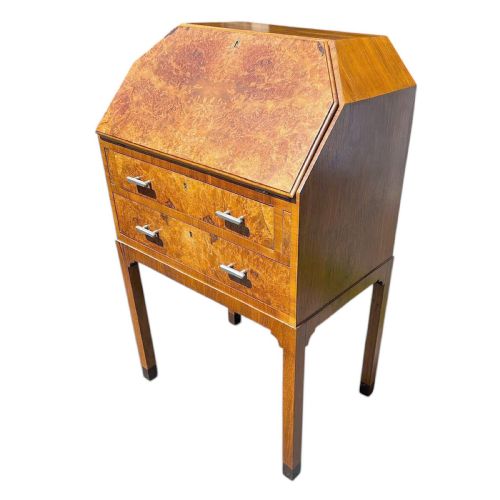
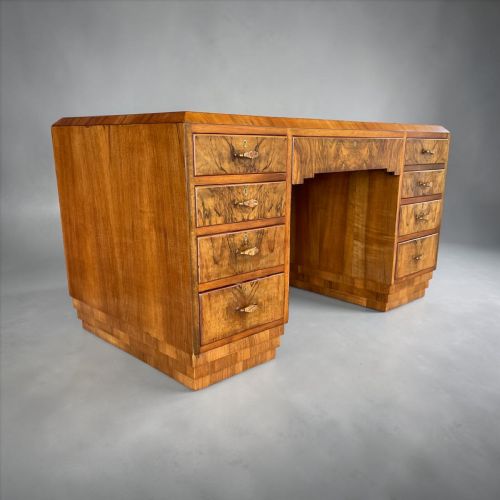
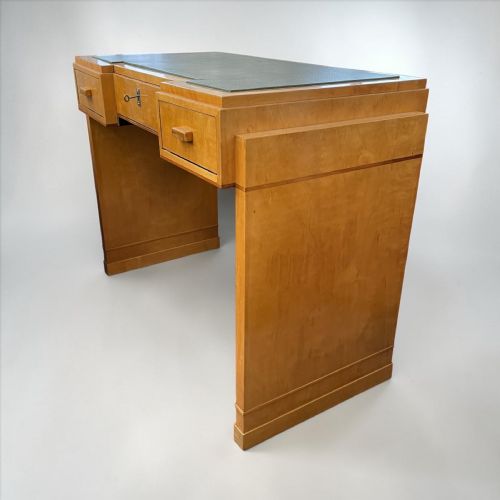
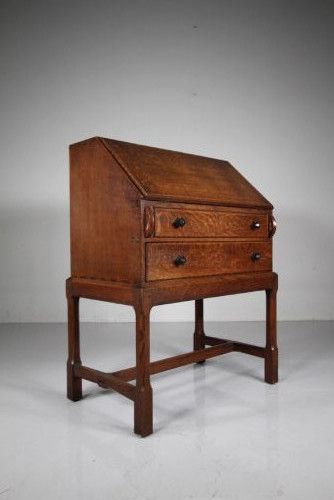
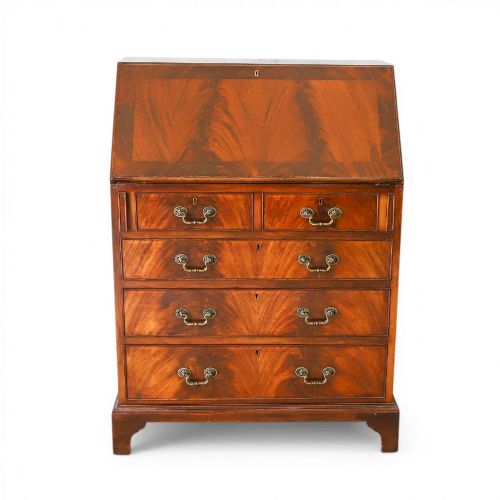
A 1930s writing bureau brings together a drop-front writing surface and internal compartments, alongside configurations that include bureau bookcases and pedestal office desks. These pieces span styles from clean-lined Art Deco and Arts and Crafts to Georgian Revival and French Louis XV style.
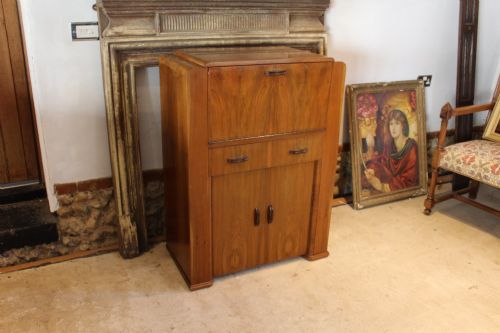
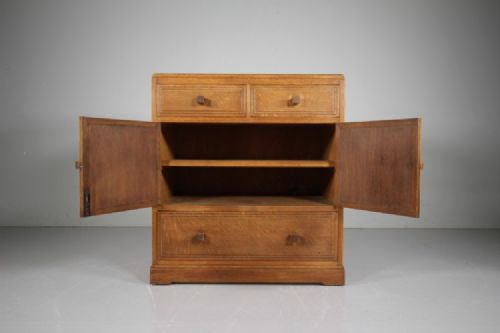
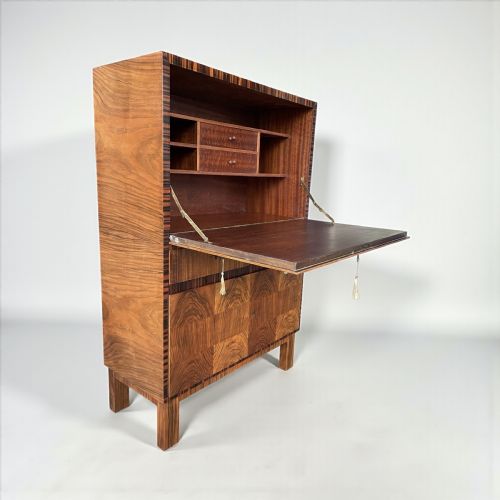
The version most frequently met on this page is the walnut bureau rendered in an Art Deco aesthetic, often featuring figured grain, burr veneers, or glass skyscraper elements. Oak examples also appear, reflecting both regional craftsmanship and established maker output from the period.
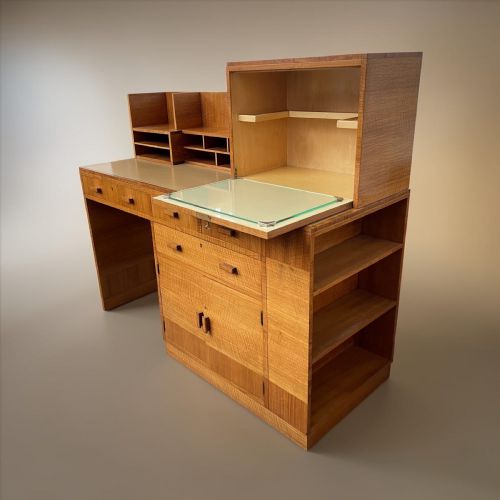
Forms range from compact writing desks and cloud-shaped bureaus to larger bureau cabinets with upright glazed bookcases. Buyers encounter English and French origins, demonstrating how diverse cabinet-making traditions adapted to interwar domestic and office requirements.
How they were made
Makers utilised solid timbers alongside decorative veneers to achieve striking surface patterns, pairing walnut and burr walnut with oak, mahogany, and kingwood. These woods were selected for their natural figuring, which defined the exterior appearance of the drop-fronts and pedestals.
Brass hardware and glass elements frequently complement the woodwork, appearing on handles, skyscraper superstructure sections, and glazed bookcase doors. Painted plaques and labelled workshop details further highlight the specific finishing techniques applied during construction.
Listings feature walnut, burr walnut, oak, and mahogany, demonstrating how interwar cabinet makers favoured rich natural wood grain.
What varies in quality
Quality rests upon the selection and matching of wood veneers, where symmetrical grain patterns and rich figured walnut elevate the visual presence of a piece. The integration of specialised forms, such as cloud shapes or skyscraper pedestals, demonstrates greater ambition in design.
The reputation of the maker or workshop plays a defining role in distinction, with labelled pieces and attributed works carrying specific design provenance. Furthermore, the cohesion between functional storage, internal compartment layout, and glazing defines the overall success of the construction.
F.H. Marshall & Co Glasgow·Stanley Webb Davies·Heal's·Étienne Kohlmann·Maurice Adams
The 1930s Writing Bureau Glossary
- Burr walnut
- A prized veneer taken from the growth growths or burls of the walnut tree, yielding intricate, swirling grain patterns. It was heavily utilised during the interwar period for decorative furniture surfaces.
- Skyscraper pedestal
- A stepped architectural form popular in Art Deco design, often incorporating vertical tiers of drawers or glass shelving. It gives writing desks a distinct vertical emphasis.
- Bureau bookcase
- A dual-purpose piece combining a lower writing bureau with an upper glazed bookcase cabinet. This form maximises storage and display within a single footprint.
- Bonheur du jour
- A light lady's writing desk featuring a small tiered superstructure with drawers, shelves, or a cabinet above the main writing surface. French examples frequently incorporate decorative painted plaques.
- Flame fronted
- A descriptive term for mahogany or walnut drawer and flap fronts featuring a rippling grain pattern resembling licking flames. This grain alignment requires skilled veneer matching.
1930s Writing Bureau: Frequently Asked Questions
What is a 1930s writing bureau?
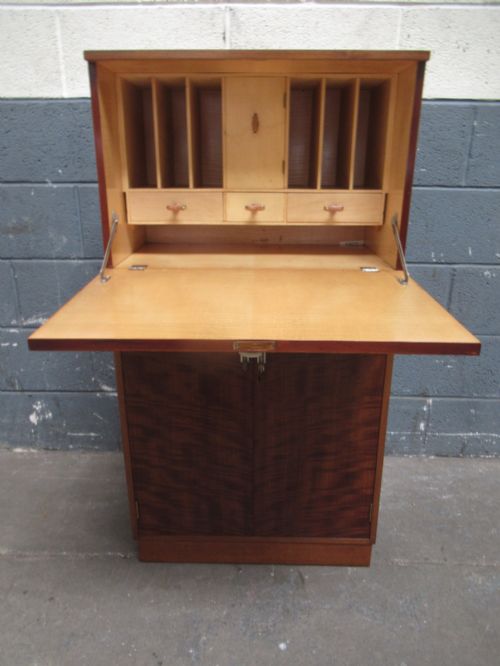
A 1930s writing bureau is a compact piece of furniture featuring a hinged writing flap that opens down to reveal a fitted interior of small drawers and pigeonholes. Below the flap, cupboards or drawers provide general storage for household items and correspondence.
These pieces reflect the design transitions of the interwar era, moving from traditional Revival styles toward the geometric lines of Art Deco. They serve as functional workspaces that conceal their contents when not in use.
How do I style a writing bureau at home?
A writing bureau works effectively in a living room, bedroom, or home office where floor space is at a premium. Keeping the drop-front closed hides paperwork, maintaining a tidy room aesthetic throughout the day.
Positioning the piece against a flat wall allows the figured walnut or oak grain to serve as a focal point. You can complement the interwar design by placing period-appropriate desk lamps or ceramic pieces nearby.
How do I tell Art Deco bureaus apart from earlier styles?
Art Deco bureaus rely on geometric forms, symmetrical veneer patterns, and streamlined silhouettes rather than heavy Victorian carving. Details such as cloud shapes, skyscraper pedestals, and minimal brass hardware point directly to 1930s modernist design.
Earlier Georgian Revival or Arts and Crafts pieces retain more traditional joinery emphasis and historical ornamentation. Examining the handles, leg forms, and overall carcass geometry clarifies the stylistic period.
What are bureau bookcases used for?
Bureau bookcases combine a lower drop-front desk with an upper glazed cabinet designed for displaying books and decorative objects. This dual functionality made them popular for urban homes requiring efficient multi-purpose furniture.
The enclosed upper shelves protect volumes from dust while keeping them visible, while the lower desk provides a surface for writing letters or managing household administration.