


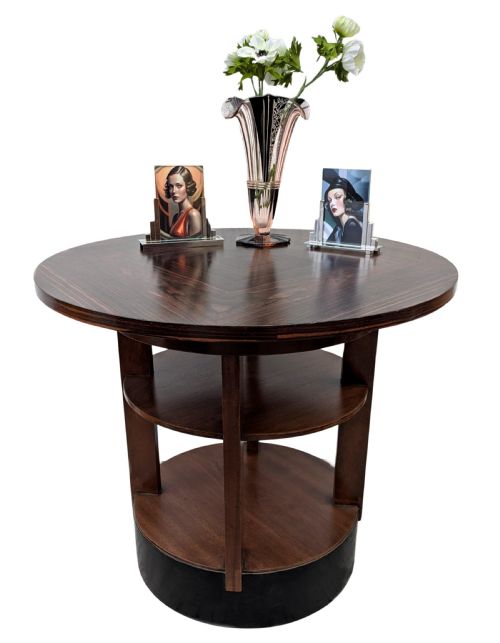
1930s Wooden Occasional Table
A 1930s wooden occasional table brings distinct period geometry and rich timber grain to a modern room.
1930s Wooden Occasional Table
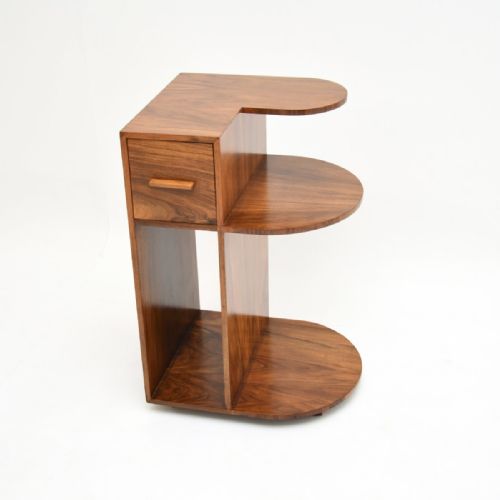
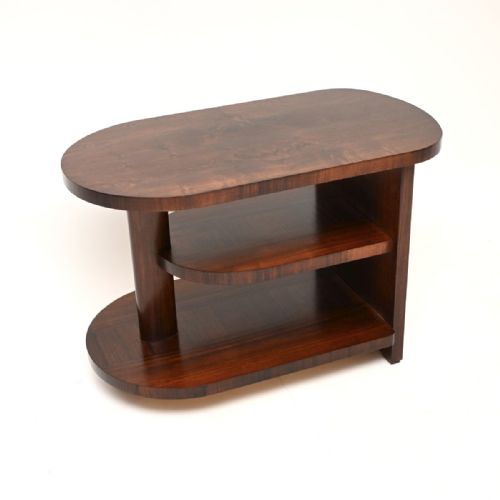
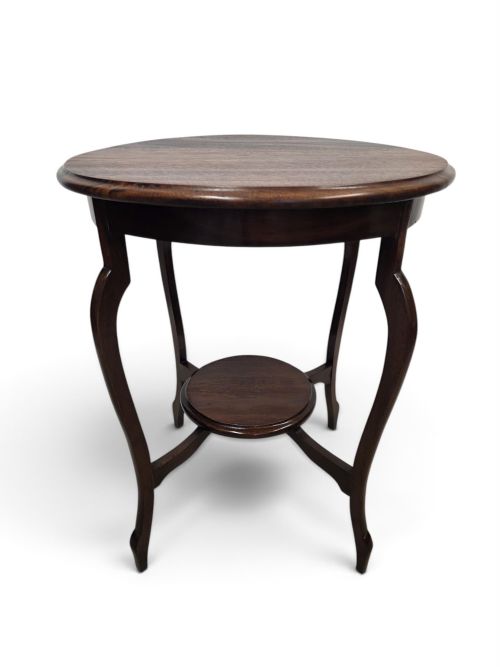
A 1930s wooden occasional table covers side tables, lamp tables, coffee tables, nests of tables, and centretables produced during the period. These versatile surfaces appear in forms ranging from simple domestic pieces to striking modernist designs.
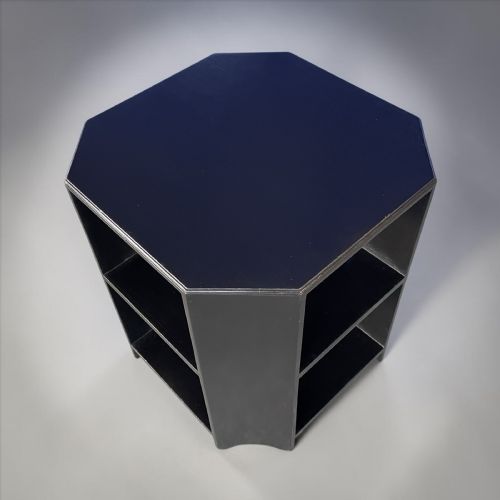
The pieces on this page lean heavily towards the Art Deco style, alongside British domestic designs and revival influences. Buyers encounter octagonal formats, tiered coffee tables, and compact side tables intended for everyday utility.
Origins span British workshops, French studios, and Anglo-Indian production, reflecting the diverse design vocabulary of the era. Walnut, oak, and ebonised timber dominate the forms available.
Materials and construction
Makers utilised solid timbers alongside figured veneers, applying walnut, rosewood, and blonde oak to flat surfaces and curved tiers. Ebonised wood and dark stained timber offered contrasting visual depth.
Construction techniques combined traditional joinery with modern veneering methods to highlight natural grain patterns. Details such as inlaid work and turned barley twist legs demonstrate varied craftsmanship across different origins.
Tables with barley twist legs prove that even a 1930s modernist could not resist a good spiral.
Judging quality in period tables
Quality rests in the selection of wood veneers and the handling of distinct geometric forms. Tables featuring well-matched figured walnut or rosewood display superior visual ambition compared to plain timber examples.
Structural integrity depends on the precision of assembly, particularly in multi-tiered tables and nests. Finer pieces maintain clean lines and stable tiers without relying on heavy ornamentation.
Heal's
The 1930s Wooden Occasional Table Glossary
- Occasional table
- A small, movable table designed for specific, intermittent use in a room. These include side, lamp, and coffee tables.
- Veneer
- A thin layer of finely figured wood applied over a secondary timber base. This technique allowed makers to display rich grain patterns like walnut across tabletops.
- Art Deco
- A design style dominant in the 1930s characterised by sleek geometric shapes, streamlined forms, and modern materials.
- Barley twist
- A type of turning shaped like a spiral rope, frequently found on the legs of oak tables from this period.
- Nest of tables
- A set of graduated tables designed to slide beneath one another for compact storage.
1930s Wooden Occasional Table: Frequently Asked Questions
How do I use an occasional table?
These small tables serve beside seating for lamps, drinks, or books. Their compact proportions allow them to move easily around a room as needed.
Tiered formats and nests offer extra surface area without taking up permanent floor space.
How do I identify Art Deco furniture?
Art Deco pieces display clean geometric lines, symmetry, and an emphasis on streamlined modern forms. Ornamentation is minimal, relying instead on the grain of the wood.
Figured walnut and rosewood veneers often define the aesthetic of these tables.
Are nests of tables practical?
A nest provides multiple surfaces that stack into the footprint of a single table. They offer flexible workspace for entertaining while saving space.
Individual tables slide out easily when guests require extra surfaces.