
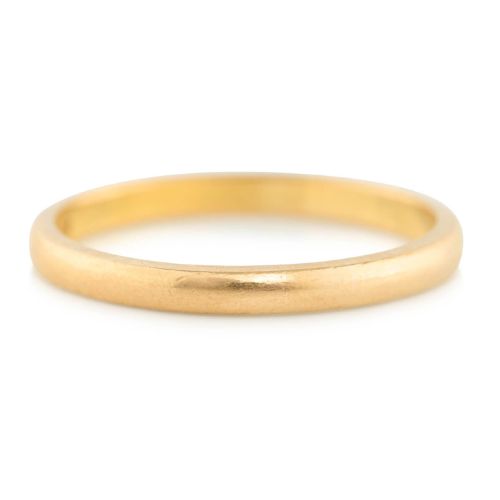


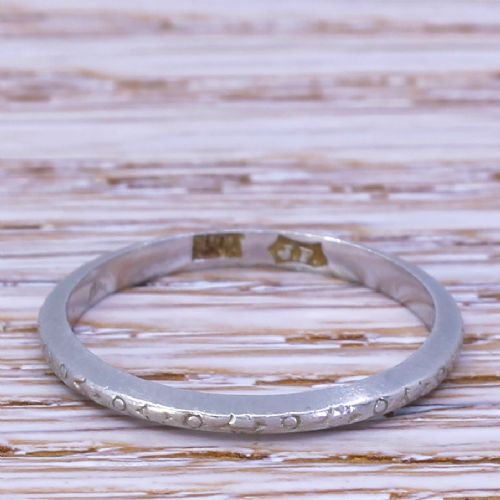
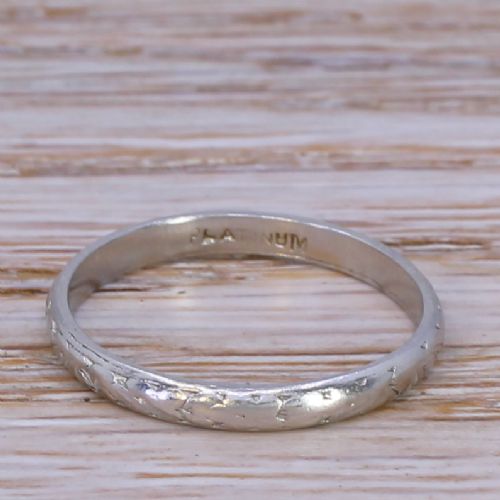

1930s Wedding Ring
A 1930s wedding ring offers the distinct geometric lines of the period combined with durable precious metals.
1930s Wedding Ring
A 1930s wedding ring encompasses plain bands and diamond-set pieces that reflect the dominant aesthetic of the era. Buyers seeking these items encounter simple gold bands alongside diamond eternity and five-stone configurations.
The objects recorded here span the nineteen-twenties and nineteen-thirties, manifesting in distinct plain metal forms or intricate diamond-set designs. Plain bands share shelf space with elaborate platinum and white gold eternity rings.
Art Deco and vintage styles dominate the offerings, bringing characteristic geometric framing to the metalwork. Most pieces on this page utilise platinum or various carats of gold to set the stones or form the band.
Materials and construction
Makers utilised platinum and gold, specifically twenty-two carat yellow gold, eighteen carat yellow gold, and eighteen carat white gold, to form the structure of these rings. These metals provide the necessary durability for daily wear while holding intricate stone settings.
Diamonds are integrated into the platinum and white gold frames through channel or claw settings, particularly in full and half eternity configurations. Plain bands rely on precise metal casting and hallmarking for their final finish.
The inventory spans plain wedding bands, half eternity rings, full eternity rings, and five stone diamond rings from the nineteen-thirties.
Factors of quality
The grade of the diamonds and the precision of the platinum or gold work dictate the distinction between standard examples and superior specimens. Full eternity rings require closely matched stones and secure metal channels to maintain structural integrity.
Hallmarks and maker marks provide clear evidence of origin and metal purity, adding historical context to the piece. The crispness of the Art Deco geometric detailing further separates ordinary bands from finer works.
W. E. D. L
The 1930s Wedding Ring Glossary
- Art Deco
- A design style characterised by sleek geometric shapes and stylised motifs. It heavily influences the visual appeal of nineteen-thirties jewellery.
- Eternity ring
- A band set continuously with gemstones symbolising endless love. These feature either full or half arrangements of diamonds.
- Hallmark
- An official stamp indicating metal purity and origin. British items often carry specific duty and maker marks.
- Platinum
- A dense, durable white metal used for secure stone settings. It withstands decades of daily wear without losing integrity.
- Old cut diamond
- A precursor to the modern brilliant cut featuring larger facets and a smaller table. It produces a softer, deeper candlelit sparkle.
1930s Wedding Ring: Frequently Asked Questions
What defines a 1930s wedding ring?
A 1930s wedding ring is characterised by geometric Art Deco styling, heavy platinum use, or high-carat yellow and white gold.
These pieces range from plain polished bands to diamond-set eternity rings created during the interwar period.
How do I wear an eternity ring?
An eternity ring sits alongside a traditional wedding band or functions as a standalone piece on the finger.
Because the stones encircle the entire band in full eternity designs, daily wear requires attention to the security of the metal channels.
Are these rings made of platinum?
Many pieces from this era utilise platinum, particularly those set with diamonds.
Platinum provides a strong, neutral backdrop that enhances the brilliance of old cut diamonds while offering high durability.
How can I check the metal purity?
Hallmarks stamped inside the band indicate the exact metal standard, such as twenty-two carat gold or eighteen carat white gold.
These official marks often reveal the workshop responsible for the creation and the year of assay.