

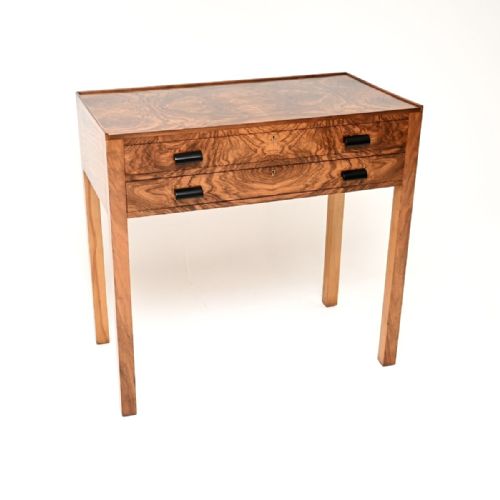
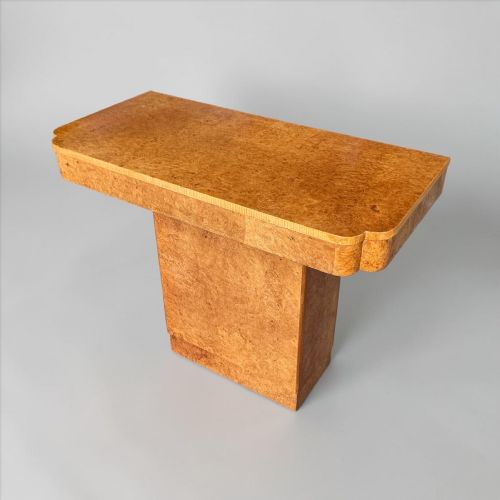
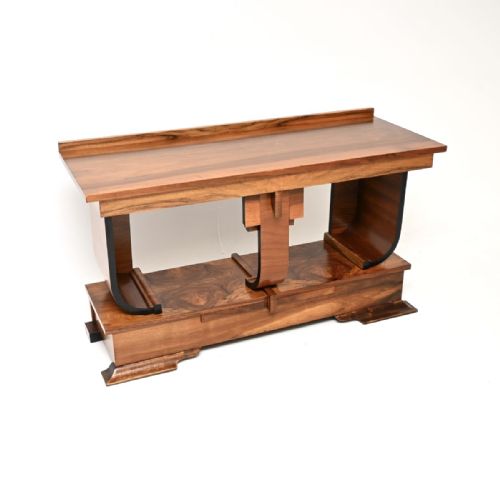
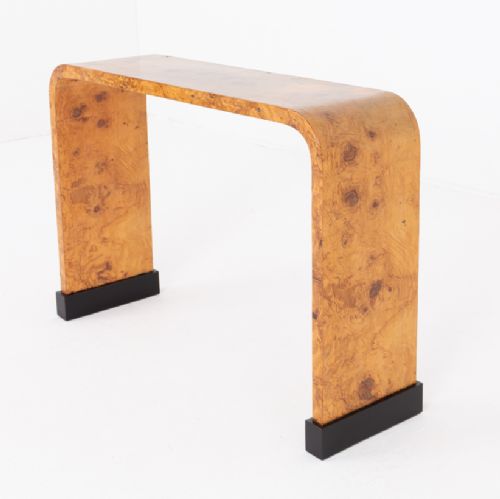

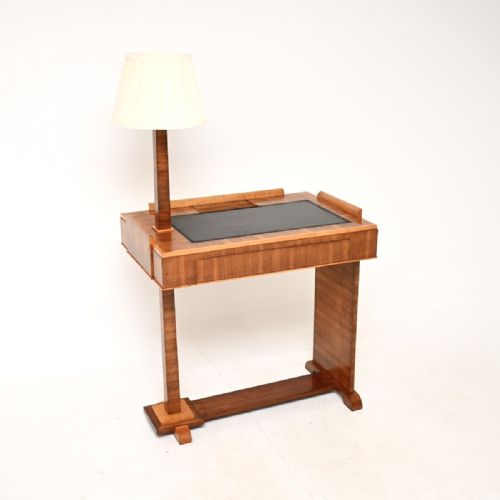


1930s Walnut Hall Table
A 1930s walnut hall table brings striking grain and geometric lines straight into an entranceway, offering an instant anchor for the room.
1930s Walnut Hall Table
When you search for a 1930s walnut hall table, you encounter practical entrance furniture shaped by the bold geometry and clean lines of the Art Deco period. These objects serve as narrow console tables, side tables, and occasional centre tables designed to fit compact spaces without losing visual impact.
On this page, the version you are most likely to meet is a console table or console-side table originating from the 1930s or late 1920s. Makers frequently configured these pieces with figured walnut, burr walnut, and contrasting veneers such as sycamore or burr birch to highlight the natural patterns of the timber.
How they were made
Cabinet makers utilised choice timbers by applying fine veneers like walnut, figured walnut, and burr walnut over solid wood foundations. This technique allowed workshops to display rich, swirling grain patterns across wide tabletops while maintaining structural stability.
Makers occasionally integrated contrasting woods like sycamore or burr birch alongside metal elements to emphasise the modern aesthetic. Selected pieces also incorporated functional details directly into the design, such as an integrated lamp within a desk form.
1930s Walnut Hall Table Retail Price Guide 2026
Typical asking prices for 1930s walnut hall table among the pieces listed under this phrase on Sellingantiques today, from the lower quarter to the upper quarter. They describe what is for sale here now, not the wider market.
Materials span walnut, burr walnut, walnut veneer, figured walnut, burr birch, wood veneer, wood, and metal.
What varies in quality
The choice of veneer sets the baseline for visual appeal, with figured and burr walnut demanding greater skill in selection and book-matching than plain timber. Workshops that aligned grain patterns seamlessly across the top and apron achieved a much more cohesive finish.
Construction methods and secondary woods separate standard production items from high-end examples produced by prominent firms. The integration of complementary materials, such as sycamore stringing or specialised metal fittings, marks the distinction between ordinary and exceptional execution.
Hille
The 1930s Walnut Hall Table Glossary
- Burr Walnut
- A prized timber harvested from the tree's growth growths, displaying swirling, highly decorative knot clusters. It commands attention when laid out across a tabletop.
- Console Table
- A narrow table designed to stand flat against a wall, making it ideal for hallways and corridors. These forms maximise surface space in compact areas.
- Sycamore
- A pale hardwood utilised for contrasting inlay work and subtle detailing. It highlights darker walnut veneers effectively.
- Centre Table
- A freestanding table finished on all sides to sit in the middle of a room. These pieces provide all-round visual interest.
1930s Walnut Hall Table: Frequently Asked Questions
Where should I place a hall table?
Position your table against a main entrance wall where it provides a convenient surface for daily items like keys and post. The shallow depth ensures the hallway remains uncluttered while framing the entryway.
Pair the furniture with a mirror or wall lamp above to balance the proportions. This arrangement creates a practical focal point as soon as you step inside.
How do I clean walnut veneer?
Dust the surface regularly with a soft, dry cloth to prevent grit from settling into the grain. Avoid chemical sprays that can damage the polish over time.
Apply a traditional beeswax polish sparingly when the wood appears dry, buffing gently to maintain the sheen. Keep the table away from direct sunlight to preserve the warm tones of the walnut.
Are these tables sturdy enough for daily use?
The solid wood foundations and robust veneer construction provide reliable stability for everyday items. Console forms rely on wall proximity or sturdy leg placement to maintain balance.
Avoid placing excessive weight on the outer edges of narrow designs. Normal daily handling will not harm the structure if treated with standard care.
What defines the Art Deco style?
Art Deco design relies on symmetrical geometry, streamlined silhouettes, and rich materials. It marks a distinct shift away from heavy Victorian ornamentation toward modern elegance.
Furniture from this era celebrates natural wood grains through careful placement rather than carving. The focus remains on clean lines and striking visual contrasts.