





1930s Uplighter Lamp
A 1930s uplighter lamp brings striking Art Deco illumination to a room, channelling an era of bold architectural form.
1930s Uplighter Lamp
A 1930s uplighter lamp directs light upwards to wash ceilings and walls, creating a warm, indirect glow. These pieces appear mainly as floor lamps, torcheres, and wall lights, with occasional table lamps.
The aesthetic is distinctly Art Deco, occasionally showing Edwardian influences. Forms range from trumpet sconces and tulip shades to sleek modernist wall brackets.
Origin points include France alongside British examples, reflecting a European reach in domestic lighting design.
How they were made
Construction relies heavily on chrome and metal for frames, brackets, and stands, paired with wrought iron for structural support. These metals give the pieces their characteristic metallic sheen and sturdy build.
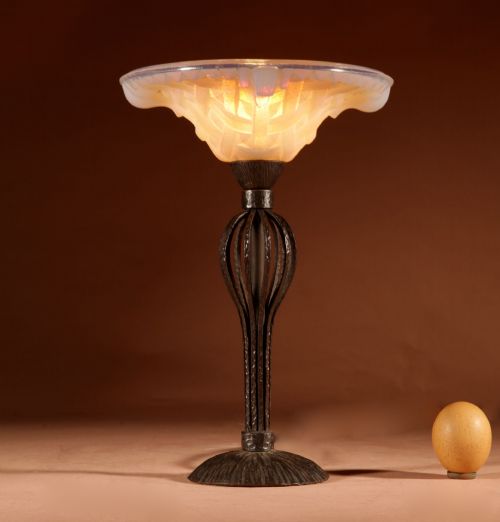
Shades utilise glass, specifically frosted and opalescent varieties, to diffuse the upward beam softly. Bakelite and aluminium also appear in the material mix for specific components.
Even a cherub finds itself caught up in the geometric geometry of the machine age.
What varies in quality
Quality rests in the purity of the Art Deco lines and the crispness of the metalwork, whether chrome plating or forged iron. Superior examples demonstrate harmonious proportions between the upward-pointing shade and the supporting stem.
The treatment of the glass sets pieces apart, particularly where frosted or opalescent panels diffuse light evenly without dulling the fixture's presence on a wall or floor.
Lacroix·Lalique
The 1930s Uplighter Lamp Glossary
- Uplighter
- A lamp designed to cast light upwards towards the ceiling rather than downwards into the room. This creates ambient illumination.
- Torchiere
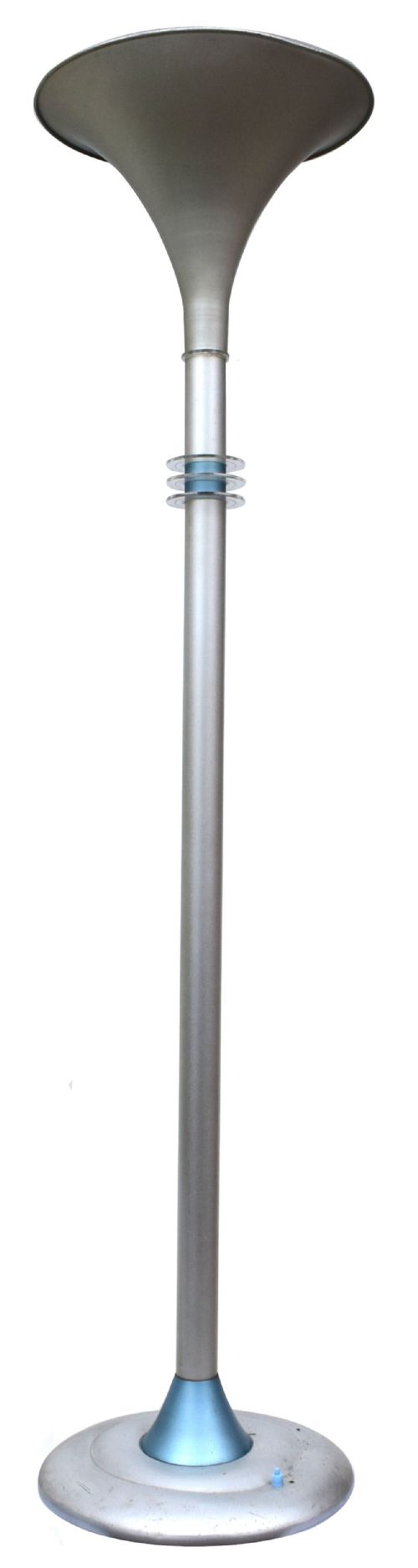
- A tall floor lamp featuring an upward-pointing shade or bowl at the top. It serves as a primary source of indirect room lighting.
- Opalescent glass
- Glass that displays a milky, iridescent quality, capturing and scattering light in soft tones. It was favoured in French decorative lighting.
- Trumpet sconce
- A wall-mounted light fitting shaped like the bell of a trumpet. These fixtures project light directly up the wall surface.
1930s Uplighter Lamp: Frequently Asked Questions
How do I place an uplighter lamp?
Position floor-standing torcheres in corners where the upward beam can bounce off white or neutral ceilings to light the whole space. Wall-mounted versions suit hallways or living rooms where ambient, indirect illumination works best.
Keep the bulbs matched to the era's wiring capacity and ensure the heavy metal bases sit firmly on stable flooring.
What defines Art Deco lighting?
Art Deco lighting relies on geometric symmetry, streamlined metallic finishes like chrome, and frosted or opalescent glass shades. The forms are clean, architectural, and unornamented compared to earlier Edwardian styles.
These lamps often combine industrial materials with artistic glasswork to create a sculptural presence in the room.
Are these lamps French or British?
The selection includes pieces originating from both France and Britain, reflecting shared European design sensibilities of the period. French examples frequently incorporate opalescent glass and wrought iron.
British pieces often lean towards polished chrome wall lights and straightforward functional formats.
How do I clean frosted and opalescent glass?
Use a soft, dry cloth to remove dust from delicate glass shades without scratching the surface. For deeper cleaning, lukewarm water and mild soap suffice, followed by thorough drying.
Avoid harsh chemical abrasives that can damage frosted textures or vintage metal fittings.