
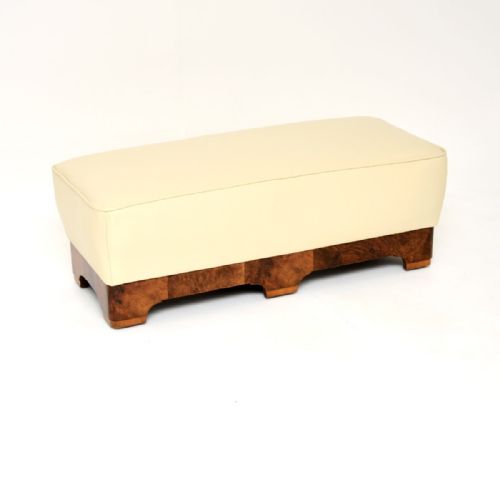
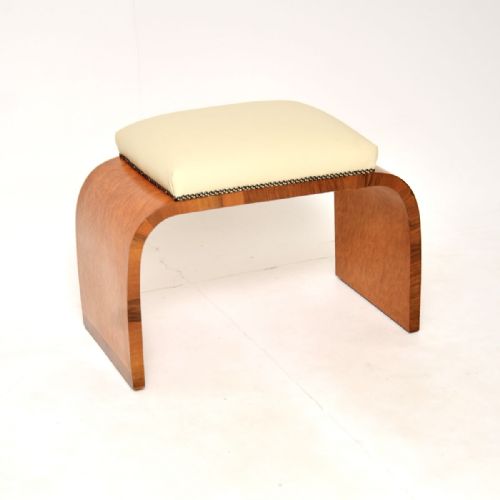


1930s Upholstered Bench
A 1930s upholstered bench brings period character to a room, offering practical seating shaped by Art Deco design and classic revival styles.
1930s Upholstered Bench
When you search for a 1930s upholstered bench, you encounter a selection of seating forms from the year 1930, predominantly featuring stools, dressing table stools, piano stools, ottomans, and settee variants. These pieces serve functional purposes in bedrooms, dressing rooms, and living spaces while displaying distinct period aesthetics.
The objects most frequently met on this page belong to the Art Deco style, alongside occasional examples of French Rococo Revival and Queen Anne Revival. English origins appear regularly, accompanied by French pieces, anchoring the selection in recognised interwar design traditions.
Makers and workshops of the period produced both compact dressing stools with storage compartments and longer settee forms. Upholstered covers vary from new floral fabric to aged leather and cream finishes, suiting diverse interior schemes.
Materials and construction
Construction relies heavily on select hardwoods and decorative veneers, including burr walnut, birds eye maple, walnut, sycamore, and painted wooden frames. Artisans combined these timbers with metal elements and detailed japanning to achieve the polished surfaces characteristic of the era.
Upholstery techniques incorporated durable fabrics, velvet, and leather fixed to padded tops, sometimes complemented by internal storage compartments. The combination of figured wood veneers and tactile covering materials defined the standard manufacturing approach for these items.
Seating forms on this page range from compact dressing table stools with storage to painted settees and French revival stools.
Assessing quality
The distinction between standard examples and the finest pieces rests upon the choice of timber veneer and the precision of the cabinetwork. Highly figured burr walnut and birds eye maple command attention through their natural grain patterns and skilful matching across the frame.
Design attribution and form also elevate certain pieces, such as iconic dressing stools by known makers compared to anonymous production models. Furthermore, the preservation of original painted surfaces or high-grade japanning separates exceptional survivals from routine utilitarian seating.
Harry and Lou Epstein
The 1930s Upholstered Bench Glossary
- Art Deco
- A design movement prevalent in the 1930s characterised by sleek geometric forms, stylised motifs, and luxurious materials. It represents the dominant aesthetic across the current selection.
- Burr Walnut
- A highly prized wood veneer showing intricate, swirling grain patterns formed by tree growths. It was frequently utilised on high-end interwar furniture.
- Birds Eye Maple
- A figured timber featuring small, distinctive circular patterns resembling tiny eyes within the grain. This light wood added visual texture to dressing furniture.
- Japanning
- A European imitation of East Asian lacquerwork involving layered varnishes and decorative finishing. It appears on specialised decorative settee frames from the period.
- Dressing Table Stool
- A low seat specifically proportioned for use at a vanity or dressing table. Many examples from this era incorporate hidden internal storage.
1930s Upholstered Bench: Frequently Asked Questions
What rooms suit a 1930s upholstered bench?
These compact seats and settees fit naturally into bedrooms as dressing table accompaniments or into hallways as occasional seating. Their modest footprint allows them to occupy awkward alcoves without crowding the floor space.
The distinct wood veneers and upholstered tops also complement living rooms and studies when used as piano stools or small decorative ottomans. They bridge functional utility with period style.
How do I identify an Art Deco stool?
Art Deco seating typically exhibits clean geometric lines, polished wood surfaces, and an absence of heavy historic ornamentation. The focus remains on the natural beauty of veneers like walnut or maple.
Many examples feature simple rectangular proportions or curved profiles that reflect the modernist shifts of 1930 design.
Are these benches comfortable for daily use?
Original padding and covers vary significantly depending on whether the piece retains its historic upholstery or has received modern renovation. Some listings feature updated fabric covers designed for regular sitting.
Stools with integrated storage compartments prioritise utility alongside seating, making them practical additions to dressing routines.
How should I care for leather upholstery?
Leather surfaces benefit from gentle cleaning and occasional conditioning to maintain suppleness and prevent the material from drying out over time. Avoiding direct sunlight helps preserve the tone of both the leather and the underlying wood.
Wood frames require simple dusting with a soft cloth to protect polished finishes such as burr walnut and sycamore.