


1930s Task Lighting
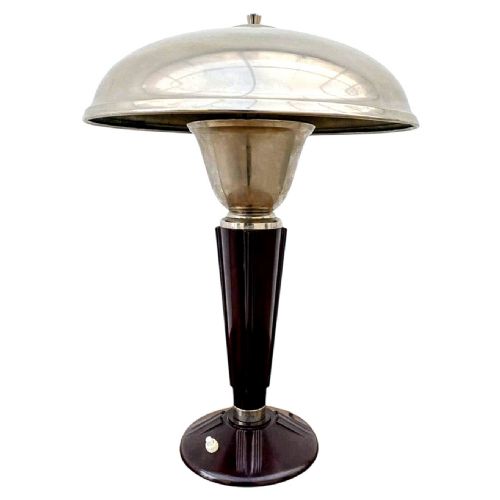
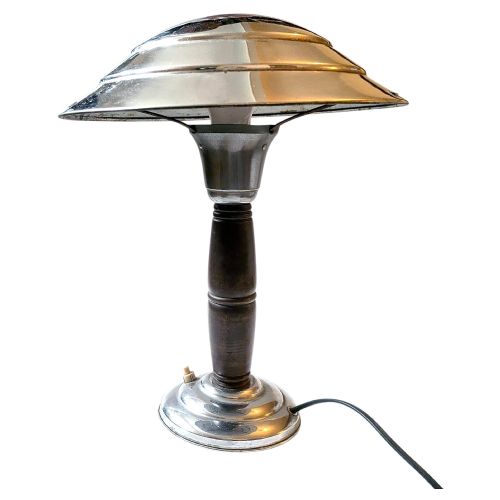
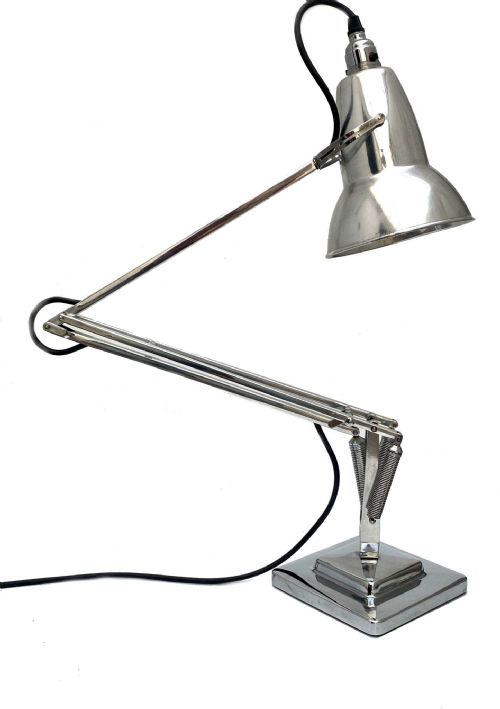
These 1930s task lighting pieces bring functional industrial design and striking Art Deco style directly to a modern desk.
1930s Task Lighting
When you search for 1930s task lighting, you encounter adjustable desk lamps and table lamps engineered for focused illumination. These utilitarian objects bridge the gap between industrial necessity and domestic style.
The pieces on this page are predominantly desk lamps spanning the 1920s to the 1940s. Art Deco and Machine Age styles dominate the selection, bringing distinctive silhouettes to workspace illumination.
Moulded bakelite, gleaming chrome, and brass appear alongside flexible stems and articulated joints. You find standard desk lights, swan neck designs, and dual lamp configurations designed for directional use.
How they were made
Manufacturers built these desk lamps using robust metals including chrome, steel, brass, and cast iron. These materials provided the necessary weight and stability for adjustable arms and heavy shades.
Moulded bakelite formed durable switches, bases, and shade components during this era. Frosted glass and blue glass elements added diffused filtering for the working light beam.
Listings combine chrome, bakelite, brass, and steel across desk lamps from the 1920s to the 1940s.
What varies in quality
The sophistication of the engineering and mechanical articulation separates standard utilitarian lamps from exceptional designs. Smooth movement in adjustable arms and balanced weighted bases indicate superior construction.
Material combination and surface finish define the visual tier of each desk lamp. Lustrous chrome plating, rich macassar accents, and undamaged moulded bakelite elevate the physical presence of the piece.
Eileen Grey·Herbert Terry·E. Cole·Pirouette·Jumo·Hawkins
The 1930s Task Lighting Glossary
- Art Deco
- A design style characterised by sleek geometric shapes, streamlined forms, and modern industrial materials. It flourished internationally during the interwar period.
- Machine Age
- An era of design influenced by industrial machinery, mass production, and clean metallic surfaces. Objects from this movement celebrate functional mechanics.
- Toleware
- Metalware coated with a lacquered or enamelled finish, often painted in dark colours. It provides a durable decorative surface for lamp shades and bases.
1930s Task Lighting: Frequently Asked Questions
How do I adjust a vintage desk lamp?
Many of these pieces utilise flexible swan necks, pivot joints, or articulated metal arms to direct the beam precisely where needed. You simply move the adjustable components by hand to alter the angle of the light.
Take care not to force rigid joints that have settled over time. Gentle handling preserves the original mechanical linkages and wiring components inside the metal housing.
How do I clean a bakelite and chrome lamp?
Dust metal and glass surfaces regularly with a soft, dry cloth to prevent grime accumulation. Chrome plating responds well to gentle wiping, while bakelite requires mild soap and water without harsh chemical solvents.
Avoid abrasive scouring pads that scratch soft metals and damage polished finishes. Keeping the materials dry prevents corrosion on unsealed iron and steel parts.
What is the difference between Machine Age and Art Deco styles?
Machine Age design draws direct inspiration from factories, locomotives, and industrial engineering. These pieces emphasise raw chrome, functional efficiency, and unadorned metallic surfaces.
Art Deco incorporates similar industrial metals but often combines them with decorative accents like coloured glass, shaped bakelite, and stylised geometric bases.