



1930s Task Light
These 1930s task light pieces bring functional industrial design and striking period style straight to your workspace.
1930s Task Light
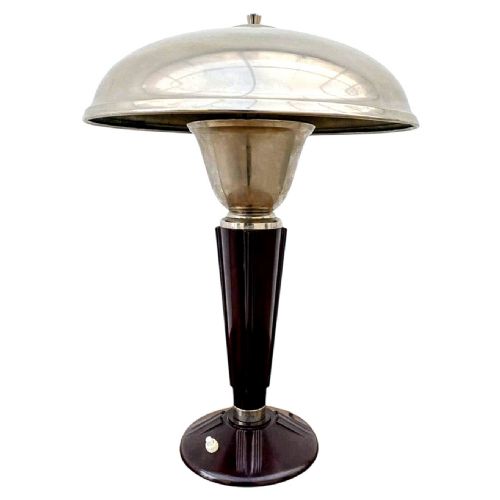
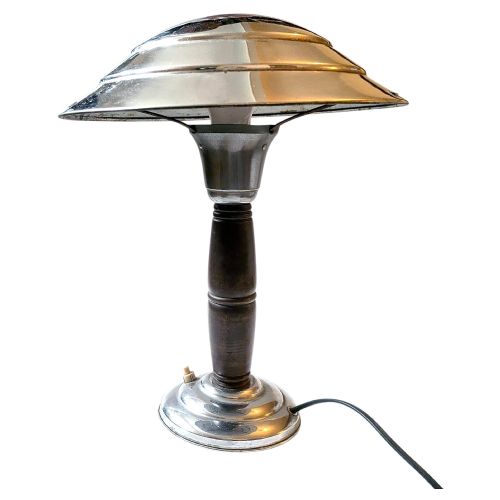
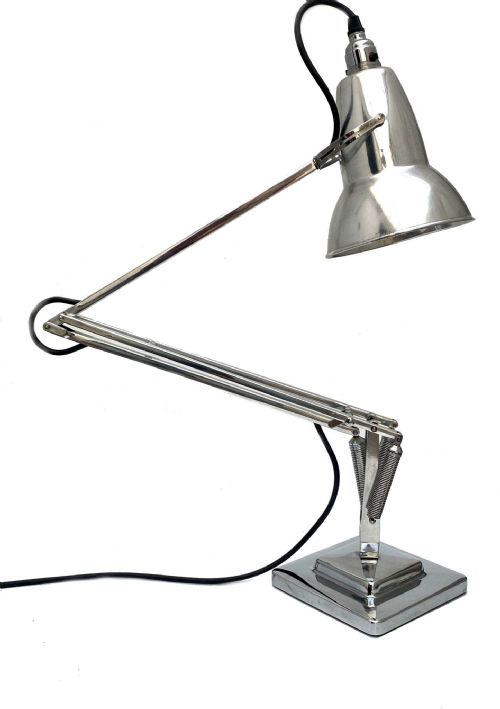
A 1930s task light is a focused desk or table lamp designed for direct illumination, heavily represented here by Art Deco and Machine Age styles. You will most frequently encounter adjustable metal and chrome desk lamps featuring shell-shaped or adjustable shades.
The selection ranges from flexible lamps and swan neck designs to dual lamp brass fittings and figural table lamps. These pieces originate primarily from the 1920s through to the 1940s, capturing the industrial momentum of the era.
How they were made
Manufacturers built these task lights using robust metals such as chrome, brass, steel, and cast iron to ensure stability and durability on desks and tables. Bakelite components and frosted glass shades provided heat resistance and diffused the electrical light effectively.
Makers shaped the metals through casting and stamping, pairing flexible arms with articulated joints to allow directional movement. Fine details like macassar wood elements and toleware finishes added polish to the industrial engineering.
1930s Task Light Retail Price Guide 2026
Typical asking prices for 1930s task light among the pieces listed under this phrase on Sellingantiques today, from the lower quarter to the upper quarter. They describe what is for sale here now, not the wider market.
Some models came with blue glass shades, proving that even strict industrialists appreciated a splash of colour on a dreary Monday morning.
What varies in quality
Quality separates through the integrity of the articulating joints, the weight of the cast iron bases, and the purity of the chrome plating. Superior examples retain their original glass shades, whether blue glass, frosted glass, or Bakelite elements, without replacement parts.
The sophistication of the mechanism dictates the grade, from simple flexible tubing to complex counterbalanced spring systems. Better pieces exhibit crisp casting lines and robust switches that endure frequent adjustment.
Eileen Grey·Herbert Terry·E. Cole·Pirouette·Jumo·Hawkins
The 1930s Task Light Glossary
- Art Deco
- A design style characterised by sleek geometric shapes, streamlined forms, and modern industrial materials popular during the interwar period. It defined much of the functional hardware of the era.
- Machine Age
- An era of design celebrating industrial machinery, raw metals, and functional efficiency. This aesthetic influenced the clean lines of lighting from the period.
- Bakelite
- An early form of thermosetting plastic prized for its durability and rich dark finish. It frequently appears on handles, switches, and bases.
- Toleware
- Painted or lacquered metalware that provided a decorative coloured finish to lamp bodies and shades. It added warmth to utilitarian designs.
- Swan neck
- A curved flexible or rigid metal arm directing the lamp shade downward. This formation allowed precise placement of the beam.
1930s Task Light: Frequently Asked Questions
What is a 1930s task light?
A 1930s task light is an adjustable desk or table lamp engineered for directional workspace illumination during the interwar period. These lamps combined utilitarian function with prevailing aesthetic movements like Art Deco.
They rely on sturdy metal construction, often featuring articulated arms or flexible tubing. The design prioritized direct, functional light for offices and drafting tables.
How do I identify an Art Deco desk lamp?
Art Deco desk lamps feature geometric silhouettes, polished chrome surfaces, and streamlined Bakelite or metal components. Look for shell-shaped shades and stepped bases that reflect the architecture of the 1930s.
Makers frequently combined contrasting materials such as brass, frosted glass, and dark woods. The overall aesthetic balances industrial utility with decorative elegance.
Were these lamps adjustable?
Many of these desk lamps incorporate articulated joints, flexible metal arms, or swan neck tubing to reposition the light beam. This adjustability was essential for detailed desk work and drafting.
Counterbalance mechanisms and spring-loaded arms allowed the shade to hold various positions securely. Original fittings often included specialised tension screws and swivel joints.
What materials were used?
Construction relied heavily on chrome, brass, steel, and cast iron to provide a heavy, stable base. Bakelite was standard for switches and housing due to its insulating properties.
Shades incorporated frosted glass, coloured glass, or spun metal to diffuse the bulb's glare. Occasional examples included decorative accents like macassar ebony and painted toleware.
How do I style a task light today?
Integrate a period task light onto a wooden desk or side table where its industrial silhouette can stand out. The adjustable arm allows you to use it for reading or accent lighting.
Pair the metallic finish with complementary desk accessories from the same era. The functional design bridges modern workspaces with historic character.