



1930s Table Globe
These 1930s table globe forms and figural lights bring genuine interwar character to a room.
1930s Table Globe
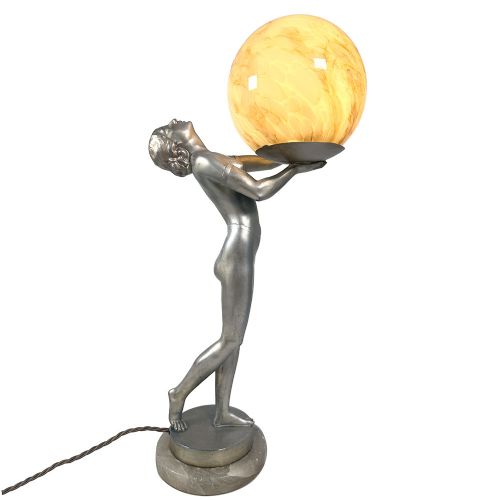
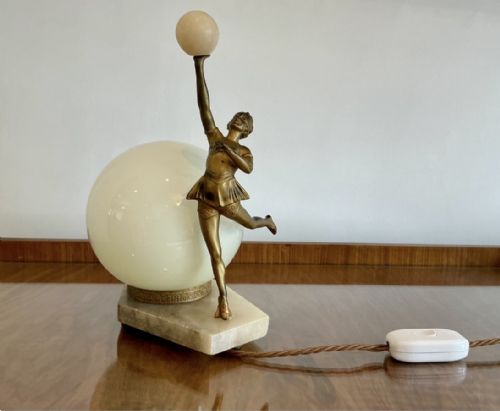
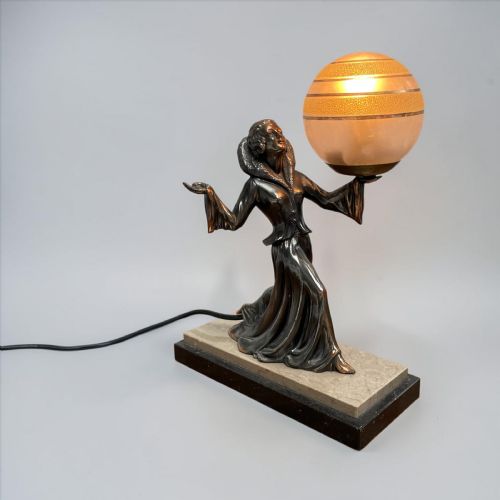
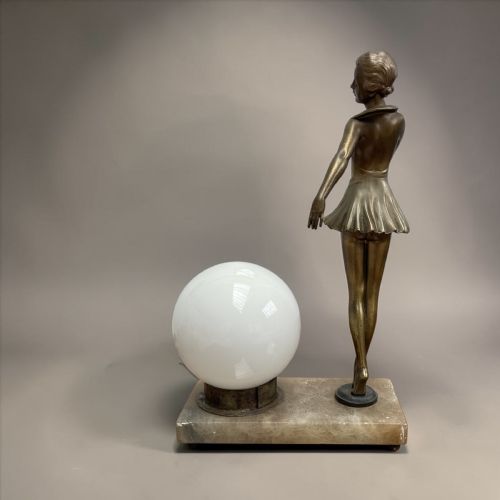
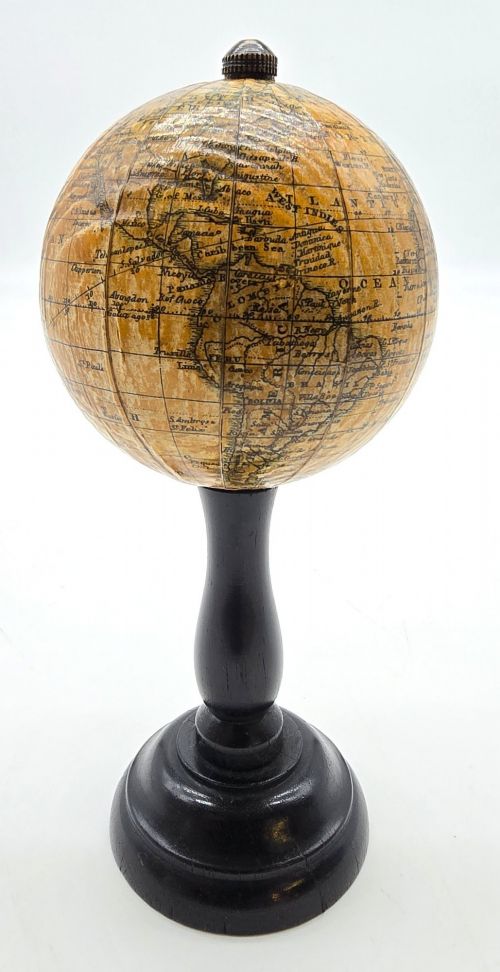
When you search for a 1930s table globe, you encounter desk lamps, figural pieces, and globe-shaped items rooted in the interwar period. The selections here heavily lean towards Art Deco figural lamps, night lights, and associated spherical designs from the 1920s to the 1940s.
Most examples combine sculptural metal figures with glass or marble bases, reflecting the modernist aesthetics of the era. Buyers find both English and French pieces that served functional lighting roles on desks and tables.
How they were made
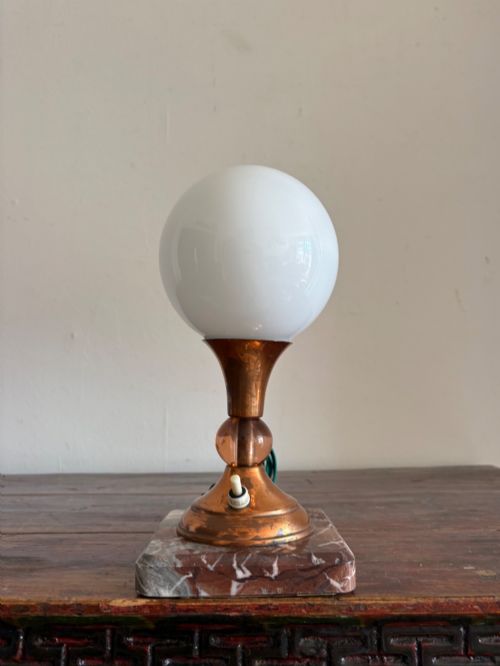
Materials such as spelter, bronze, chrome, and patinated metal form the sculptural figures and stands, often mounted on heavy marble, onyx, or granite bases. Manufacturers combined these with glass elements, including opaline, frosted, and etched crystal shades, alongside early plastics like bakelite and catalin.
Techniques relied on metal casting for figures alongside precision turning for stone bases and specialised glass blowing or moulding for shades. Makers integrated these disparate components into cohesive desk lamps and globe-form accessories.
1930s Table Globe Retail Price Guide 2026
Typical asking prices for 1930s table globe among the pieces listed under this phrase on Sellingantiques today, from the lower quarter to the upper quarter. They describe what is for sale here now, not the wider market.
Materials recorded across the inventory include glass, marble, chrome, spelter, frosted glass, bronze, patinated metal, and opaline glass.
What varies in quality
Quality separates through the crispness of the metal casting and the heft of the stone base, distinguishing finely detailed figures from softer pressings. The integration between the lamp body and the glass or globe element shows the care taken during assembly.
The choice of materials dictates the tier of the piece, with genuine bronze or heavy chrome paired with quality marble sitting above lighter spelter and standard finishes. Original components and matched glass shades elevate the overall integrity of the object.
Karl Palda
The 1930s Table Globe Glossary
- Spelter
- A zinc alloy commonly used as a base metal for cast figures and lamps, often finished with patination to simulate bronze. It provides a lighter and more malleable alternative to heavier metals.
- Opaline glass
- A milky, semi-translucent glass that diffuses light evenly across lamps and globe shades. It was widely utilised during the interwar period for soft illumination.
- Catalin
- A cast phenolic formaldehyde resin that yields vibrant, glossy colours in modernist desk accessories. It differs from standard bakelite through its translucent and deeply saturated appearance.
- Patinated metal
- Metal surfaces treated with chemical solutions or heat to produce an aged or coloured finish. This layer protects the underlying metal while adding visual depth.
- Interwar
- The historical period spanning the First and Second World Wars, encompassing the height of Art Deco design. Objects from this era display distinct geometric and machine-age influences.
1930s Table Globe: Frequently Asked Questions
What defines a 1930s table globe?
These pieces comprise spherical glass elements, desk globes, and figural globe-holding lamps produced during the interwar period. They reflect the prevalent Art Deco and modernist design movements of the decade.
Most items function as desk or table lighting, combining metal or stone bases with spherical shades. Their construction captures the industrial and decorative spirit of the 1930s.
How were these items used originally?
They served primarily as functional desk lamps, night lights, or decorative accessories in interwar homes and offices. Placed on tables or writing desks, they provided ambient or task lighting.
Many incorporated figural elements, such as athletes or animals holding spherical balls, blending sculpture with utility. Their compact size made them suitable for everyday desk placement.
How do I care for marble and metal?
Dust marble and stone bases gently with a dry microfibre cloth to prevent scratching the polished surface. Avoid abrasive cleaners that can dull the natural grain of the stone.
Metal parts require minimal intervention beyond dusting, preserving the original patination and finishes like chrome or spelter. Keep electrical components checked by a professional for safe modern usage.
How can I tell the period?
Interwar pieces exhibit characteristic Art Deco motifs, geometric lines, and specific material combinations like chrome, bakelite, and opaline glass. The styling of figures often reflects 1920s and 1940s crossover aesthetics.
Construction methods, such as cast spelter on heavy marble bases or early plastic components, anchor these items firmly in the decades surrounding 1930.