


1930s Sapphire Cluster Ring
A 1930s sapphire cluster ring brings geometric brilliance and rich blue stones together in a classic Art Deco format that collectors prize.
1930s Sapphire Cluster Ring
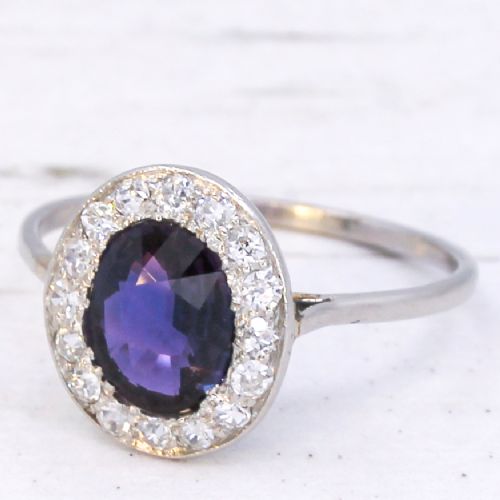
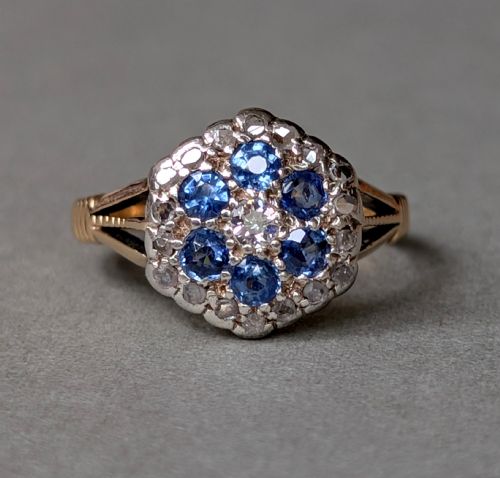
A 1930s sapphire cluster ring is a finger ornament featuring a central blue sapphire surrounded by a halo of smaller diamonds, defining the jewellery of the period. These pieces originate predominantly from the 1930s, alongside adjacent examples from the 1920s and 1940s.
The dominant style visible here is Art Deco, characterised by strong geometric lines and structured mountings that frame the central stones effectively. Dress rings form the primary category of objects encountered within this selection.
Most examples combine diamonds with sapphires, mounted in settings that emphasise the contrast between the deep blue stones and the bright surrounding melee. Buyers searching this phrase look for authentic period geometry and original stone configurations.
How they were made
Goldsmiths of this era utilised platinum and various gold alloys, notably 18ct yellow gold, 18ct white gold, 14ct yellow gold, and 15ct yellow gold, to construct secure claw and bezel settings. Platinum provided the structural strength required for delicate millegrain edges and fine wirework without adding excessive bulk.
Stones were carefully hand-cut and fitted into geometric arrangements, often pairing brilliant-cut diamonds with unheated or heat-treated sapphires originating from Ceylon or Burma, as well as basaltic sources. The meticulous metalwork reflects the transitional technical standards of the early twentieth century.
Materials recorded across these listings include platinum, 18ct gold, 18ct white gold, 14ct yellow gold, and 15ct yellow gold.
What varies in quality
Quality differences stem primarily from the origin, treatment status, and weight of the central sapphire, with unheated Burmese or Ceylon stones commanding greater attention than basaltic alternatives. The clarity and carat weight of the surrounding diamonds further dictate the overall standard of the piece.
The precision of the metalwork, including the crispness of platinum mounts and the integrity of the original settings, separates superior examples from more ordinary survivals. Finer pieces maintain their structural rigidity and stone alignment intact over decades of wear.
The 1930s Sapphire Cluster Ring Glossary
- Art Deco
- A design style spanning the 1920s and 1930s characterised by symmetry, geometric forms, and stylised motifs. This aesthetic heavily influences the mountings of these cluster rings.
- Ceylon Sapphire
- A sapphire originating from Sri Lanka, traditionally noted for a vibrant cornflower blue hue and high transparency. These stones appear frequently in period cluster settings.
- Cabochon
- A gem cut with a smooth, rounded, convex upper surface rather than faceted planes. Cabochon sapphires in these rings offer a soft, deep pool of colour.
- Cluster Ring
- A ring featuring a prominent central gemstone encircled by a cluster of smaller stones, typically diamonds. This layout maximises visual impact and light reflection on the hand.
- Millegrain
- A decorative technique involving a row of tiny metal beads along the edges of a setting. It provides a delicate, textured border typical of period platinum work.
1930s Sapphire Cluster Ring: Frequently Asked Questions
How do I wear a 1930s sapphire cluster ring daily?
These rings suit daily wear provided you remove them during heavy manual tasks to protect the claws holding the stones in place.
Platinum and 18ct gold offer sufficient durability for regular use, but the delicate settings benefit from periodic professional inspection.
Are these sapphires heat treated?
The evidence shows a mix of unheated stones and standard sapphires, with specific certificates sometimes noting the thermal history.
Unheated sapphires retain their natural growth characteristics and origin traits entirely unaltered by human intervention.
What metals were used in the 1930s?
Goldsmiths worked extensively in platinum, 18ct yellow gold, 18ct white gold, and occasional 14ct or 15ct yellow gold variations.
Platinum gained favour for its strength in holding intricate diamond work, while yellow gold provided a warmer traditional contrast to the blue stones.
How can I tell if a ring is Art Deco?
Art Deco pieces display strict geometric symmetry, stepped motifs, and structured cluster arrangements rather than flowing organic curves.
The integration of platinum millegrain work and sharp angular settings points directly to this design movement.