


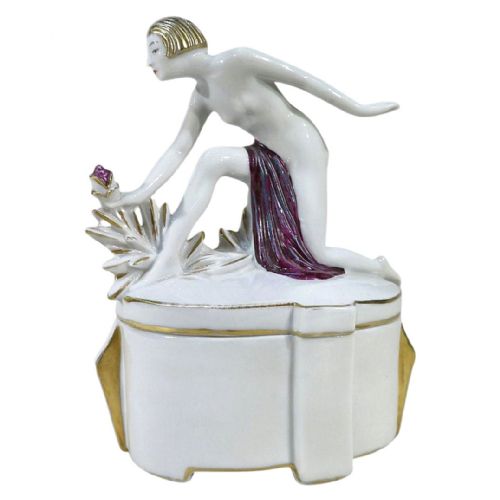


1930s Porcelain Powder Box
These 1930s porcelain powder box pieces bring the bold lines of Art Deco vanity design directly into the modern dressing room.
1930s Porcelain Powder Box
A 1930s porcelain powder box typically takes the form of a ceramic bowl or jar designed for the dressing table during the height of the Art Deco period. These items frequently incorporate figural elements such as flapper girls, half dolls, bathing belles, and jesters.
The objects serve as both functional powder jars and decorative vanity accessories. Many examples originate from European workshops in France, Germany, and Austria.
Buyers will encounter variations including powder bowls, trinket boxes, and specialised stands for powder puffs. The overarching style remains firmly rooted in the geometric and figural aesthetics of nineteen thirty.
Materials and production methods
Production relies primarily on ceramic, porcelain, and earthenware bodies shaped into bowls, jars, and figural lids. Artisans applied coloured glaze to the ceramic surfaces to achieve vibrant finishes.
Decoration often includes enamel details alongside gilt or gold leaf highlights. Certain vanity sets combine these ceramic elements with fabric components to complete the dressing table accessory.
Listings for a 1930s porcelain powder box span French, German, and Austrian origins, frequently featuring Limoges production alongside unmarked novelty figural bowls.
Distinctions in quality and execution
The standard of painting on figural lids, particularly the faces of flapper girls and pierrots, dictates much of the visual success of the piece. Crisp lines in the enamel and precise application of gold leaf separate finer items from simpler production.
The modelling of the porcelain or ceramic itself, from German and French potteries to Austrian studios, shows varying degrees of sculptural detail in the robes and hats of the half doll figures.
Limoges
The 1930s Porcelain Powder Box Glossary
- Half doll
- A ceramic torso without legs, commonly made as the upper half of a brush handle, tea cosy, or powder box lid. These figures typically depict stylized women of the period.
- Flapper girl
- A representation of the modern young woman of the nineteen thirties, characterised by short hair and distinct hats. This motif frequently crowns the lids of vanity jars.
- Powder bowl
- A wide ceramic container designed to hold loose cosmetic powder on a dressing table. These pieces usually feature a matching lift-off lid.
- Enamel
- A decorative glass-like substance fused to the ceramic body through firing. It provides durable colour on nineteenth and twentieth century vanity items.
1930s Porcelain Powder Box: Frequently Asked Questions
How were these powder boxes used?
These containers sat on dressing tables to hold loose face powder, accessible via lift-off lids for daily cosmetic routines.
Many functioned alongside matching perfume bottles and trinket trays as complete vanity sets.
Where were these pieces made?
Production centred in European ceramic hubs, notably in France, Germany, and Austria, during the nineteen thirties.
Maker marks often point to specific regional potteries and studios active in that decade.
How do I display a powder box?
They suit dressing tables, bathroom shelves, or glass-front cabinets where the figural lids remain visible.
Keep them away from busy edges to protect the delicate porcelain and gilt details.
What motifs appear on the lids?
Figural designs dominate, featuring flapper girls, bathing belles, jesters, and pierrots modelled in ceramic.
Some pieces incorporate novelty elements like puppies alongside the human figures.