




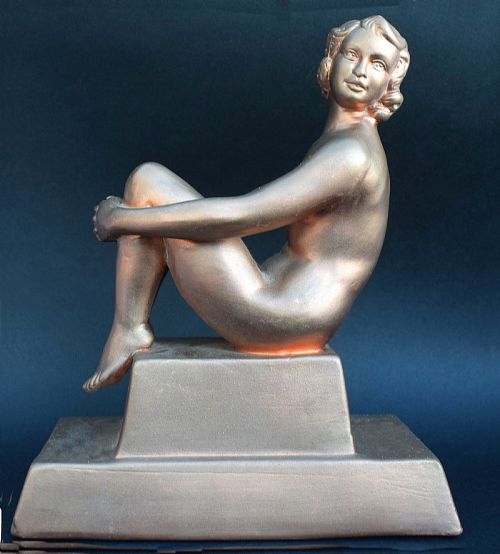


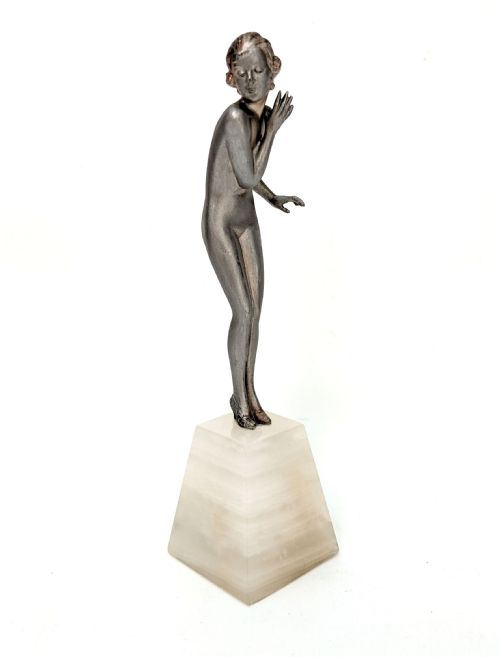


1930s Nude Bronze
These 1930s nude bronze figures and lamps capture the bold, stylised glamour of the interwar period.
1930s Nude Bronze
When you search for 1930s nude bronze, you encounter sculptural works and lighting that define the Art Deco movement. These pieces portray female figures in stylised poses, often mounted upon bases of marble or onyx.
The objects listed here span table lamps, bookends, and standalone figurines. Alongside solid bronze, you will frequently meet patinated metal, spelter, and cast metal pieces modelled in the same distinctive aesthetic.
Materials and construction
Foundry workers cast these figures in bronze or alternative metals before applying patination, cold painting, or gilt finishes. Metal components are combined with carved stone bases, utilising marble and onyx to provide weight and contrast.
Lamps integrate frosted glass and electrical fittings into the figural design, while bookends pair metal sculptures with alabaster or stone blocks.
1930s Nude Bronze Retail Price Guide 2026
Typical asking prices for 1930s nude bronze among the pieces listed under this phrase on Sellingantiques today, from the lower quarter to the upper quarter. They describe what is for sale here now, not the wider market.
Objects span the 1920s and 1930s periods, uniting sculptural figures with functional bookends and table lamps.
Assessing quality
Quality rests in the crispness of the casting and the fidelity of the surface finish. Works bearing the distinct touch of named sculptors demonstrate superior modelling in the contours of the figure and the drape of any cold-painted details.
The choice of base material also distinguishes the range. Solid bronze paired with high-grade marble sits apart from simpler spelter castings mounted on cast metal.
Ferdinand Preiss·Josef Lorenzl·Sibylle May·Ugo Cipriani·C Neuhaus
The 1930s Nude Bronze Glossary
- Spelter
- A zinc alloy commonly used as a cost-effective alternative to bronze in interwar European figures. It takes patination and cold painting well, though it is softer than bronze.
- Patinated metal
- Metal treated with chemicals to produce a coloured surface finish. This technique highlights the contours and details of the figural sculpture.
- Cold painted
- A method where paint is applied to a metal sculpture without firing. This finish appears frequently on early twentieth-century decorative bronzes.
- Art Deco
- The dominant design style of the interwar period, characterised by sleek lines and stylised forms. It heavily influenced sculpture, lighting, and decorative objects of the era.
1930s Nude Bronze: Frequently Asked Questions
Are these 1930s bronze figures solid metal?
Many sculptures are cast in solid bronze or alternative metals, while others utilise hollow-cast spelter or mixed media.
Stone bases in marble or onyx provide stability and weight to the finished pieces.
How do I identify an Art Deco nude lamp?
These lamps incorporate figural bronze or metal sculptures into functional lighting designs, often featuring frosted glass shades.
Wiring is typically updated for modern use while retaining the original interwar metalwork.
What is the difference between bronze and spelter figures?
Bronze is a durable copper alloy that holds sharp casting details and patination over decades. Spelter is a softer zinc-based alternative used for accessible interwar decorative figures.
Weight, surface resonance, and the sharpness of the casting help differentiate the two materials.
Where were these nude sculptures made?
France, Germany, and England were major centres for the production of these decorative bronzes and spelter figures during the interwar period.
Foundries and independent artists exported these works internationally to satisfy demand for modern home decor.