




1930s Night Tables
These 1930s night tables bring striking geometric lines and rich figured woods directly to the bedside.
1930s Night Tables
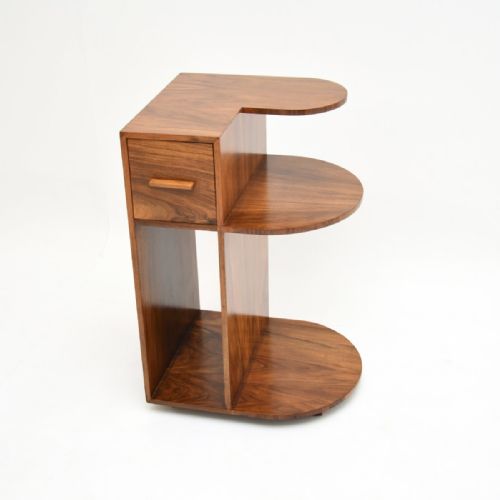
When searching for 1930s night tables, you encounter compact bedside furniture designed primarily during the height of the Art Deco movement. These pieces function as small storage cabinets, night stands, and open side tables intended to sit neatly beside a bed.
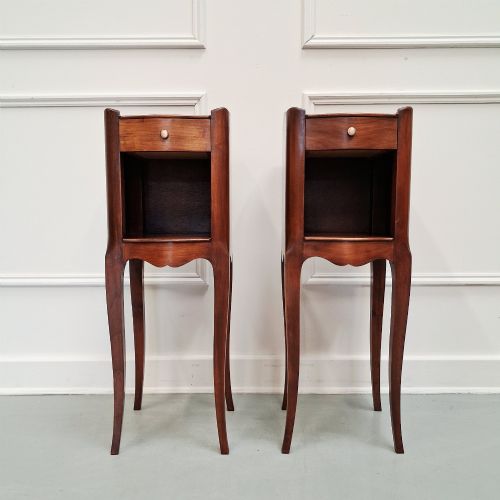
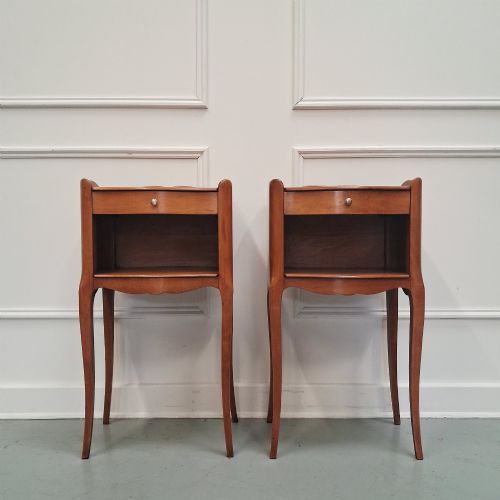
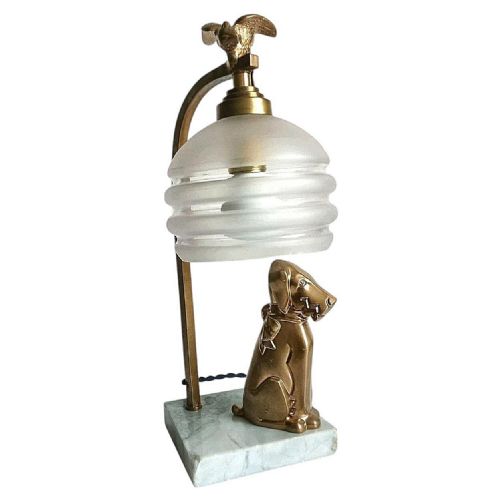
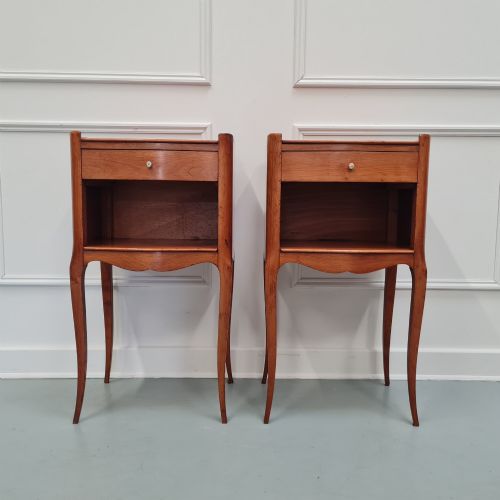
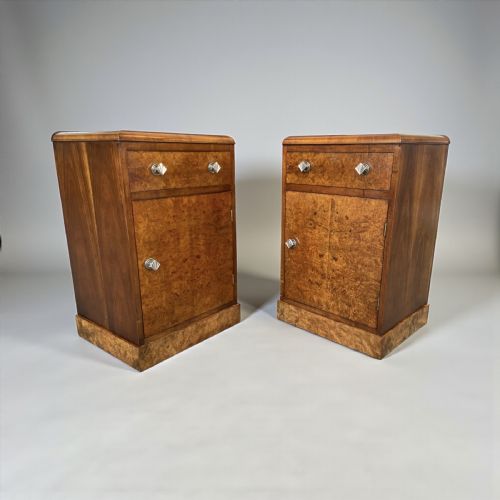
The selections on this page heavily feature matching pairs in walnut, burr walnut veneer, birds eye maple, and cherry wood. Alongside conventional bedside cabinets with doors and drawers, the inventory includes figurative night lights incorporating marble, bronze, brass, and spelter.
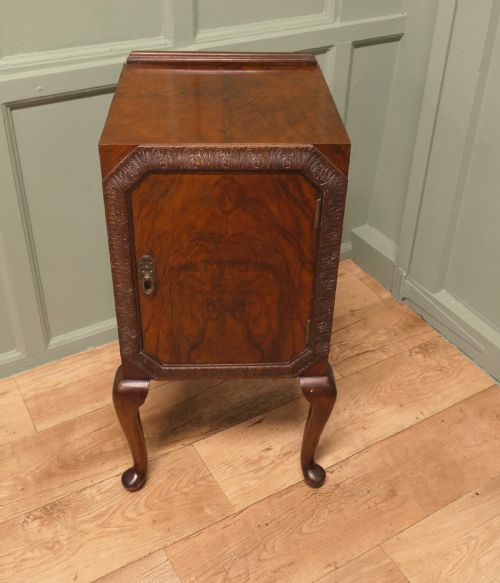
Originating largely from French and English workshops, these items span the 1920s and 1930s stylistic periods. Cabinets frequently stand on cabriole legs or feature streamlined rectilinear carcases suited to period interiors.
How they were made
Cabinetmakers utilised timber veneers such as figured walnut, burr walnut, blonde maple, and satinwood laid over sturdy wood carcases to create striking grain patterns on drawer fronts and cabinet doors. Brass handles, glass elements, and marble tops provided durable and contrasting functional surfaces.
Lighting pieces combined cast metals like bronze, brass, and spelter mounted upon heavy marble or granite bases to support mottled opaline or porcelain shades. These mixed media constructions relied on secure metal fixings and fitted electrical components appropriate for the era.
1930s Night Tables Retail Price Guide 2026
Typical asking prices for 1930s night tables among the pieces listed under this phrase on Sellingantiques today, from the lower quarter to the upper quarter. They describe what is for sale here now, not the wider market.
Listings span pieces dated across the 1920 and 1930 periods, incorporating walnut, brass, marble, glass, and burr walnut veneer.
What varies in quality
The sophistication of the timber selection dictates the visual appeal of each cabinet, with symmetrical figured veneers and contrasting fruitwood borders showing superior craftsmanship. Matched pairs demonstrate a higher degree of initial design intent than single standalone pieces.
Sculptural night lights differ according to the crispness of the metal casting and the quality of the marble or granite plinths. Detailed patination on bronze and spelter figures alongside undamaged opaline glass distinguishes finer decorative examples.
Argilor Paris
The 1930s Night Tables Glossary
- Art Deco
- A design style spanning the 1920s and 1930s characterised by sleek geometric shapes, stylised motifs, and modern industrial materials. It replaced more ornate historical revivals with clean, streamlined forms.
- Burr Walnut Veneer
- A thin decorative slice of wood cut from a walnut tree growth wart, revealing swirling, highly figured grain patterns. Cabinetmakers applied this to prominent surfaces like drawer fronts.
- Cabriole Leg
- A furniture leg that curves outward in a convex arc and then bends inward in a concave arc, terminating in a simple foot. This shape appears frequently on French Provincial and early twentieth-century pieces.
- Opaline
- A type of semi-translucent art glass developed in France, often coloured in soft pastels or whites. It diffuses light evenly within period bedside lamps and night lights.
- Spelter
- An alloy of zinc and lead used as a cost-effective substitute for bronze in decorative figures and lamp bases. It takes patination well to simulate heavier metals.
1930s Night Tables: Frequently Asked Questions
What defines a 1930s night table?
These pieces comprise compact bedside cabinets, small chests, and open stands created during the Art Deco era. They emphasise geometric symmetry and rich wood veneers.
Most examples incorporate functional storage behind cabinet doors or single drawers, sitting low to the ground on wooden legs or integrated plinths.
Are pairs common for these tables?
Many listings feature matching pairs intended to sit symmetrically on either side of a double bed. These sets share identical timber grains, hardware, and dimensions.
Finding a matched pair remains a significant advantage for unifying a bedroom interior in a consistent period style.
What materials appear most frequently?
Walnut and figured walnut veneer dominate the wooden cabinet selections, often paired with satinwood, blonde maple, or cherry wood. Marble tops and brass details also feature prominently.
Figurative night lights utilise bronze, brass, and spelter mounted on heavy granite or marble bases with opaline glass elements.
How do I care for wood veneer?
Protect delicate walnut and maple surfaces from excessive moisture and direct sunlight to prevent veneer lifting and fading. Regular dusting with a dry cloth maintains the polished finish.
Avoid chemical polishes that can degrade the original French polish or wax coatings applied during the 1930s.