

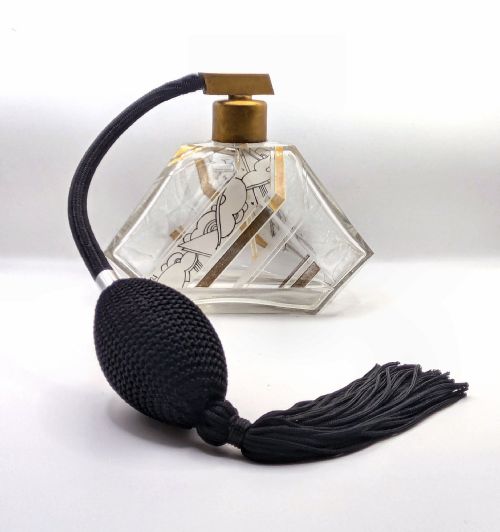


1930s Glass Scent Bottle
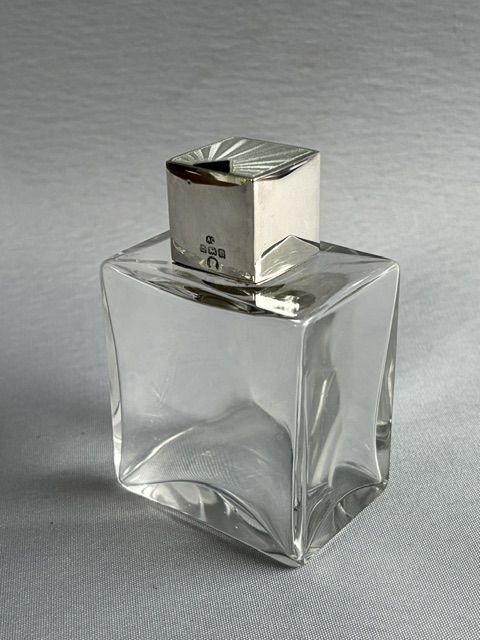
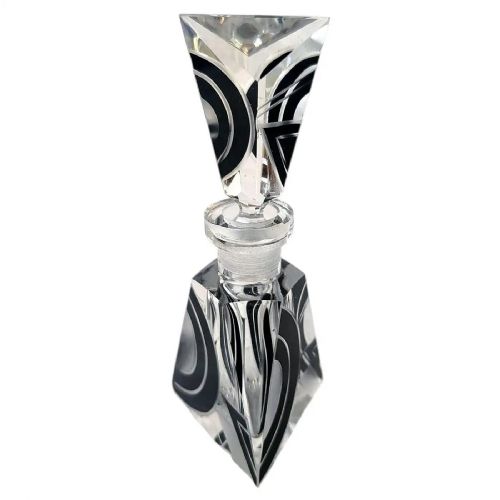
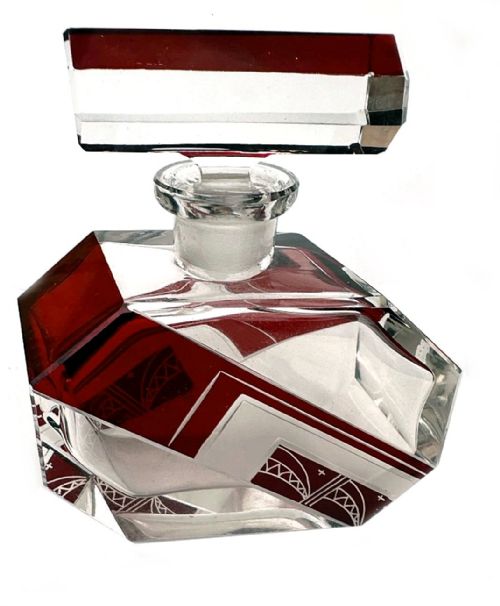
These 1930s glass scent bottle examples bring the distinct geometry of the period to a dressing table with coloured glass and metal fittings.
1930s Glass Scent Bottle
A 1930s glass scent bottle sits on dressing tables in various forms, including tall atomisers with stands, matching globe containers, and geometric bottles designed during the Art Deco period. The pieces originate primarily from workshops in Czechoslovakia, France, and Britain.
Makers produced these containers from moulded, opalescent, and cut glass, often pairing the vessels with sterling silver collars, enamel decoration, or chrome atomizer hardware.
Materials and construction methods
Glassmakers utilised pressing and moulding techniques to create opalescent and coloured bodies, whilst others employed wheel-cutting to shape crystal profiles into sharp geometric facets.
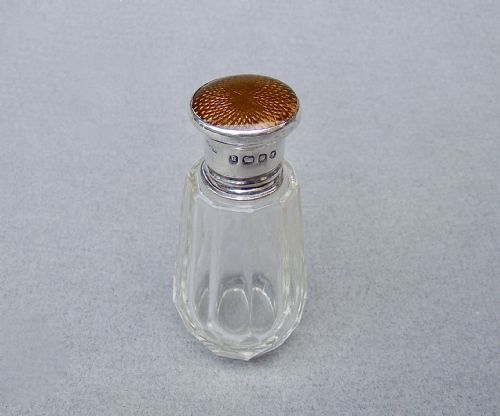
Workshops combined the glass bodies with sterling silver mounts, guilloche enamel panels, and metal atomiser mechanisms operated via fabric bulbs.
1930s Glass Scent Bottle Retail Price Guide 2026
Typical asking prices for 1930s glass scent bottle among the pieces listed under this phrase on Sellingantiques today, from the lower quarter to the upper quarter. They describe what is for sale here now, not the wider market.
The documented pieces originate primarily from the 1920 and 1930 periods, reflecting the height of interwar European glass design.
Distinctions in construction and design
The standard of a piece depends on the complexity of the glass cutting, the depth of the coloured or opalescent finish, and the integration of secondary materials like guilloche enamel and silver mounts.
Signed works from notable designers demonstrate greater precision in the glass surfaces and metal hardware than unmarked commercial equivalents.
Karl Palda·Henry Perkins·Rene Lalique·Rudolf Hlousek·Hermanova·Sabino
The 1930s Glass Scent Bottle Glossary
- Atomiser
- A perfume bottle fitted with a spray mechanism and a flexible squeeze bulb. This hardware is often connected via a metal collar.
- Guilloche
- An intricate decorative technique involving mechanical engraving beneath translucent enamel. It appears frequently on silver collars and caps.
- Opalescent glass
- Glass containing ingredients that scatter light to create a milky, multi-toned appearance. This effect highlights moulded reliefs.
- Crystal
- Clear glass containing metal oxides to increase brilliance and weight. It allows deep geometric cutting.
1930s Glass Scent Bottle: Frequently Asked Questions
How do atomisers work?
The mechanism uses a squeeze bulb to force air across a fine tube inserted into the perfume reservoir. This action draws the liquid upward and creates a fine spray.
Original fabric bulbs and rubber components often perish over time, meaning many surviving examples require restored or replacement parts to function.
Where were these bottles made?
Production centred on workshops and glasshouses in Czechoslovakia, France, and Britain during the interwar years. Czech and French makers particularly influenced the Art Deco style.
Designers in these regions exported luxury vanity wares globally through retail stores and department outlets.
Are silver mounts marked?
British silver mounts typically bear hallmarks indicating the assay office, city, and year of manufacture, such as London marks from the mid-1930s. Continental pieces often feature maker stamps or purity marks.
These stamps assist in verifying the production date of the metal components attached to the glass body.
What is the difference between an atomiser and a standard bottle?
An atomiser includes spray hardware and a pump mechanism for misting fragrance, whilst a standard scent bottle relies on a glass stopper or dabber for direct application.
Both forms were produced simultaneously as part of matching vanity sets during the Art Deco period.