


1930s Glass Clock
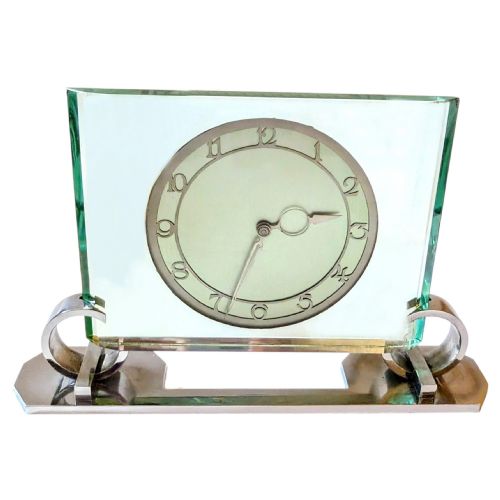
A 1930s glass clock brings bold geometric styling and striking coloured transparency to a mantelpiece or desk.
1930s Glass Clock
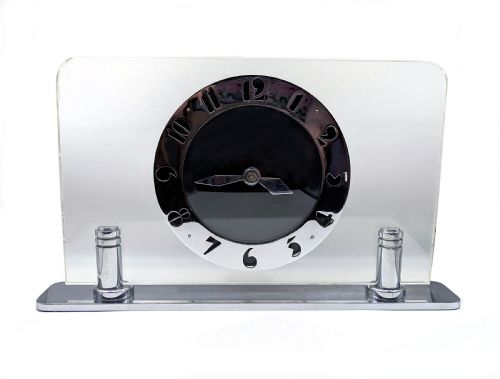
A 1930s glass clock is typically an Art Deco timepiece executed in transparent, opaline, mirrored, or coloured glass alongside metal elements. Most examples encountered here function as mantel clocks or desk clocks, often incorporating chrome, brass, or marble bases.
The aesthetic leans heavily into modernist lines, symmetrical geometry, and clean silhouettes characteristic of the period. Alongside traditional mantel pieces, variants include desk lamps combined with clocks, wall clocks, and mirror clocks.
Many of these timepieces originate from English and French makers, utilising vibrant blue, green, peach, and pink glass panels. They capture the technological optimism and decorative flair of the interwar decades through materials that reflect and refract light.
Materials and construction
Makers constructed these clocks by combining heavy plate glass, mirrored glass, or coloured pressed glass with metal chassis components, commonly using chrome-plated brass or solid brass for bezels and stands. Bases frequently incorporate contrasting green marble or polished metal to anchor the translucent glass body.
Movements within these housings vary from traditional mechanical wind-up and eight-day systems to early electric movements like Sectric systems, as well as specialised mechanisms such as Bulle systems or mystery clock configurations.
Several models incorporate working lamps or mystery movements that make the clock hands seem to float without gears.
Evaluating quality and execution
Quality in a 1930s glass clock rests upon the weight and clarity of the glass, the depth of colour in opaline or tinted panels, and the structural integrity of the metal fittings. Heavier, thicker glass plates and sophisticated modernist geometry distinguish the finer studio and factory productions from standard commercial items.
The precision of the dial design, the integration of chrome or brass hardware, and the reputation of the maker or signers on the dial elevate specific pieces. Original mechanical or specialised movements preserved within the housing also influence the standing of an individual clock.
Smiths Clockmakers·Mappin & Webb·Jaeger-LeCoultre·GEC·Jaz
The 1930s Glass Clock Glossary
- Art Deco
- A design style dominant in the 1920s and 1930s characterised by sleek geometric shapes, streamlined forms, and modern industrial materials.
- Opaline glass
- A milky, translucent glass often tinted in soft shades such as green or blue, popular in interwar decorative objects.
- Bulle clock
- An electrically driven clock utilising a pendulum with a coil moving over a permanent magnet, patented by Marcel Bulle.
- Mystery clock
- A timepiece where the dial appears to have no mechanical connection to the movement, creating a floating effect.
- Sectric
- A proprietary term used by Smiths for their synchronous electric mantel and desk clocks introduced in the 1930s.
1930s Glass Clock: Frequently Asked Questions
How do I wind a mechanical 1930s glass clock?
Mechanical models require a key inserted into the winding arbours on the dial or back plate to tension the mainspring.
Care must be taken not to overwind the spring to ensure the movement operates smoothly.
What powers electric glass clocks from this era?
Early electric clocks rely on mains electricity through synchronous motors or specialised electromagnetic systems like the Bulle movement.
Some modern examples have been safely converted to battery power for contemporary use.
Where should I place a glass mantel clock?
These clocks sit best on stable horizontal surfaces such as mantelpieces, sideboards, or large desks where their reflective glass panels catch ambient light.
Avoid locations subject to heavy vibrations or direct, intense heat that could affect the vintage materials.
How do I distinguish between glass and mirrored clock types?
Standard glass clocks use transparent, opaline, or coloured glass panels that allow light to pass through or show internal components.
Mirrored glass variants use reflective silvered surfaces on the reverse to create a shiny, metallic sheen.