
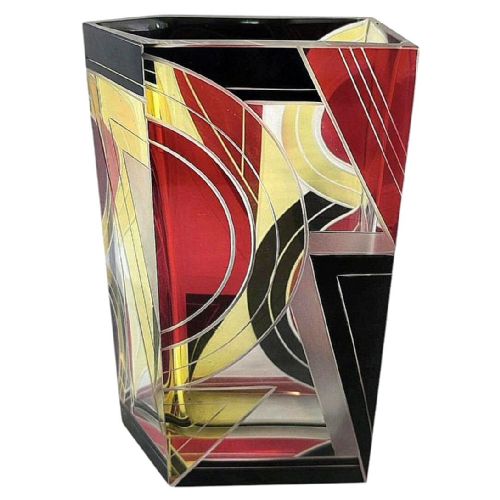


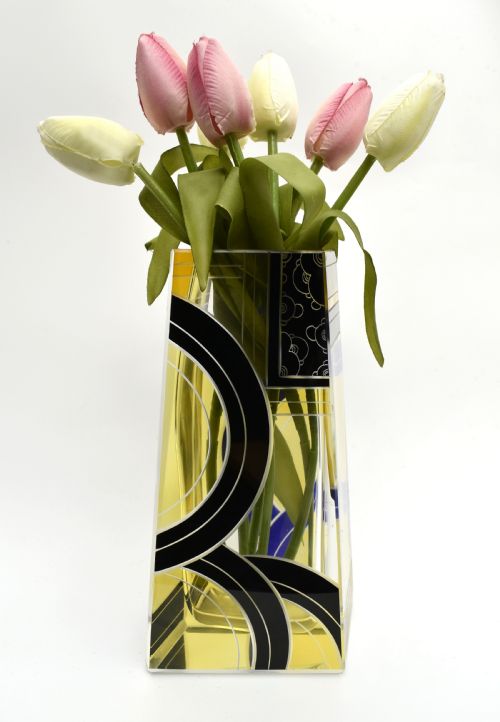


1930s Geometric Glass Vessel
A 1930s geometric glass vessel brings sharp modernist lines and striking colour to a room through bold Art Deco design.
1930s Geometric Glass Vessel
A 1930s geometric glass vessel is primarily an Art Deco vase defined by clean angles, squared profiles, and striking colour palettes. These decorative objects range from tall statement pieces to compact vessels designed to showcase the modernist aesthetic of the period.
The versions most commonly met on this page are tall or square vases featuring enamel decoration or deep etching. Makers from Belgium and the Czech Republic dominate the selection, bringing vibrant green, sapphire blue, and uranium glass to the forefront of the design.
How they were made
Makers utilised techniques such as cased glass and overlay glass to build rich depth, layering contrasting colours of crystal glass together before cutting or etching through the surface. This method exposed the underlying hue and created sharp contrast against the clear or tinted body.
Surface ornamentation often involved deep acid etching and hand-applied enamel work. Artisans traced geometric patterns across the glass, combining translucent finishes with opaque colour to accentuate the angular forms typical of the era.
Materials across these listings span basic glass and crystal glass alongside specialised finishes like cased, overlay, cut, etched, and enamelled glass.
What varies in quality
The distinction between standard production and superior craftsmanship lies in the precision of the surface execution and the weight of the material. Heavy lead crystal provides a substantial feel and allows for deeper, crisper cuts that catch the light directly.
Enamel application and etching depth also separate the exceptional examples from simpler items. Finely detailed geometric motifs applied by notable designers show sharper definition and more deliberate colour placement across the glass body.
Charles Graffart for VSL·Jean Luce·Karl Palda·Val St. Lambert
The 1930s Geometric Glass Vessel Glossary
- Cased glass
- Glass formed of two or more distinct layers of different colours fused together during the blowing process. This technique allows artisans to cut through the top layer to reveal the contrasting colour underneath.
- Uranium glass
- Glass containing trace amounts of uranium oxide added as a colourant, resulting in a distinctive yellow-green hue. Under ultraviolet light, this material glows brightly.
- Overlay glass
- A method where a thin layer of coloured glass is fused over a base of clear or contrasting crystal glass. It is frequently carved or etched to create patterns.
- Etched glass
- Glass treated with acid to create frosted or recessed surface designs. Deep etching produces a tactile, textured finish that contrasts with polished areas.
1930s Geometric Glass Vessel: Frequently Asked Questions
How do I identify a genuine 1930s piece?
Authentic pieces from this decade typically feature characteristic Art Deco styling, specific manufacturing techniques like overlay or cased glass, and appropriate ageing consistent with the period.
Examining the depth of the etching and the weight of the crystal glass helps confirm the standard of production associated with this era.
Where were these vessels made?
The listings show production originating primarily from Belgium and the Czech Republic, alongside works attributed to specific European designers and workshops.
These regions were major centres for innovative glassmaking and decorative arts during the interwar period.
What colours are most common?
Green and sapphire blue dominate many of the coloured crystal designs, often achieved through layered overlay techniques.
Uranium glass also appears frequently, providing a distinct vibrant green tone characteristic of the era's palette.
How should I display them?
These vessels suit placement in well-lit areas where natural light can pass through the cased glass and highlight the geometric etching.
Their strong modernist lines make them effective as standalone decorative objects or focal points on mantelpieces and sideboards.