
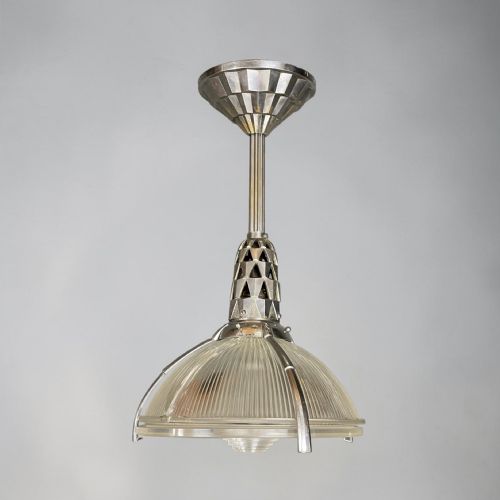


1930s Geometric Ceiling Light
These 1930s geometric ceiling light fixtures bring clean lines and striking overhead illumination to any room.
1930s Geometric Ceiling Light
When you search for a 1930s geometric ceiling light, you are looking at overhead fixtures designed during the Art Deco period. The selections here include pendant lights, flush mounted ceiling lights, chandeliers, and hall lanterns.
The most common examples you will meet on this page take the form of plafonniers and glass lanterns suspended by metal frames or mounted close to the ceiling. These pieces rely on stepped, angular designs that define the aesthetic of the nineteen-thirties.
Origins and periods span the 1920s and 1930s, showing how early modernist geometry translated into domestic lighting. You will find single fixtures as well as matching pairs designed to unify the illumination of larger spaces.
How they were made
Maker workshops combined heavy cast and plated metals with shaped glass to create durable overhead fittings. Chrome, brass, copper, nickel plated metal, steel, bronze, and wrought iron form the structural frameworks that hold the diffusers.
The glass components were produced using moulding and frosting techniques to soften the illumination. Frosted, moulded, and opaque glass panels or bowls disperse the light evenly while highlighting the geometric silhouettes of the metalwork.
What varies in quality
The distinction between standard production and finer execution lies in the integration of the metal framing with the glass components. Superior examples feature heavier gauge metals and crisp, cleanly cast frames that hold moulded glass securely without excess play.
Quality also shows in the finish of the metalwork, whether chrome plating, polished brass, or dark wrought iron. Stronger pieces maintain consistent patination and substantial weight, reflecting the original manufacturing standards of the period.
Émile Jacques Ruhlmann
The 1930s Geometric Ceiling Light Glossary
- Plafonnier
- A ceiling light that mounts directly against the plaster without a long drop. This French term frequently applies to bowl-shaped glass fixtures held by metal mounts.
- Flush Mounted
- A fitting that sits tight against the ceiling surface. These fixtures work well in rooms with standard ceiling heights.
- Pendant Light
- A hanging light suspended from the ceiling by a single cord, rod, or chain. It positions the illumination lower into the room space.
- Frosted Glass
- Glass treated by acid-etching or sandblasting to create a diffuse surface. This treatment softens the glare from internal bulbs.
- Art Deco
- A design style spanning the 1920s and 1930s characterised by symmetry, geometric shapes, and streamlined forms. It guides the visual language of these ceiling lights.
1930s Geometric Ceiling Light: Frequently Asked Questions
What is a 1930s geometric ceiling light?
These are overhead lighting fixtures created during the Art Deco era, featuring angular lines and stepped shapes.
They use materials like chrome, brass, and frosted glass to direct illumination while serving as a central decorative feature in a room.
How were these ceiling lights used?
Original homes installed them in hallways, living rooms, and dining spaces to provide general overhead illumination.
Flush mounted versions suited lower ceilings, while pendants and lanterns hung lower over specific functional areas.
How do I live with antique lighting?
Integrating these pieces into modern spaces requires checking the electrical wiring to ensure it meets current safety standards.
Many collectors pair them with warm LED bulbs that mimic the soft glow of historic incandescent lighting without generating excessive heat.
How do I tell periods apart?
Fixtures from this era transition from the heavier wrought iron and bronze of the early period toward sleeker chrome and nickel plated metal by the nineteen-thirties.
Examining the complexity of the glass moulding and the type of metal finish helps narrow down the decade of production.