

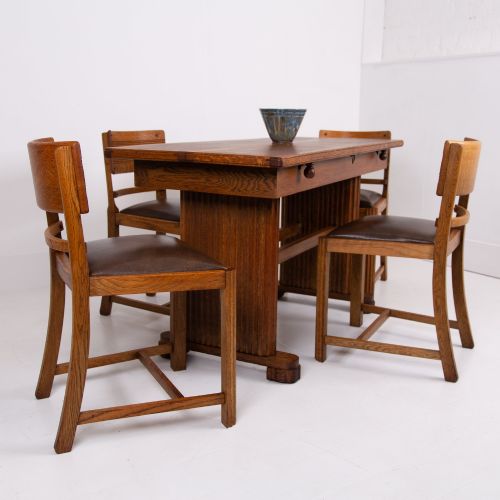
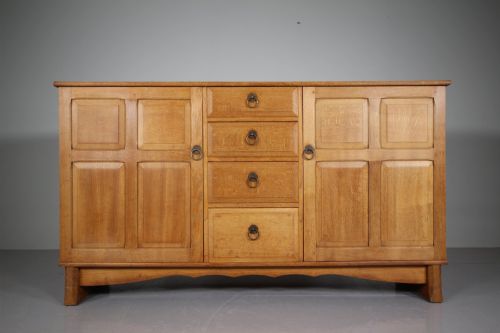
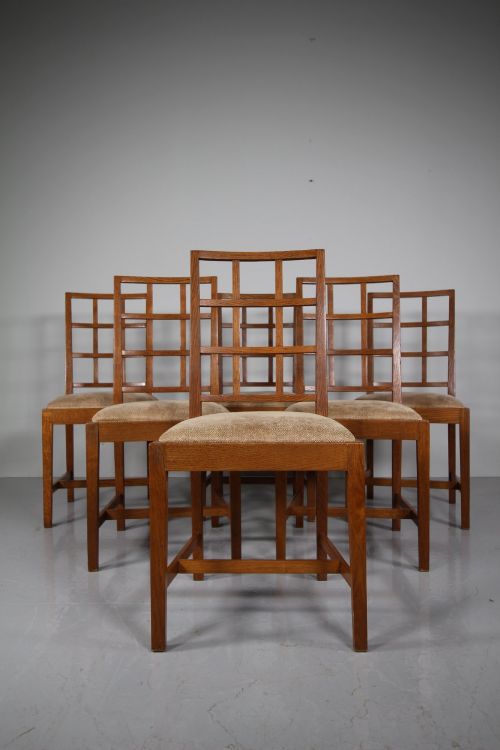
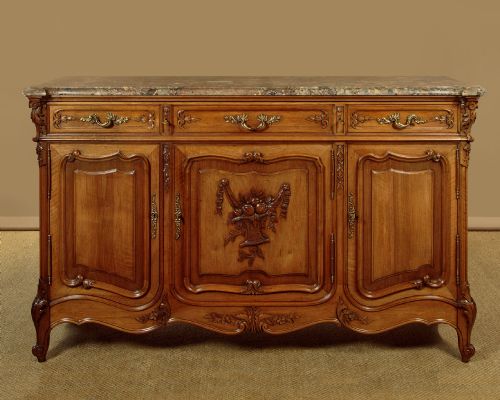
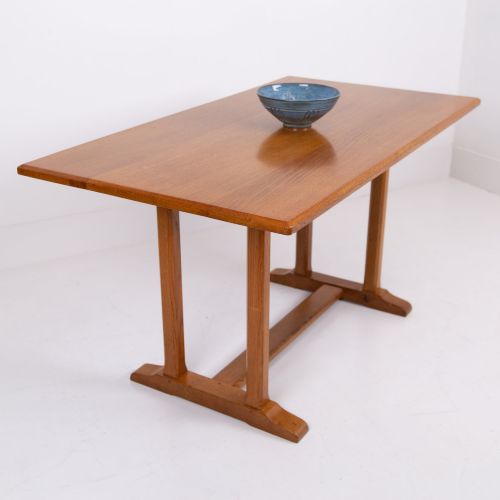

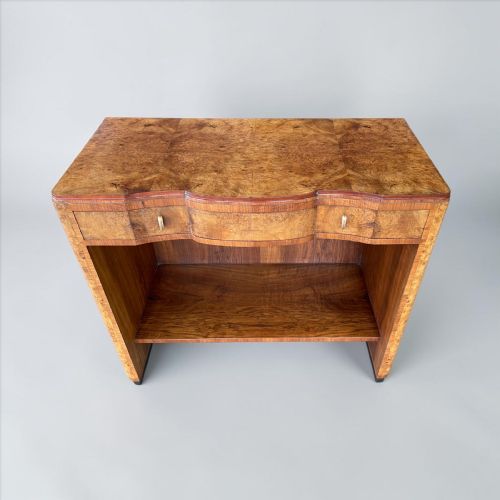
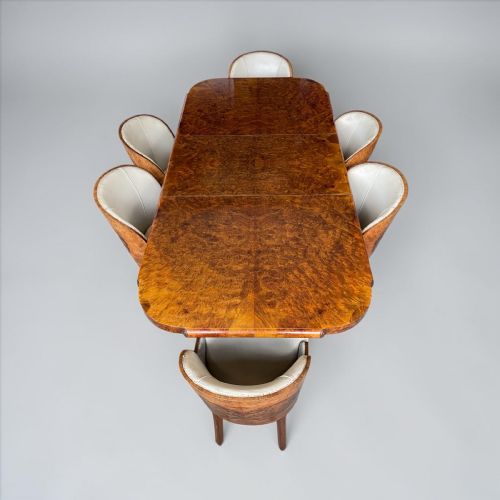
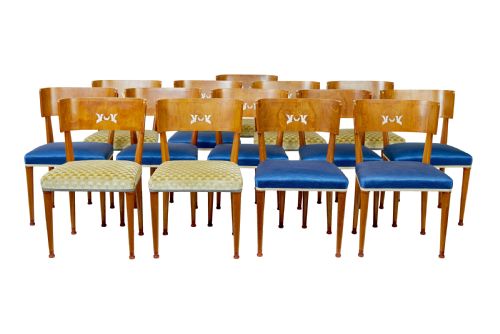

1930s Dining Furniture
1930s dining furniture delivers bold geometric forms and rich veneers that transform any dining room into a striking period interior.
1930s Dining Furniture
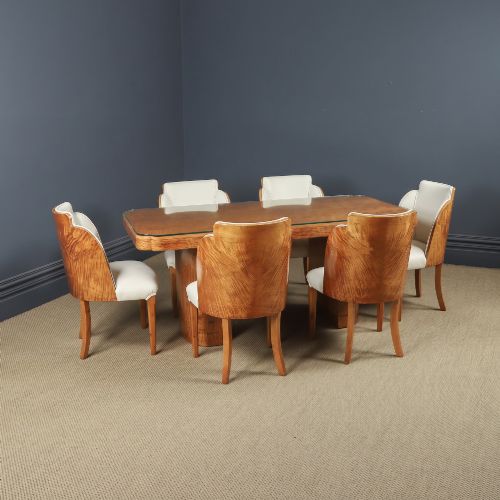
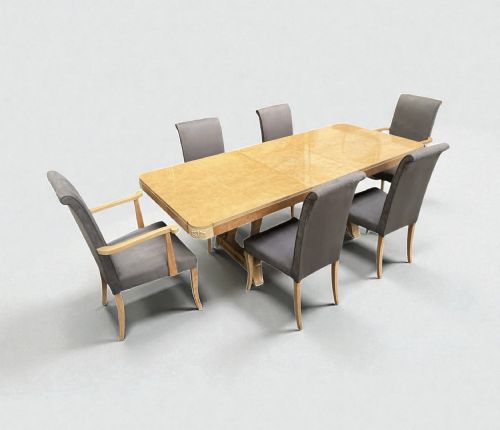
When you examine 1930s dining furniture, you encounter robust dining suites, extending tables, and capacious sideboards designed for formal entertaining. These groups often bring together matching sets of chairs alongside large serving tables built to handle substantial gatherings.
The aesthetic bridges the heavy oak traditions of earlier decades with the streamlined geometries of Art Deco and Scandinavian design. You meet British cabinet makers alongside French, Swedish, and wider European workshops within these forms.
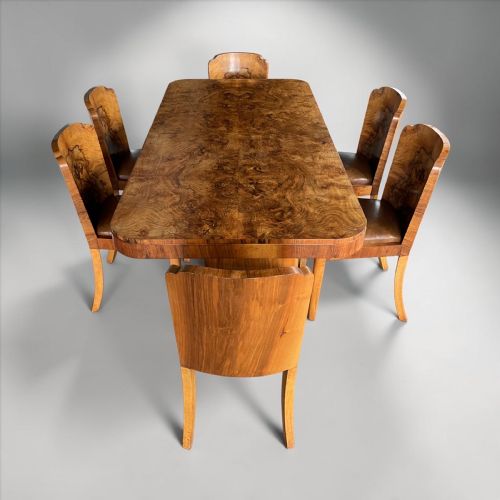
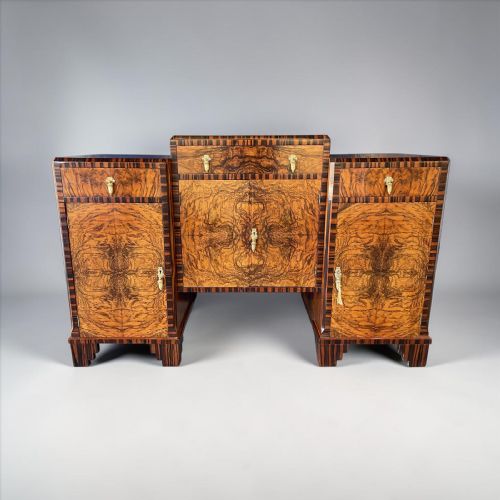
Dining sets frequently pair burr walnut, oak, or mahogany surfaces with upholstered leather or fabric seating. Sideboards and credenzas anchor the room with substantial storage compartments framed by figured wood veneers.
Materials and Construction
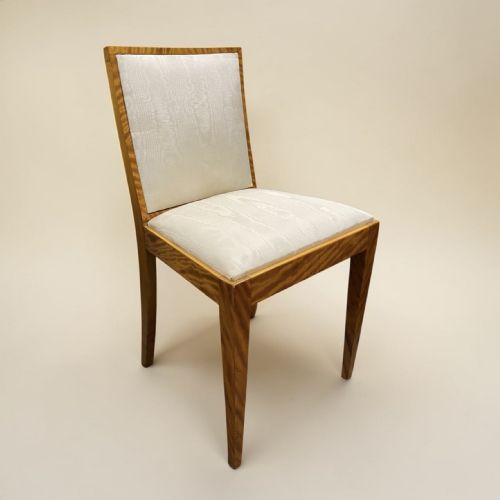
Cabinet makers applied figured veneers such as burr walnut, bird's eye maple, and rosewood over solid timber frames to create striking grain patterns across table tops and sideboard doors. Brass hardware provided functional accents on drawer pulls and cabinet hinges.
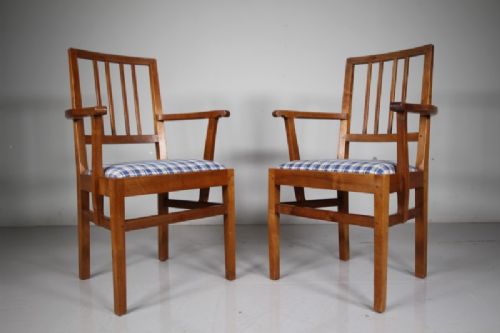
Seating frames relied on sturdy timbers like oak, elm, and beech, joined securely to withstand regular dining use. Upholsterers finished chairs in durable leathers and woven fabrics, often matching the specific tone of the accompanying dining table.
1930s Dining Furniture Retail Price Guide 2026
Typical asking prices for 1930s dining furniture among the pieces listed under this phrase on Sellingantiques today, from the lower quarter to the upper quarter. They describe what is for sale here now, not the wider market.
Judging Quality and Execution
Superior examples showcase carefully matched veneer book-matching across large surfaces like sideboard doors and table leaves, ensuring the wood grain flows symmetrically. Lesser pieces rely on random patching or plain timber without the same attention to decorative grain alignment.
Makers known for exceptional craftsmanship integrate subtle curves and precise joinery that elevate standard dining sets into sculptural focal points. The weight of the timber and the rigidity of the chair frames demonstrate the underlying structural integrity.
Maurice Adams·Edward Barnsley·Bath Cabinet Makers·Gomme·Hamptons of Pall Mall London·Heals·Hille·Harry and Lou Epstein
The 1930s Dining Furniture Glossary
- Art Deco
- A design style characterised by sleek geometric shapes, stylised motifs, and luxurious materials that dominated the interwar period.
- Veneer
- A thin layer of highly figured wood applied over a stable secondary timber to produce decorative surfaces on tables and sideboards.
- Klismos
- An ancient Greek chair shape with curved back rails and splayed legs that inspired modern revivals during the twentieth century.
- Sideboard
- A long low cabinet utilised in dining rooms for storing tableware and serving food during meals.
- Burr Walnut
- A mottled wood grain harvested from tree growths that produces intricate patterns prized by cabinet makers.
1930s Dining Furniture: Frequently Asked Questions
What pieces make up a dining suite?
A standard dining suite comprises a dining table accompanied by a set of side chairs or armchairs, often supplemented by a matching sideboard or serving table.
Larger configurations accommodate eight or more seats, providing a unified design scheme across every item in the room.
How do I identify Art Deco furniture?
Art Deco furniture relies on symmetrical geometries, stepped outlines, and unadorned surfaces that emphasise the natural pattern of wood veneers.
Look for contrasting borders, curved cabinet corners, and polished metal accents that define the aesthetic of the period.
Are these pieces suitable for daily use?
These dining sets were constructed for everyday family meals as well as formal entertaining, utilising sturdy timbers and durable upholstery.
Routine care and appropriate maintenance preserve the polished veneer surfaces and keep the chair frames stable for regular seating.
Which woods appear most frequently?
Walnut and oak form the foundation of many British and European dining tables and sideboards from this era.
Cabinet makers also utilised exotic veneers including rosewood, macassar, and birch to create high contrast patterns on storage cabinets.