


1930s Desk Timepiece
These 1930s desk timepiece designs bring functional geometry and striking materials straight to the working surface.
1930s Desk Timepiece
A 1930s desk timepiece is a compact instrument designed to sit on a table, writing surface, or mantel, capturing the industrial momentum of the interwar period. Most pieces you meet on this page hail from the 1930s proper, though occasional examples stretch back into the 1920s or incorporate earlier movements.
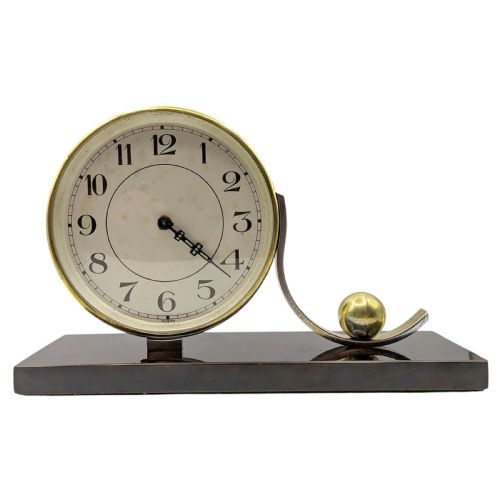
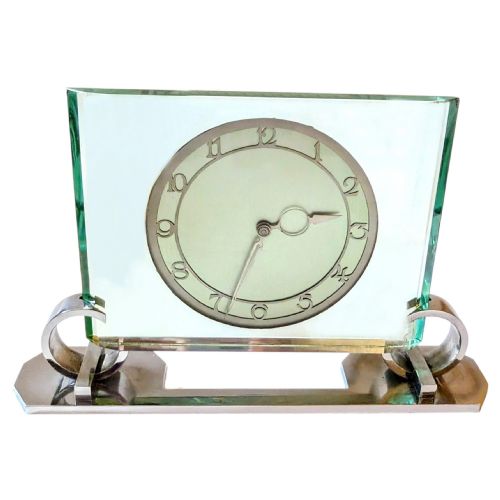
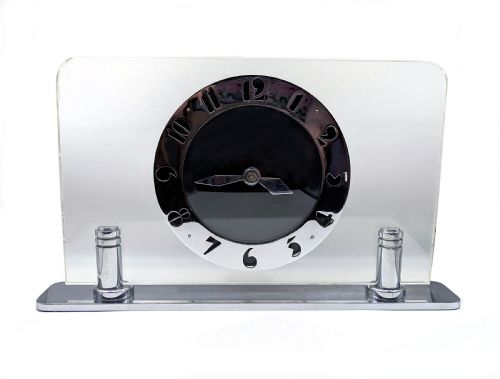
The dominant aesthetic is firmly Art Deco, translating skyscraper lines and modernist geometry into portable formats. Forms range from simple upright easel cases to elaborate glass panels and multi-piece mantel sets complete with side garnitures.
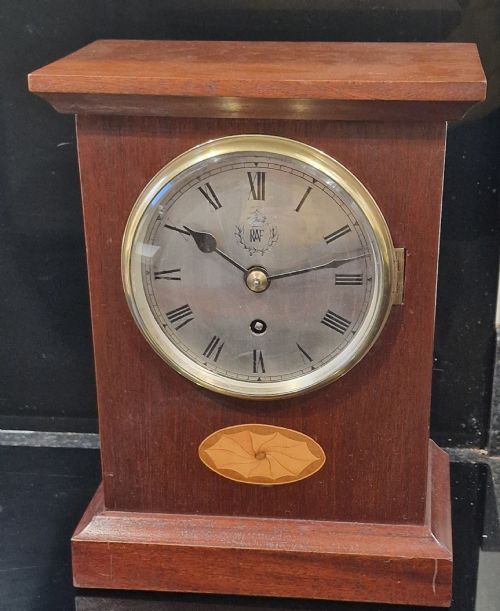
Originating largely from English, French, and German workshops, these clocks served domestic and institutional roles alike. You find civilian travel pieces alongside specialised items like military mess clocks.
Materials and Construction
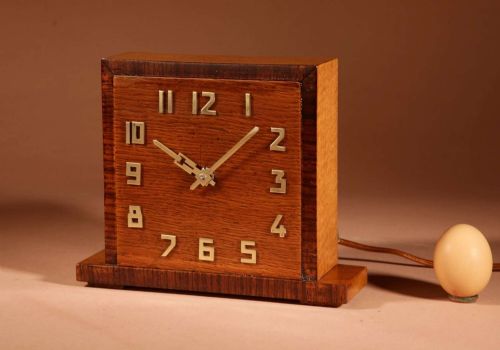
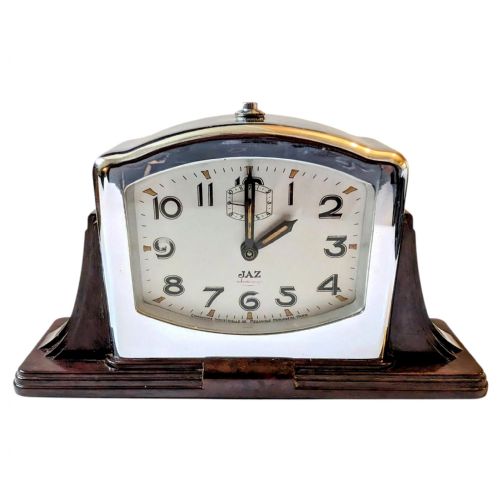
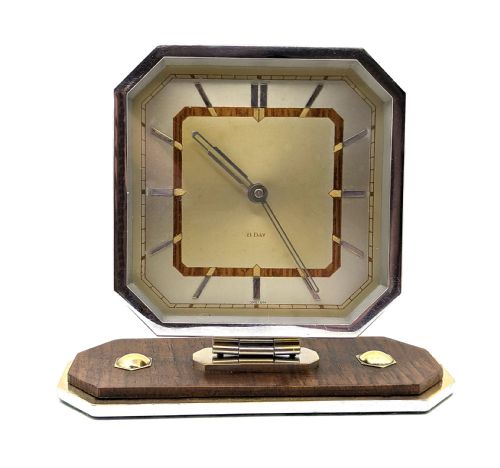
Makers of the era combined traditional cabinet woods like walnut, oak, and rosewood with emerging industrial substances such as early plastics and polished metals. Chrome plating provided a bright, modern finish over brass or base metals, frequently paired with black or coloured Bakelite bases.
Movements varied from standard 30-hour and 8-day mechanical wind mechanisms to early electrical systems. Specialised makers integrated electric coils, pendulum-driven Bulle patents, or dedicated alarm complications within the compact housings.
One German Shepherd dog keeps eternal watch over a clock and garniture set, sculpted in metal by Michel Decoux.
Distinctions in Quality
Quality rests significantly on the prestige of the maker and the sophistication of the housing. Pieces bearing signatures from established retailers like Asprey, Harrods, or Mappin & Webb, alongside recognised clockmakers like Smiths, command higher regard.
The choice and execution of materials separate standard production items from finer studio pieces. Heavy solid silver cases, intricate copper and enamel work, or signed glass sculptures integrated into the design indicate superior workshop input.
The integrity and servicing of the movement dictate practical worth. An original mechanism that has been fully serviced and maintains proper function preserves the historical and mechanical value of the object.
Smiths Clockmakers·Mappin & Webb·Harrods of London·Asprey·Bravingtons Ltd
The 1930s Desk Timepiece Glossary
- Bakelite
- An early form of synthetic plastic prized for its durability and rich, dark tones in interwar design. It allowed manufacturers to mould smooth, geometric housings for dials.
- Onyx
- A banded variety of chalcedony used frequently for solid mantel and desk clock bodies. Its natural striations provided a heavy, decorative foundation for metal bezels.
- Garniture
- A set of matching decorative ornaments, typically comprising a central clock flanked by matching side pieces. These arrangements were popular for mantels and large sideboards.
- Mystery clock
- A timepiece where the mechanism driving the hands is concealed, often making the hands appear to float without a visible connection to the movement.
- Easel back
- A hinged support strut attached to the rear of a clock case, allowing the timepiece to tilt upright on a flat surface like a photograph frame.
1930s Desk Timepiece: Frequently Asked Questions
What is an eight day movement?
An eight day movement is a mechanical caliber designed to run for slightly over a week on a single full wind. This reduced the frequency of maintenance required for busy office desks or household mantelpieces.
Such movements generally demand larger mainspring barrels within the housing. They represent a step up in convenience compared to basic daily wind calibres.
Are these clocks suitable for daily use?
Many surviving examples remain entirely operational for daily timekeeping, provided they have received recent professional servicing. The robust nature of interwar brass and steel mechanisms suits regular living environments.
Care should be taken with delicate glass cases and antique electric components. Placing them away from direct sunlight and damp environments preserves both the casing and the internal gears.
How do I identify an Art Deco clock?
Art Deco clocks are characterised by geometric silhouettes, stepped skyscraper motifs, and symmetrical layouts. Dials frequently feature stylised Arabic numerals and clean modernist hands.
Materials also offer a strong clue, combining chrome plating with contrasting Bakelite or coloured glass. Ornate floral carvings of earlier eras give way to streamlined industrial forms.