



1930s Czech Glass Perfume Bottle
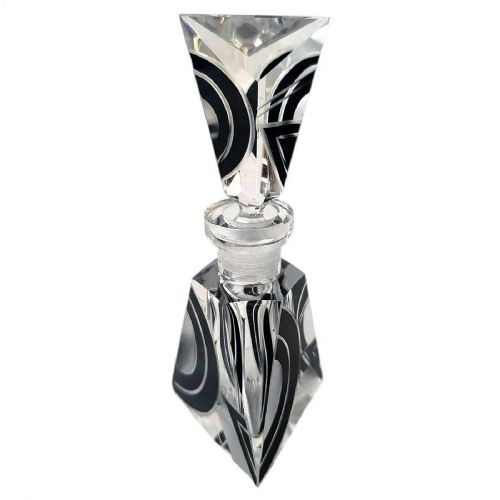
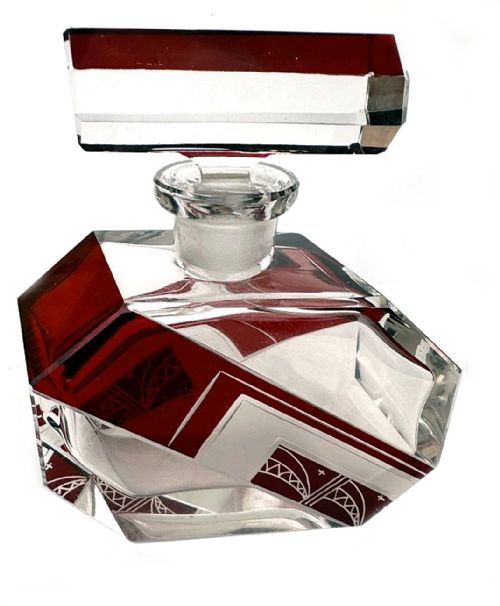
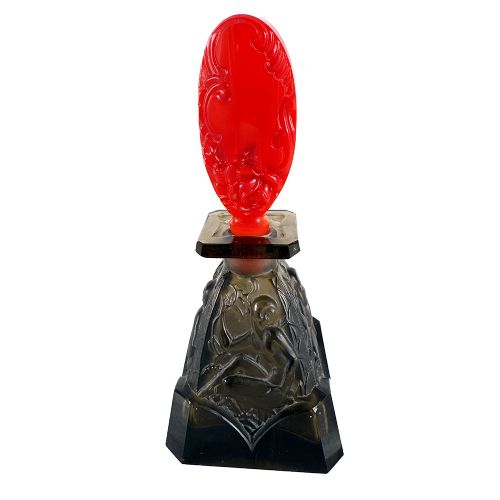
A 1930s czech glass perfume bottle brings geometric Art Deco lines and vibrant colour to a dressing table.
1930s Czech Glass Perfume Bottle
A 1930s czech glass perfume bottle typically follows the geometric tenets of the Art Deco style, originating from Czechoslovakia and the Bohemian region. These pieces take the form of scent bottles, perfume bottles, and ladies perfume atomizers.
The objects seen here date predominantly from the 1930 period, with occasional examples from the 1920 period. They appear in clear crystal, bold blue glass, and moulded forms.
Collectors encounter matching globe perfume bottles alongside single vessels. The designs frequently incorporate applied metalwork, atomiser hardware, and distinct colour palettes.
Materials and construction methods
Makers shaped these vessels using glass, cut glass, and moulded glass, frequently enhancing the surfaces with enamel, black enamel, and gold leaf. Chrome and silver components provide structural mounts and functional atomizer hardware for the bottles.
The decorative techniques rely heavily on geometric cutting and enamelling applied to crystal and coloured glass bases. Fabric elements occasionally supplement the metal and glass construction on specific atomizer models.
The materials recorded across these listings include glass, cut glass, crystal, enamel, black enamel, chrome, gold leaf, and fabric.
Factors determining the standard of a piece
The refinement of the glass cutting and the precision of the geometric facets separate standard examples from finer works. Deeply saturated glass colours and crisp moulding contribute significantly to the visual weight of the vessel.
The presence of intact surface decoration, such as gold leaf, enamel work, and original chrome or silver mounts, elevates the execution. Maker attribution, particularly pieces associated with known designers, adds distinct interest to an individual bottle.
Karl Palda·Rudolf Hlousek·Hermanova
The 1930s Czech Glass Perfume Bottle Glossary
- Art Deco
- A design style from the interwar period characterised by sleek geometric shapes and stylised motifs. It dominates the aesthetic of these Bohemian vessels.
- Atomizer
- A spray bottle mechanism fitted to a perfume vessel to disperse scent in a fine mist. These often feature chrome or silver metal hardware.
- Moulded glass
- Glass shaped by being pressed into a metal or wooden mould while hot. This technique allowed makers to achieve consistent three-dimensional patterns.
- Enamel
- A decorative glassy substance fused to the surface of the glass or metal mounts through firing. It provides opaque blocks of contrasting colour.
1930s Czech Glass Perfume Bottle: Frequently Asked Questions
What defines a 1930s czech glass perfume bottle?
These vessels are defined by their Art Deco geometric forms, Bohemian manufacturing origins, and use of coloured or cut glass.
They frequently incorporate specialised elements like atomizers, silver mounts, and enamel decoration characteristic of interwar European design.
How do I identify a period piece?
Authentic examples date predominantly from the 1930 period, displaying typical Art Deco stylistic conventions and traditional manufacturing methods like hand cutting and moulding.
Look for period-correct chrome hardware, enamel work, and glass formulations consistent with Bohemian production from the era.
Were these bottles used for display or application?
The pieces served both functional and decorative purposes on dressing tables as receptacles for fragrance and ladies scent.
Many incorporate functional atomizers or stoppers designed for daily use alongside their decorative geometric glass bodies.
What colours are common for these bottles?
The listings show a prominent use of deep blue glass alongside clear crystal and moulded transparent bodies.
Surface contrast is frequently added through black enamel, gold leaf, and metallic chrome or silver elements.