
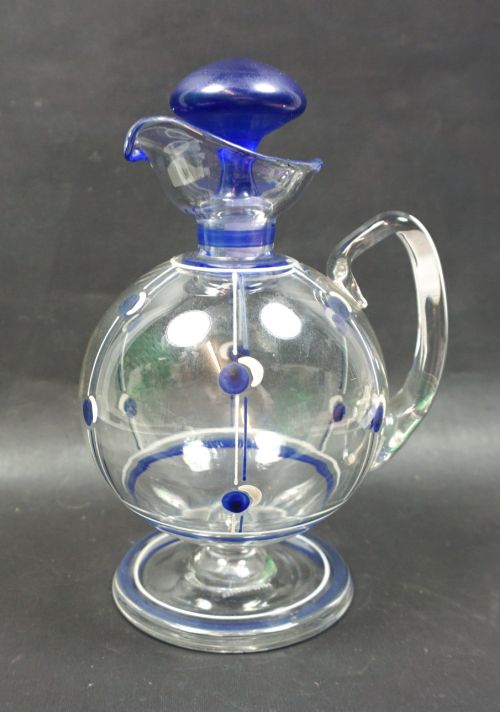


1930s Czech Glass Decanter
A 1930s czech glass decanter brings sharp angles and striking geometry to a bar cart, combining modernist design with tactile craft.
1930s Czech Glass Decanter
A 1930s czech glass decanter embodies the bold geometry of the Art Deco period, originating from Bohemia and wider Czechoslovakia. These pieces frequently appear as complete sets accompanied by matching glasses, and sometimes rest upon matching trays.
The objects take the form of decanter sets, wine jugs, and whisky decanters intended for sophisticated entertaining. Most examples date firmly to around nineteen thirty, reflecting the height of Central European glass production.
How they were made
Makers shaped heavy lead crystal and standard glass through cutting and moulding to achieve sharp, architectural profiles. These vessels often incorporate stained glass effects and reflective surfaces such as mirror.
Artisans applied hand enamel decoration directly onto the crystal surfaces, creating striking geometric patterns that define the aesthetic. Chrome elements occasionally integrate into the barware designs to complement the glass.
Listings for this phrase are anchored entirely in the year nineteen thirty and feature lead crystal, amber glass, and chrome materials.
What varies in quality
Quality separates simple moulded vessels from substantial lead crystal pieces that possess crisp geometric facets and heavier physical weight. The precision of the hand enamel work and the completeness of matching glass sets heavily influence the standing of an item.
The presence of named maker attribution distinguishes standard production barware from distinguished workshop outputs. Integrity across matching sets, including trays and a full complement of glasses, elevates the piece.
Karl Palda·Mosey
The 1930s Czech Glass Decanter Glossary
- Art Deco
- A design style characterised by sleek geometric shapes, stylised motifs, and streamlined forms that dominated the interwar period. It remains the defining aesthetic for these pieces.
- Lead Crystal
- A heavy, brilliant glass variety containing lead oxide to increase refractive index and clarity. It allows for deeper cutting and sharper facets.
- Hand Enamelled
- Decorated by hand using fused glass paints applied to the vessel surface. This technique produces vibrant, tactile colour patterns.
- Bohemia
- A historical region renowned for its long tradition of glassmaking and crystal production. Much of the finest interwar glass originated here.
1930s Czech Glass Decanter: Frequently Asked Questions
What defines a 1930s czech glass decanter?
These vessels are defined by their distinct Art Deco geometry, heavy crystal or glass construction, and often vibrant hand enamelled decoration originating from Czechoslovakia.
They frequently form part of larger barware sets that include matching drinking glasses and serving trays.
Are these decanters meant for daily use?
While originally designed for serving wine and spirits during the interwar period, many collectors treat them primarily as display objects.
Hand enamelled surfaces and delicate crystal require careful handling to preserve their original finish.
How do I identify a set with matching glasses?
Complete sets typically feature decanters accompanied by a specific count of matching glasses that share the exact enamel motifs and glass colours.
Some configurations also include a dedicated matching tray to anchor the entire service together.
What materials were commonly used?
Makers utilised clear crystal, lead crystal, amber glass, and stained glass alongside hand applied enamel.
Chrome components and mirror elements also appear in select barware and decanter set configurations.