



1930s Cuff Links
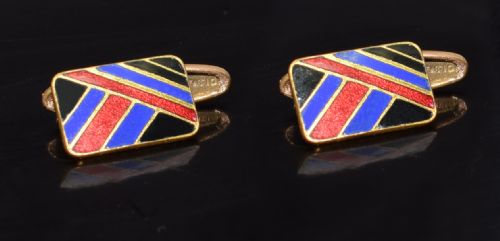
These 1930s cuff links deliver sharp geometric style and rich enamel colour, making them a brilliant addition to any smart shirt cuff.
1930s Cuff Links
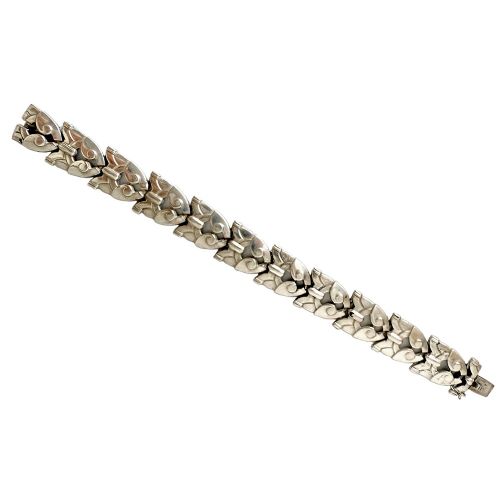
Beyond the standard gentleman's fittings, the wider design vocabulary of the era crosses over into related forms like bracelets, sharing the same distinctive modernist aesthetic. These small fastenings capture the architectural spirit of their decade in miniature.
How they were made
Makers utilised a combination of metals including silver, silver plate, platinum, brass, chrome, and gold as the structural foundation for these accessories. Enamel was then applied to introduce bold blocks of colour and graphic patterns.
Selected examples incorporate precious gemstones such as diamonds and emeralds set into platinum or gold, reflecting high-end manufacturing techniques of the period alongside industrial metals like chrome.
Skyscraper cuff links let you wear a tiny piece of New York's 1930s skyline right on your wrists.
What varies in quality
The standard of execution in the enamel work largely dictates the calibre of a piece, separating simple production items from finer studio output. Crisp lines and well-preserved coloured surfaces indicate superior craftsmanship.
The choice of base materials also creates a clear distinction across the range, moving from utilitarian chrome and brass up to substantial silver, gold, and diamond-set platinum settings.
Jakob Bengel
The 1930s Cuff Links Glossary
- Art Deco
- A design style spanning the 1920s and 1930s characterised by geometric shapes, streamlined forms, and modernist influences. It remains the defining visual language of this jewellery.
- Enamel
- A durable vitreous substance fused to metal through high-temperature firing to provide vivid colour and pattern. It forms the primary decorative surface on these pieces.
- Platinum
- A dense, strong precious metal used as a secure setting for diamonds and fine stones during the period. Its natural white lustre complements the geometric designs.
- Skyscraper
- A descriptive term for architectural motifs inspired by urban high-rise buildings of the era. These stepped geometric patterns appear frequently in cuff link designs.
1930s Cuff Links: Frequently Asked Questions
How do I wear vintage cuff links?
These accessories require a double-cuff shirt with buttonholes on both sides. Simply slide the fastening through the fabric to secure the cuffs together.
They sit flat against the wrist, providing a discreet flash of colour and metalwork that elevates formal or business attire.
Are these cuff links solid silver?
The materials vary considerably across the selection, ranging from precious metals like silver and gold to chrome, brass, and silver plate. Each listing specifies the exact metal composition used in construction.
Checking the description ensures you know whether you are looking at a base metal piece or a precious metal example.
What does Art Deco mean for cuff links?
Art Deco refers to the dominant design movement of the 1920s and 1930s, favouring symmetry, clean lines, and geometric abstraction. This style replaced the flowing curves of earlier Edwardian and Art Nouveau jewellery.
On cuff links, this translates to rectangular, stepped, and linear patterns enhanced by contrasting enamel colours.
Can I wear these every day?
Sturdily built from durable metals and fired enamel, these items were originally made for regular gentleman's wear. Modern daily use is entirely practical provided you handle the closures with care.
Store them separately in a box to prevent the enamel surfaces from scratching against other items.