
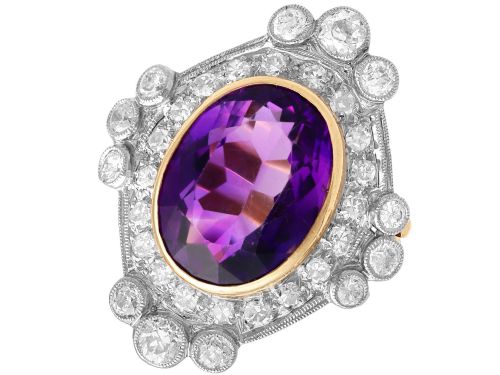
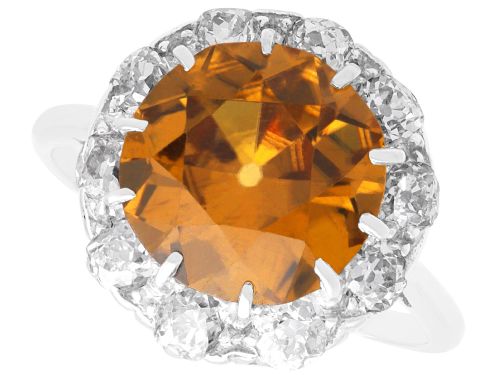
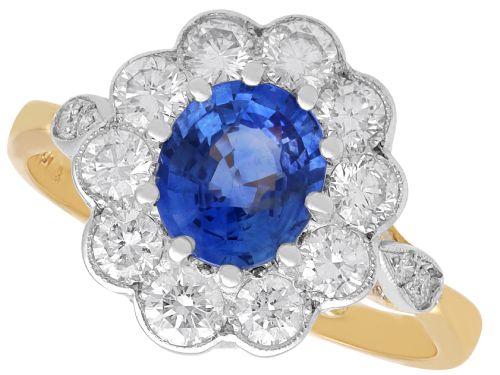
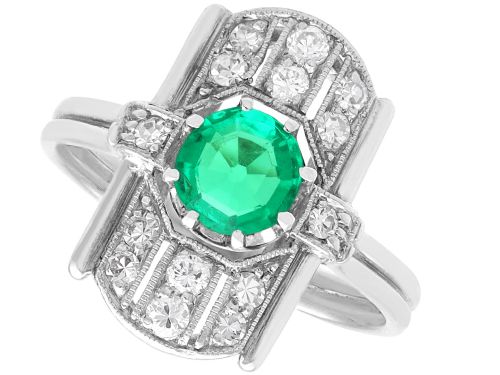
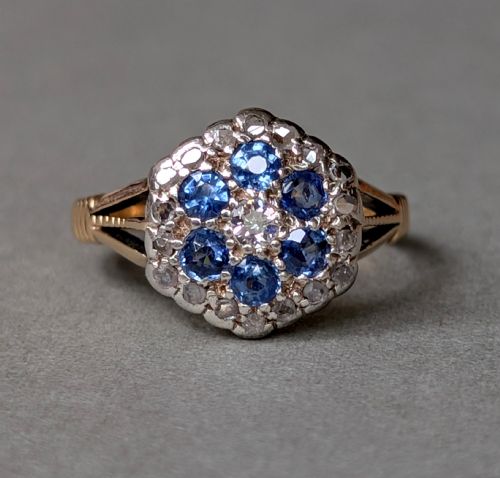


1930s Cluster Dress Ring
When you examine a 1930s cluster dress ring, you meet geometric symmetry and vibrant central stones framed by diamonds.
1930s Cluster Dress Ring
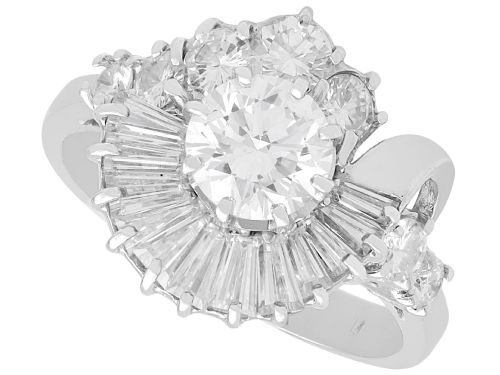
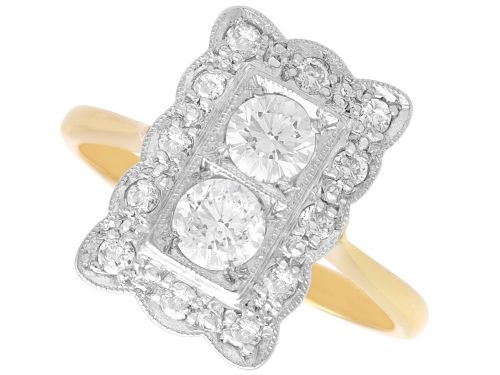
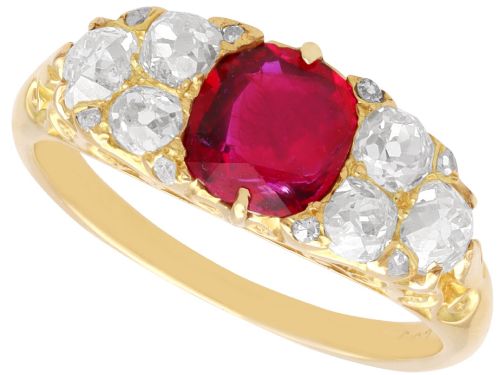
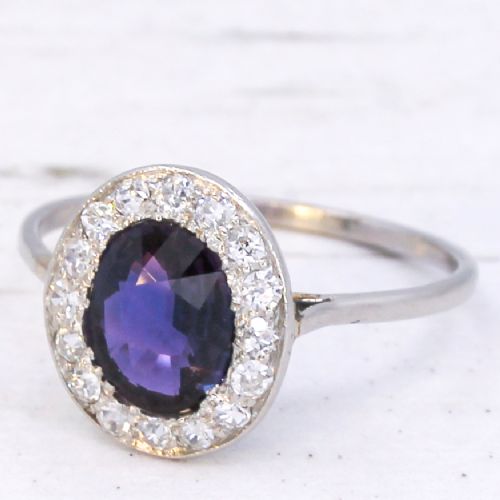
A 1930s cluster dress ring typically centres on a vibrant gemstone such as sapphire, ruby, emerald, zircon, amethyst, aquamarine, moonstone or diamond, surrounded by a border of smaller diamonds. These pieces belong predominantly to the Art Deco period, spanning the 1920s to the 1940s, and serve as decorative hand ornaments.
Buyers browsing this selection encounter rings fashioned from 18ct yellow gold, 18ct white gold, 14ct yellow gold, 15ct yellow gold and platinum. The overall arrangement prioritises geometric impact, often utilising floral, star or multi-tiered cluster layouts.
Most examples originate from the interwar decades, reflecting the architectural and design preoccupations of the era. They function primarily as cocktail or dress rings rather than standard engagement bands, though cluster formations frequently double as statement pieces.
Materials and Construction
Metals such as platinum and 18ct white gold were deployed to provide robust yet slender settings that could hold numerous small diamonds without heavy metal bulk. Yellow gold in 14ct, 15ct and 18ct weights also appears frequently, often providing a warm contrast to white metal top clusters.
Gems were cut in traditional old mine or old European styles, alongside step-cut emeralds and cabochons, which were secured using claw or millegrain settings. The integration of platinum allowed jewellers to create intricate wirework and perforated galleries beneath the main stones.
Current listings feature pieces spanning the 1920s, 1930s and 1940s, constructed in platinum, white gold and yellow gold.
Quality Variations
The distinction between tiers rests upon the saturation and origin of the central gemstone, alongside the uniformity and cut quality of the surrounding diamond melee. Sapphires from Burma or emeralds from Colombia command greater attention due to their inherent colour depth.
Constructional integrity also dictates worth, particularly the crispness of the millegrain edge work and the preservation of the original platinum or gold gallery structure. Pieces that retain their geometric sharpness without thinning of the shank represent superior survivals.
The 1930s Cluster Dress Ring Glossary
- Cluster ring
- A ring design featuring a prominent central stone encircled by a cluster of smaller accent stones, usually diamonds.
- Art Deco
- A design style characterised by sleek geometric shapes, streamlined forms and rich colour contrasts, prevalent through the 1920s and 1930s.
- Millegrain
- A decorative technique involving a row of tiny raised metal beads along the edges of a setting.
- Old cut
- A diamond cutting style typical of earlier periods, featuring a small table, high crown and deep pavilion.
- Cabochon
- A gemstone shaped and polished with a smooth, rounded surface rather than faceted planes.
1930s Cluster Dress Ring: Frequently Asked Questions
How do I wear a cluster ring safely?
Wear the ring on its own to prevent the claw settings or millegrain edges from rubbing against adjacent bands.
Take it off during manual tasks to protect the central gem and smaller surrounding stones from impact.
Are these rings suitable for daily wear?
These pieces tolerate regular daily use provided the settings receive routine checks by a jeweller.
Platinum and 18ct gold offer good durability, but softer centre stones require extra care against knocks.
What defines Art Deco ring design?
Art Deco design relies on strong geometric lines, symmetry and the pairing of white metals with colourful gems.
This aesthetic marked a sharp departure from the flowing, organic curves of the preceding Edwardian and Art Nouveau eras.
How do I identify platinum settings?
Platinum settings appear in a bright silvery-white tone that does not tarnish or require rhodium plating.
They also exhibit a heavier weight in the hand compared to white gold pieces of identical dimensions.