



1930s Chrome Light Fixture
A 1930s chrome light fixture brings clean industrial sheen and geometric elegance to a room, offering genuine period character.
1930s Chrome Light Fixture
When you search for a 1930s chrome light fixture, you encounter a distinct array of wall lights, pendant lights, and ceiling lights shaped by the Art Deco movement. These fittings combine metallic frames with glass elements to create a sharp, streamlined aesthetic suited to period interiors.
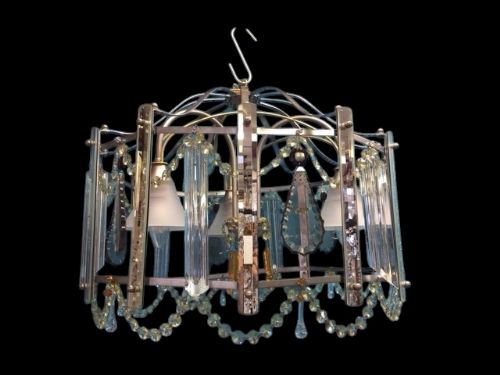
The version you are most likely to meet on this page is a wall light or ceiling light featuring chrome paired with frosted, pressed, or moulded glass. Examples span simple tubular sconces and trumpet designs to more elaborate French lanterns and small chandeliers.
Pieces draw on periods including the 1930s, the 1920s, and the Edwardian era, showing styles from standard Art Deco to French Art Deco, Modernist, and Odeon. Formats range from single wall sconces and pairs to matching suites and multi-light pendants.
How they were made
Makers constructed these fixtures using metal foundations of chrome, steel, nickel-plated metal, and occasionally catalin bakelite or lucite. Chrome plating provided a durable, reflective surface that defined the modern look of the decade.
Glass components were formed through pressing, moulding, cutting, or frosting to diffuse light evenly across the geometric shades and panels. Metal frames held these glass elements securely in place using screws, galleries, and structured brackets.
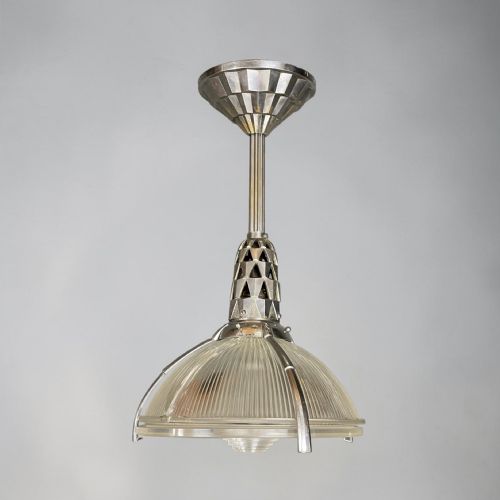
Fish scale glass shades let a 1930s pendant cast aquatic ripples across your ceiling.
What varies in quality
Quality separates fixtures by the crispness of the casting in the metal and the depth of the finish on the chrome or steel. Superior pieces display precise joints, substantial weight, and well-balanced proportions across arms and backplates.
Glass elements indicate quality through thickness, clarity, and the sharpness of pressed patterns or cut facets. Matching sets and original pairs demonstrate a higher grade of manufacture than single adapted items.
Émile-Jacques Ruhlmann
The 1930s Chrome Light Fixture Glossary
- Chrome
- A thin layer of chromium electroplated onto a base metal to provide a bright, corrosion-resistant finish. This process defined the shiny aesthetic of interwar lighting design.
- Frosted glass
- Glass treated by acid-etching or sandblasting to diffuse light and reduce glare. It creates a soft, even glow across wall lights and ceiling fittings.
- Sconce
- A wall-mounted lighting fixture designed to hold bulbs and direct illumination outward or upward. These often appear in matching pairs or suites.
- Pressed glass
- Glass shaped by being pressed into a metal mould using a plunger, allowing for decorative patterns and textured surfaces. This technique enabled mass production of uniform shades.
1930s Chrome Light Fixture: Frequently Asked Questions
How do I install a vintage chrome light?
Vintage fixtures require standard modern electrical wiring to connect safely to your ceiling or wall circuits. An electrician should check the internal lampholders and mounting brackets during installation.
Ensure the wall or ceiling structure can support the weight of metal and glass fittings, particularly with larger pendants or small chandeliers.
Are these lights suitable for low ceilings?
Flush-mounted ceiling lights and wall sconces sit close to the surface, making them ideal for rooms with restricted vertical clearance. Pendants require careful placement to ensure adequate headroom in hallways or living spaces.
Checking the drop measurement helps determine whether a pendant light fits a specific room layout.
How do I clean chrome and glass fixtures?
Wipe chrome surfaces gently with a soft microfibre cloth to remove dust without scratching the plated finish. Avoid harsh chemical cleaners that can strip or pit the metal over time.
Remove glass shades for washing in warm soapy water when necessary, drying them thoroughly before reattaching them to the metal frame.
What bulbs should I use in these fittings?
Modern LED bulbs that replicate the warmth of traditional incandescent lighting work well inside frosted and pressed glass shades. Choose low-heat options to protect vintage bakelite or wiring components.
Selecting the correct wattage ensures the fixture illuminates the space effectively without exceeding safe thermal limits for older sockets.