








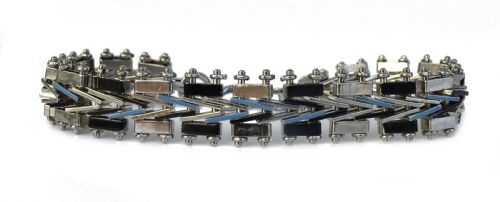
1930s Chrome Jewellery
These pieces of 1930s chrome jewellery capture the bold modernist spirit of the Art Deco era through striking industrial materials.
1930s Chrome Jewellery
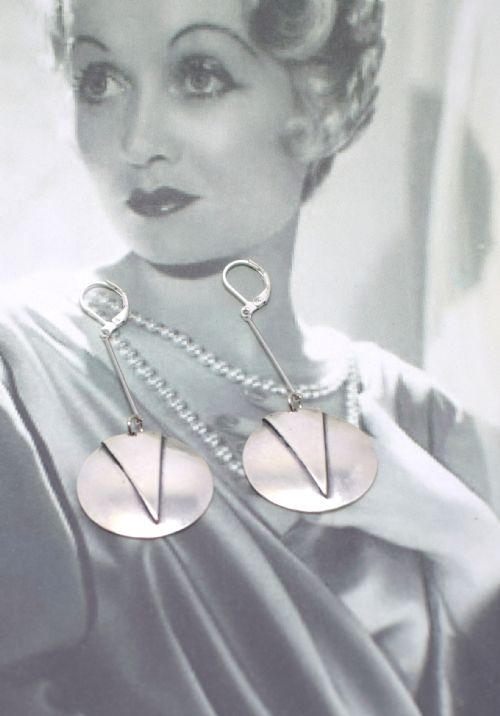
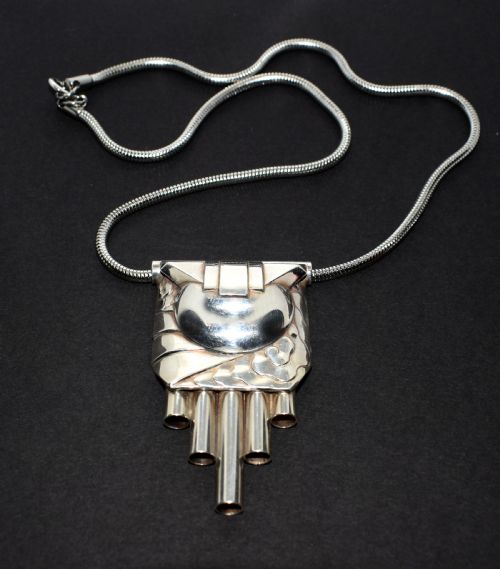
When you search for 1930s chrome jewellery, you encounter distinctive accessories defined by the geometric aesthetics of the Art Deco movement. These items range from statement necklaces and intricate link bracelets to dress clips, brooches, and earrings.
Many examples demonstrate German manufacturing origins, particularly through the distinctive output of the period. Pieces frequently appear as matched sets or standalone items meant to make a distinct visual statement.
How these pieces were made
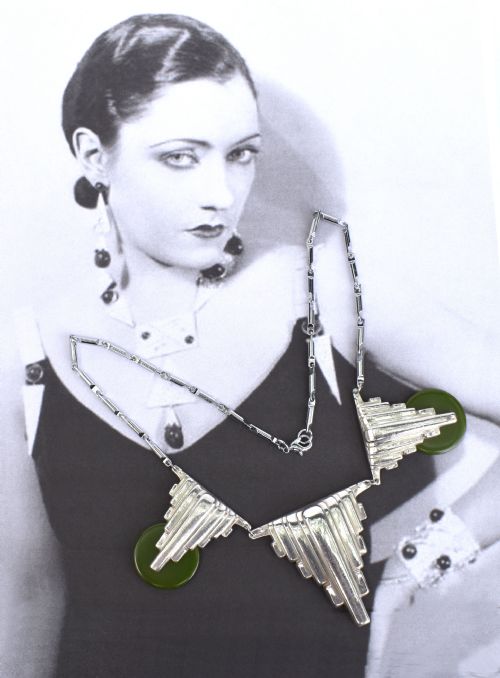
Makers utilised chrome and chromium plating over base metals to achieve a bright, rust-resistant surface that emulated silver without the need for constant polishing. This metal framework was frequently paired with early plastics such as bakelite, galalith, and phenolic resin.
Vibrant touches of enamel and cut glass were incorporated into the metal structures to add spots of colour and texture. Artisans assembled these disparate elements using mechanical connections like rivets and interlocking links rather than traditional fine jewellery soldering.
1930s Chrome Jewellery Retail Price Guide 2026
Typical asking prices for 1930s chrome jewellery among the pieces listed under this phrase on Sellingantiques today, from the lower quarter to the upper quarter. They describe what is for sale here now, not the wider market.
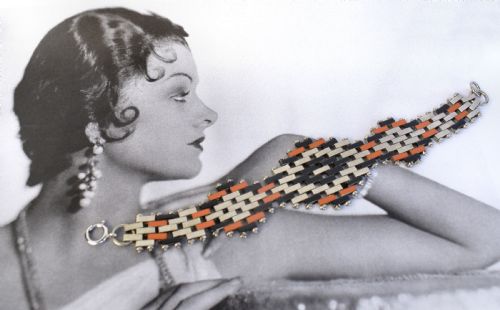
Industrial machinery parts found a second life when clever Berlin workshops turned clock chain designs into high-fashion wristwear.
What varies in quality
The standard of construction relies heavily on the precision of the metal linkages and the stability of the plating. Superior examples maintain an even, reflective chrome surface across intricate geometric joints without pitting or flaking.
Quality also rests in the integration of secondary materials like bakelite and glass, where tight tolerances and secure bezel settings prevent movement. Signed works attributed to known design houses demonstrate superior execution in their modernist geometry compared to anonymous factory output.
Jakob Bengel
The 1930s Chrome Jewellery Glossary
- Chrome
- An electroplated metallic coating providing a bright, durable, and reflective finish on base metals. It became the defining surface material for machine-age accessories.
- Bakelite
- An early form of synthetic plastic prized for its ability to be cast in solid colours and geometric shapes. It provides a warm, tactile contrast to cold industrial metal.
- Galalith
- A semi-synthetic plastic derived from casein milk protein used extensively for colourful geometric accents in modernist pieces. It holds a rich polish and absorbs vibrant dyes.
- Dress clip
- A two-pronged fastening ornament designed to clamp securely onto the neckline or lapel of a garment. These pieces often detach from a central frame to be worn individually.
- Modernist
- A design style discarding traditional floral motifs in favour of abstract geometric lines, industrial themes, and stark functionalism. It forms the core aesthetic of the period.
1930s Chrome Jewellery: Frequently Asked Questions
How do I clean 1930s chrome jewellery?
Clean the metal surfaces gently using a soft, dry microfibre cloth to remove oils and dust without scratching the chrome plating. Avoid harsh liquid dips, as moisture can damage early plastics and degrade the joints.
Store pieces individually in dry conditions away from other metals to prevent abrasion and tarnishing of the underlying base materials.
Are these pieces made of solid chrome?
These items consist of a base metal core coated with a thin layer of chromium plating rather than being cast from solid chrome. This technique provided the desired metallic sheen while keeping the accessories lightweight and wearable.
Over decades of handling, the underlying metal may occasionally show through at points of high friction on the reverse side.
What is a dress clip?
A dress clip is a decorative accessory featuring a hinged mechanism with teeth on the reverse to grip fabric firmly. They were commonly worn along the V-neck of a dress or attached to the lapels of a coat.
Many examples were designed to lock onto a separate frame, allowing the wearer to transform a brooch into a pair of dress clips.
How can I identify Jakob Bengel pieces?
Jakob Bengel designs are characterised by precise brickwork link construction, exposed geometric shapes, and a stark industrial aesthetic. The combination of chrome tubing with brightly coloured galalith or bakelite elements is a strong indicator.
While some items bear maker marks, many rely on distinct construction techniques and catalogue patterns for attribution.