

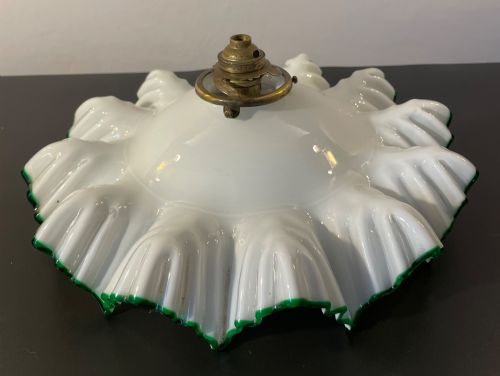
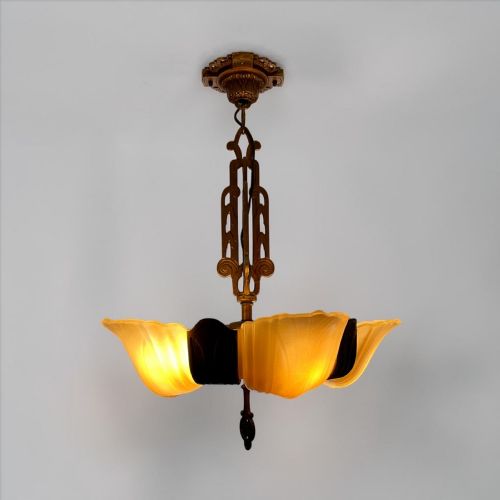
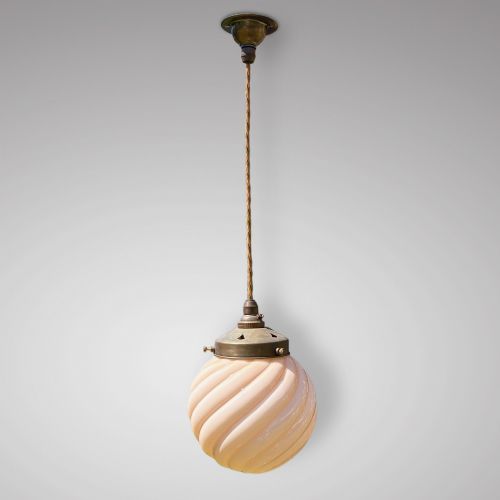
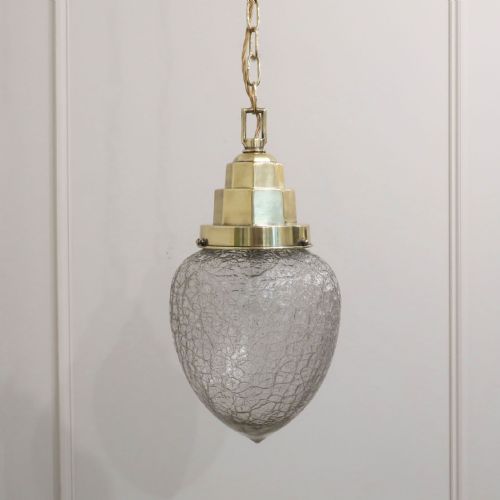
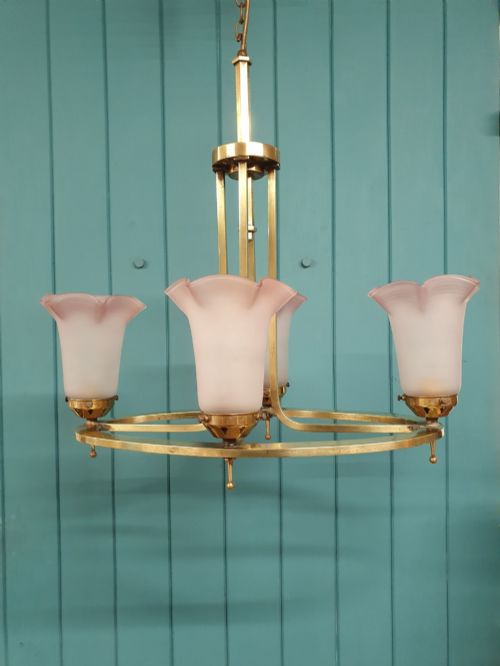


1930s Ceiling Pendant
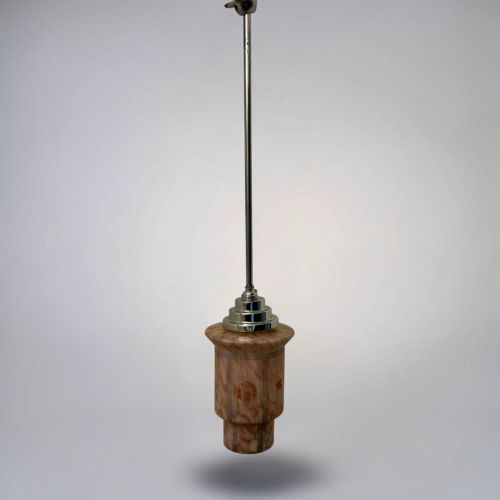
A 1930s ceiling pendant brings geometric lines and diffused illumination to a room, offering genuine period character for a period interior.
1930s Ceiling Pendant
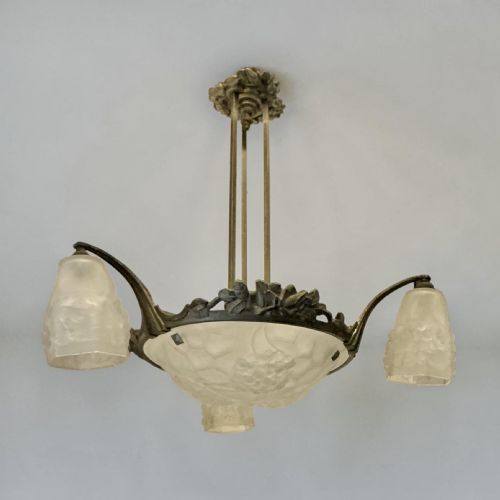
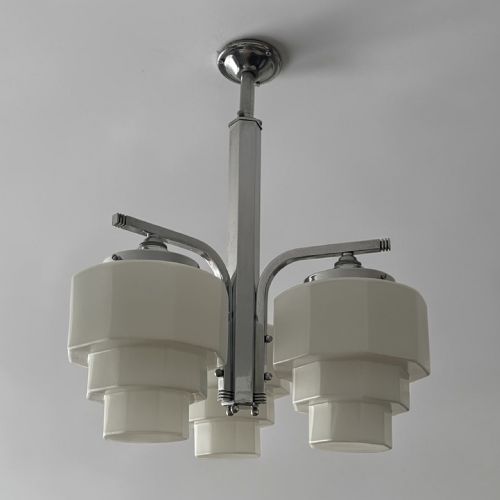
A 1930s ceiling pendant spans single drop lights, multi-arm chandeliers, and flush plafonnier fixtures designed to hang centrally in a room. The search phrase covers diverse lighting forms from domestic hallways to grand public spaces.
Art Deco examples dominate the selection, bringing characteristic stepped forms, moulded slip shades, and symmetrical arrangements of glass and metal. Alongside these, industrial reflectors and regional styles appear across the inventory.
Most pieces date strictly to the interwar decades, drawing on French, American, and British design vocabularies of the era. Buyers encounter both single hanging shades and matching suites of light fittings.
Materials and construction methods
Makers utilised cast and spun metals including brass, chrome, copper, and steel to form the structural frames, suspension chains, and galleries. These metals were frequently polished, plated, or left with their industrial patination intact.
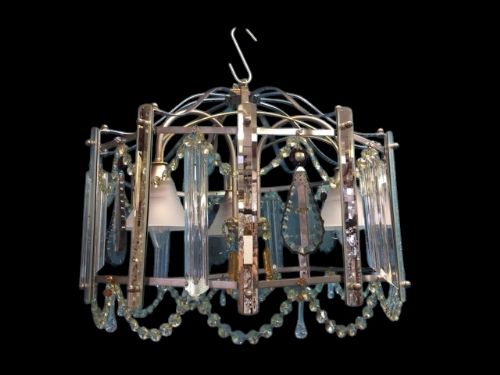
Glass production defined the period, employing frosted, opalescent, crackle, and slip-moulded techniques to diffuse light efficiently. Specialised units also incorporated crystal drops, alabaster dishes, and mercury-coated reflectors.
1930s Ceiling Pendant Retail Price Guide 2026
Typical asking prices for 1930s ceiling pendant among the pieces listed under this phrase on Sellingantiques today, from the lower quarter to the upper quarter. They describe what is for sale here now, not the wider market.
Listings feature brass, chrome, copper, and steel supporting frosted, opalescent, crystal, and opaline glass.
Indicators of quality and manufacture
Quality rests in the weight of the metalwork and the depth of the glass moulding, where heavier castings and thick, evenly distributed opaline or frosted surfaces separate standard production from superior output. The precision of the geometric joints and the integrity of original mounts distinguish better examples.
Artistic ambition dictates the upper tier, seen in named French glasshouses, intricate etched crystal domes, and monumental architectural commissions. Simpler utilitarian reflectors occupy the functional end of the spectrum.
Émile-Jacques Ruhlmann·Jean Gauthier·Gecoray·Holophane
The 1930s Ceiling Pendant Glossary
- Slip shade
- A moulded piece of glass that slots directly into a metal frame to form a bowl or shade around the bulb. These shades often display moulded geometric or floral reliefs typical of the interwar period.
- Plafonnier
- A ceiling-mounted light fixture that sits flush or very close to the ceiling surface rather than hanging on a long drop. This French term describes bowls and shallow domes used for overhead illumination.
- Opaline glass
- A milky, semi-translucent glass that diffuses light softly across a room without harsh glares. It appears frequently in spherical, pear-shaped, and prismatic pendant shades.
- Chandelier
- A branched hanging light fixture designed to hold multiple bulbs and distribute illumination across a wider space. Interwar variants often feature three to six arms arranged symmetrically.
- Mercury glass
- A double-walled blown glass coated on the interior with a silvering substance to create a reflective mirror finish. Industrial pendants utilised this technique to maximise downward light output.
1930s Ceiling Pendant: Frequently Asked Questions
How do I hang a heavy Art Deco chandelier safely?
Heavy multi-arm chandeliers and large glass fixtures require direct fixing into a ceiling joist or a substantial weight-bearing steel hook rather than lath and plaster alone. Professional installation ensures the original brass or chrome suspension chains bear the load securely.
Electrical wiring must be inspected and updated where necessary to meet current safety standards before connection to the mains supply.
Are original glass shades fragile?
Interwar glass such as frosted, opalescent, and slip-moulded panels possess substantial thickness, but individual components remain vulnerable to impact during handling and cleaning. Care must be taken when removing shades from their metal galleries for maintenance.
Replacement parts for specific period pieces can prove difficult to source, making careful handling essential.
How do I clean brass and chrome metalwork?
Maintenance depends on the surface finish, with unlacquered brass benefiting from gentle polishing to preserve its warm tone. Chrome plating requires only a soft cloth and mild soapy water to remove dust without abrading the reflective layer.
Harsh chemical cleaners should be avoided to prevent stripping original patination or protective coatings.
Can these pendants be rewired for modern bulbs?
Most surviving fixtures accept standard modern bulb holders after professional rewiring of the internal channels. Rewiring preserves the exterior aesthetic while ensuring compatibility with contemporary electrical safety regulations.
LED bulbs that replicate the warm glow of vintage filaments suit frosted and opalescent glass shades well.