
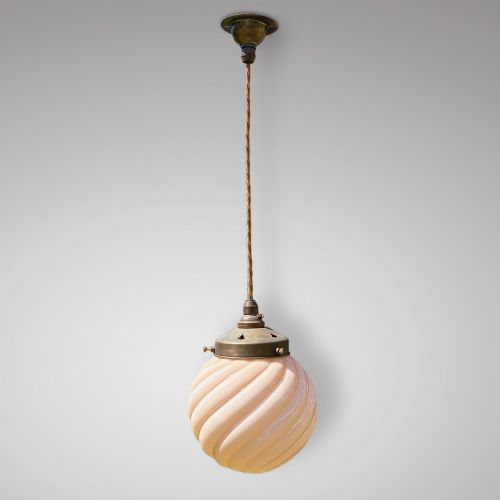
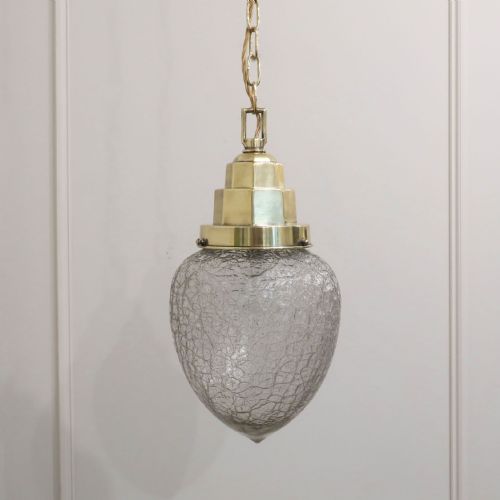


1930s Ceiling Fixture
A 1930s ceiling fixture brings period character to a room, offering geometric lines and warm illumination that defines an interior space.
1930s Ceiling Fixture
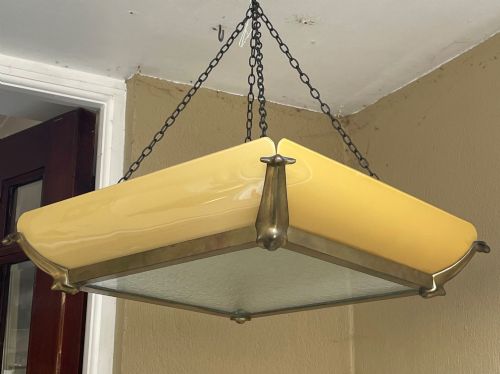
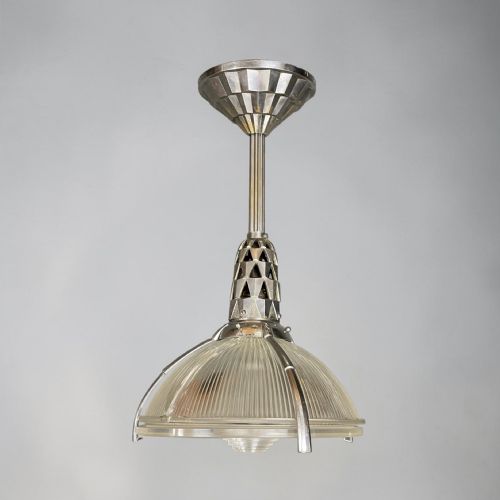
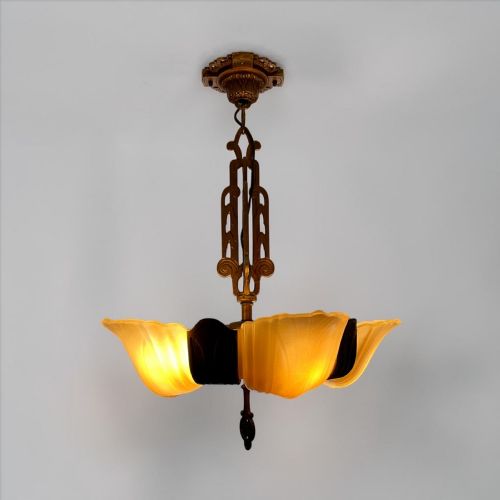
A 1930s ceiling fixture encompasses various lighting forms designed during the interwar years, predominantly featuring the distinct geometry and streamlined profiles of the Art Deco style. These pieces provide functional illumination while serving as strong decorative focal points within a room.
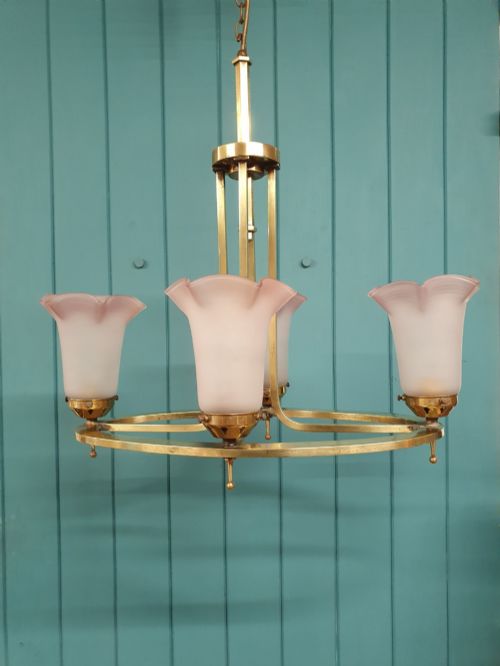
Buyers will most frequently encounter pendant lights, chandeliers, and flush-mounted ceiling lamps spanning the 1920s and 1930s periods. Examples range from modest single-bulb opaline shades to substantial multi-arm chandeliers sourced from French and domestic workshops.
The selection includes specialised regional variations such as Dutch Revival pendants and Highland Lodge antler configurations alongside standard urban forms. This variety allows the fixtures to complement both period properties and contemporary interiors seeking historical contrast.
How they were made
Makers constructed these fixtures using robust structural metals including brass, chrome, copper, steel, and wrought iron to form the frames, suspension rods, and lantern mounts. These metallic elements were often polished, patinated, or plated to achieve either a bright metallic sheen or a subdued industrial finish.
The diffusers and shades rely on specialist glassmaking techniques, utilising pressed satin glass, crackle glass, opalescent material, and heavily etched crystal. Molten glass was blown, moulded, or slipped into intricate geometric moulds to create the characteristic light-softening properties demanded by the era.
Listings demonstrate a strong prevalence of brass, chrome, and copper used alongside frosted and opaline glass in Art Deco ceiling lights.
What varies in quality
Quality in these fixtures is dictated by the heaviness and purity of the metal casting and the complexity of the glass components. Superior examples feature thick, heavy-gauge brass or bronze frames paired with deeply moulded or acid-etched glass shades rather than thin stamped metal and plain pressed glass.
The integrity of the design implementation and attribution to known designers or prominent installations elevate certain pieces above standard domestic lighting. Well-preserved original surface finishes and complete, matching shade suites demonstrate higher grade manufacture.
Émile-Jacques Ruhlmann·Jean Gauthier
The 1930s Ceiling Fixture Glossary
- Slip shade
- A type of glass shade that slips directly into a metal frame or basket on a ceiling light. These shades are frequently moulded with geometric Art Deco motifs.
- Opaline glass
- A milky, semi-translucent glass that diffuses light evenly across a room. It was widely utilised in the production of pendant lights and globes during the period.
- Bag chandelier
- A light fitting where numerous crystal droplets are arranged in a bag or basket shape beneath the main frame. This configuration concentrates and reflects illumination downward.
- Flush ceiling light
- A fixture mounted directly against the ceiling surface without a drop rod or chain. These are typically installed in spaces with lower ceiling heights.
- Chandelier
- A branched decorative ceiling fixture designed to hold multiple light sources. Period examples often utilise three, four, or six arms arranged symmetrically.
1930s Ceiling Fixture: Frequently Asked Questions
How do I hang a heavy 1930s chandelier?
These substantial metal and glass fixtures require secure anchorage directly into ceiling joists using appropriate steel mounting brackets. Professional electrical installation is essential to support the combined weight of the frame and glass shades safely.
Ensure the ceiling box and wiring can handle the electrical load of period multi-light configurations. Local electricians should verify that the hanging chain or rod is securely fastened to the primary structure of the building.
What rooms suit a 1930s ceiling fixture?
Pendant lights and flush fixtures fit well in hallways, dining rooms, and bedrooms where ambient or focused downward illumination is required. Larger multi-arm chandeliers anchor high-ceilinged living spaces and entrance halls effectively.
Matching the scale of the room to the diameter of the fixture ensures proper visual balance. Low ceilings benefit from close-fitting flush domes or shallow bowl pendants.
How do I clean frosted and opaline glass?
Gentle washing with warm soapy water and a soft cloth removes dust and grease accumulated on glass shades. Avoid harsh chemical abrasives that can damage delicate etched surfaces or original patinas on the metal.
Carefully remove slip shades or glass bowls from their frames before cleaning to prevent accidental drops. Dry the glass thoroughly with a lint-free cloth before reassembly.
Are these fixtures compatible with modern bulbs?
Most period fixtures accept standard modern bulb bases, though internal wiring may require updating to meet contemporary safety standards. LED alternatives provide efficient illumination while reducing heat output inside enclosed glass shades.
Consult a qualified electrician to inspect the internal sockets and wiring harness during installation. Using lower-wattage warm white bulbs preserves the soft atmospheric glow intended by the original designers.