





1930s Bookends
These 1930s bookends bring bold sculptural lines and period character to a shelf, anchoring volumes with unmistakable modernist style.
1930s Bookends
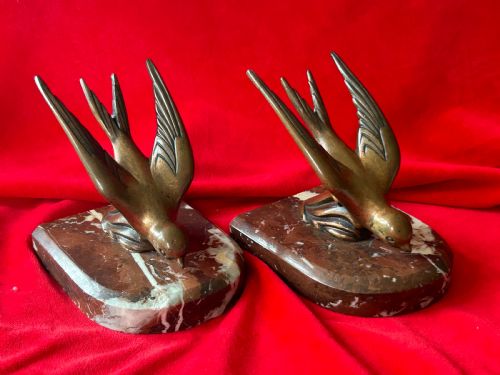
When you search for 1930s bookends, you encounter functional shelf supports that double as miniature sculptures reflecting the dominant tastes of the interwar period. The examples on this page are overwhelmingly tied to the Art Deco movement, featuring stylised animals, figures, and architectural forms designed to organise books while making a distinct aesthetic statement.
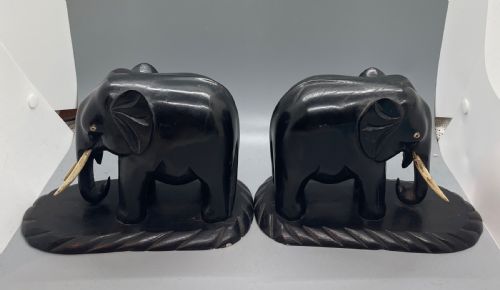
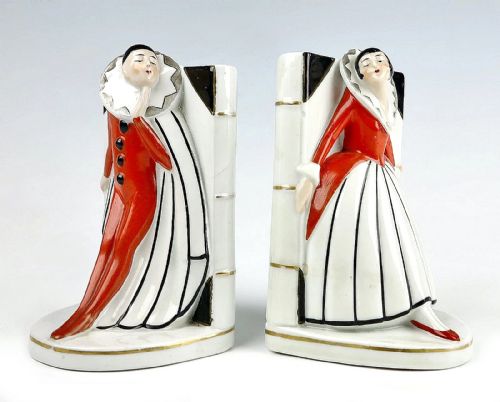
The selection frequently takes the form of matched pairs, ensuring symmetrical balance on either end of a row of volumes. Alongside standard upright supports, the inventory includes integrated book troughs and figural groupings that place sculptural subjects like dogs, elephants, and human characters front and centre in the room.
How they were made
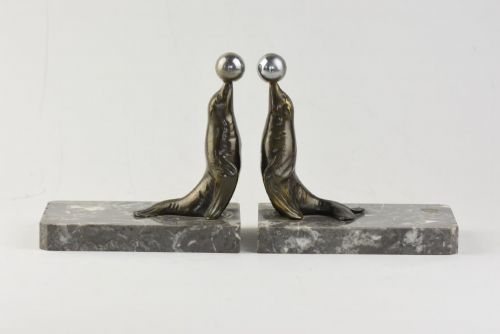
Maker construction relies heavily on casting metals such as bronze, brass, spelter, and chrome, often paired with dense natural stone bases like marble and alabaster. These heavy mineral foundations provide the necessary weight to keep heavy books upright without slipping.
Makers also utilised organic materials including wood and ebony, alongside ceramic components, to achieve contrasting textures and dual-tone colour schemes. Metal elements frequently received silvered or patinated finishes to catch the light and accentuate the sharp geometry typical of the era.
1930s Bookends Retail Price Guide 2026
Typical asking prices for 1930s bookends among the pieces listed under this phrase on Sellingantiques today, from the lower quarter to the upper quarter. They describe what is for sale here now, not the wider market.
Scottish terriers and elephants hold up your library with equal architectural dignity.
What varies in quality
The choice and combination of materials also dictate the overall standard, where genuine solid marble or substantial bronze commands greater presence than lighter plated metals or composite substitutes. Original surface finishes, whether patinated bronze or polished chrome, preserve the integrity of the piece.
Karl Hagenauer·Herzig
The 1930s Bookends Glossary
- Spelter
- An alloy primarily composed of zinc, frequently used as a cost-effective alternative to bronze in decorative metalwork. It was commonly cast and painted or electroplated to imitate more expensive metals.
- Alabaster
- A fine-grained, translucent stone valued for its soft veining and smooth tactile surface. It was frequently utilised for bases and carved sculptural components during the interwar period.
- Art Deco
- A design style spanning the 1920s and 1930s characterised by sleek geometric shapes, streamlined forms, and modern industrial materials. It influences the dominant visual language of the pieces seen here.
- Book Trough
- A small shelf or desktop rack with integrated end supports designed to hold a curated selection of volumes together. This form combines the function of independent bookends into a single unified object.
1930s Bookends: Frequently Asked Questions
What materials were used?
Makers utilised a wide range of materials including marble, alabaster, bronze, spelter, brass, chrome, and ebony. These were often combined to create contrast between heavy stone bases and detailed metal sculptures.
Heavier stones provided the practical weight required to secure volumes effectively while metals allowed for intricate figural modelling.
Are they sold in pairs?
The majority of items listed appear as matched pairs designed to anchor both ends of a row of books symmetrically. Single items and integrated book troughs also appear to suit different shelf configurations.
Pairs often feature mirrored animal subjects or balancing human figures tailored for visual harmony.
How do I style them?
Place them on open bookshelves, sideboards, or mantelpieces to secure upright volumes while introducing a strong modernist accent to the room. Their sculptural qualities allow them to function as decorative objects even when supporting only a few books.
Pairing them with period furniture helps contextualise their distinct interwar design lineage.
How do I identify the period?
Look for characteristic Art Deco motifs, streamlined geometric silhouettes, and the specific material combinations popular during the interwar decades. Signatures or foundry marks can also provide direct confirmation of origin.
Stylised depictions of animals such as greyhounds, elephants, and sea lions point directly to this era.