


1930s Art Deco Coffee Table
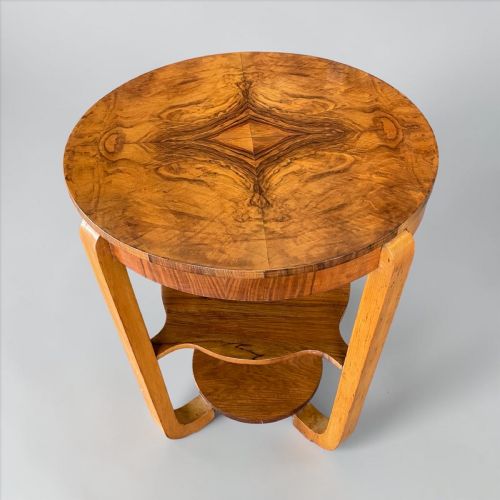
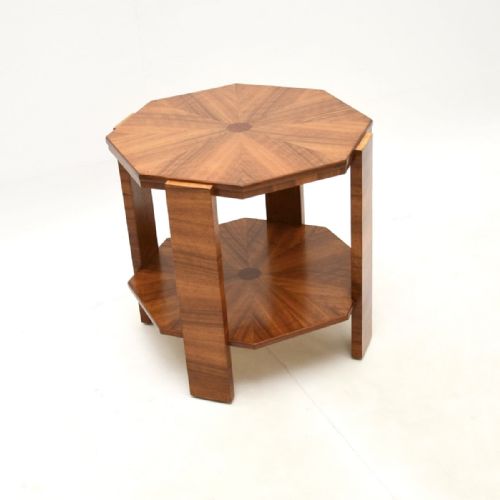
A 1930s art deco coffee table brings geometric clarity and rich timber figures to a room, offering a low surface shaped by the design ambition of the interwar period.
1930s Art Deco Coffee Table
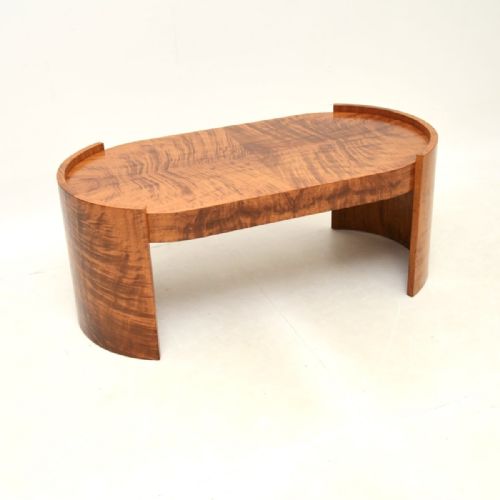
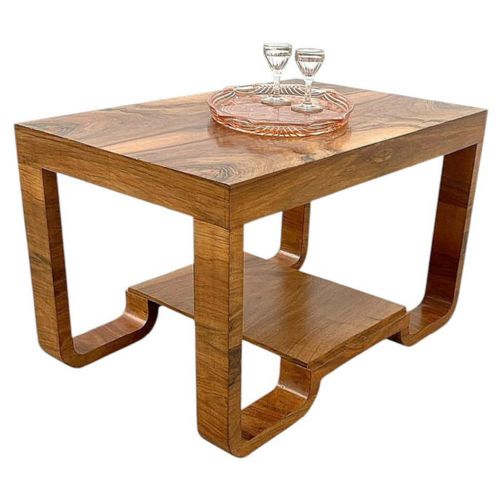
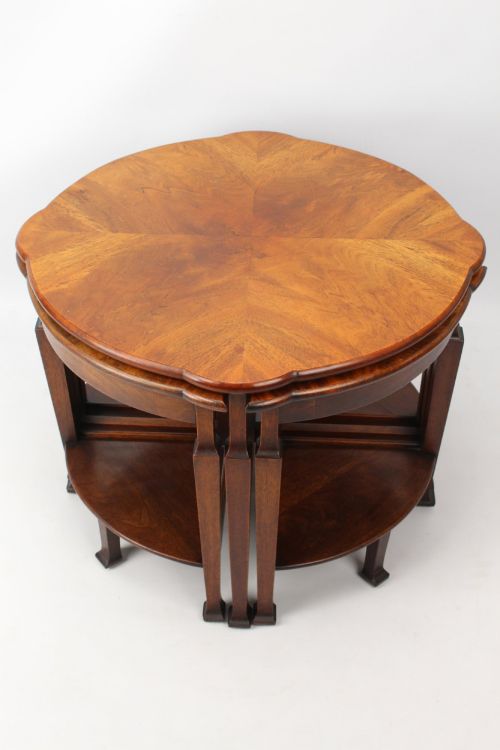
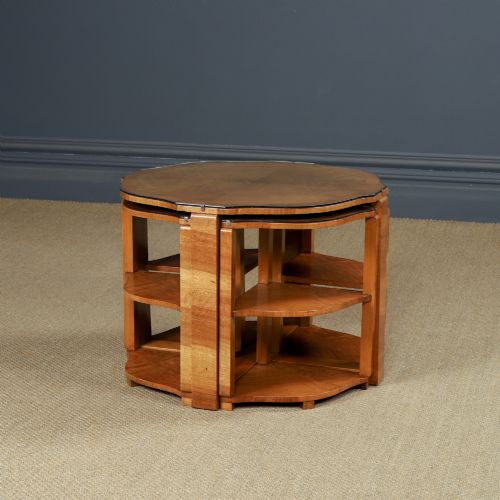
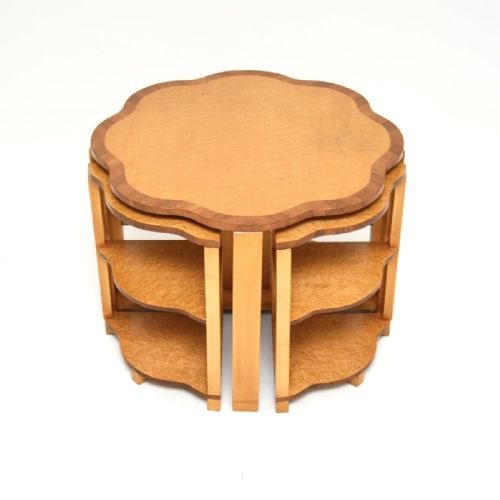
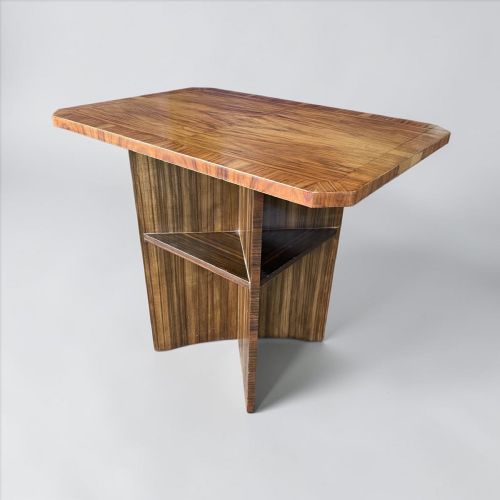
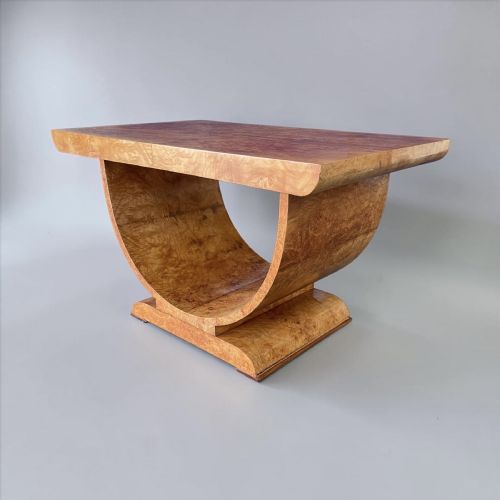
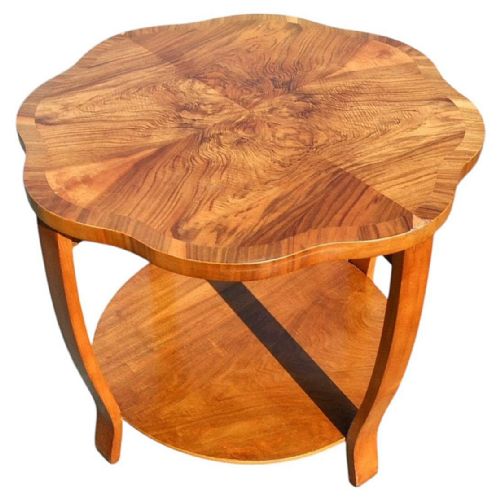
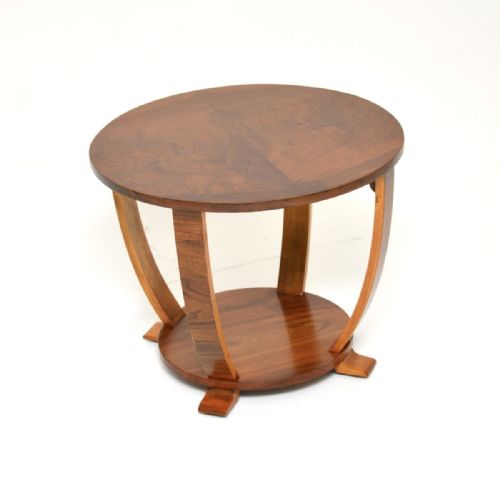
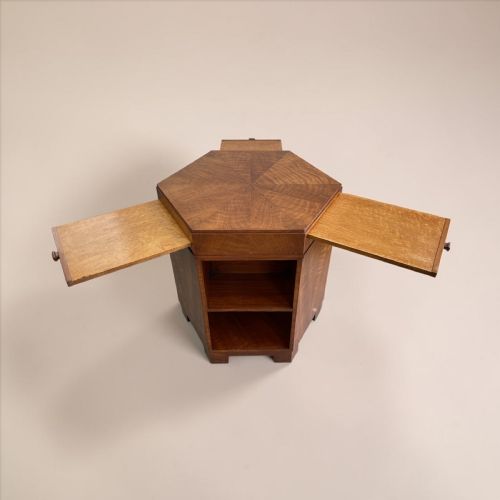
A 1930s art deco coffee table is a low occasional surface built primarily during the 1930s, though examples also surface from the 1920s and 1940s. The selection relies heavily on English and French origins, taking the form of central coffee tables, nests of tables, two-tier designs, and occasional book tables.
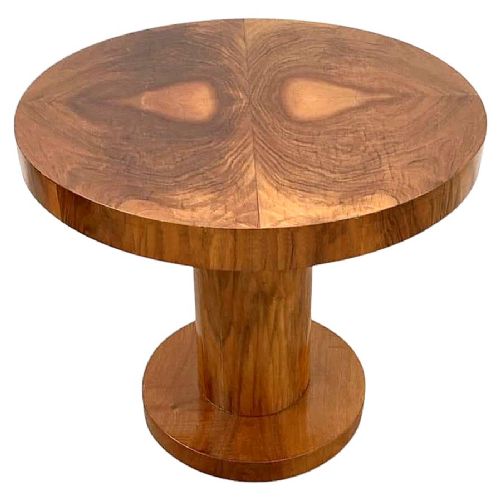
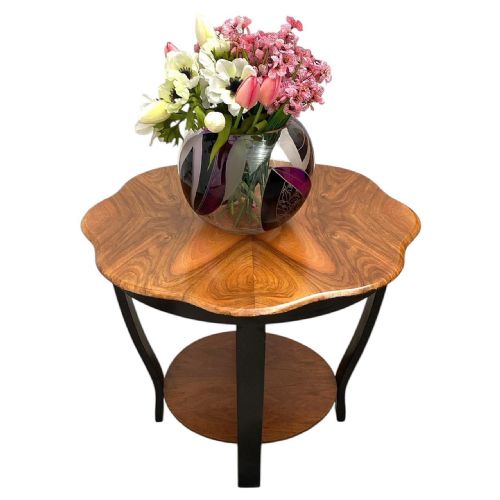
Buyers meet variations spanning simple round or octagonal oak models to elaborate multi-tiered walnut pieces. Many examples double as side, lamp, or wine tables, showing the adaptable domestic requirements of the period.
How they were made
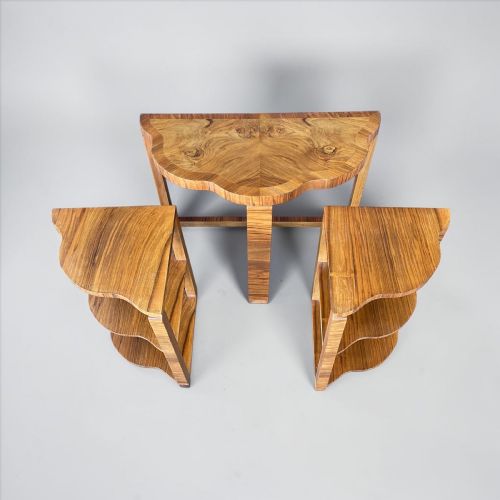
Cabinet makers utilised solid woods like oak and ebonised timber alongside extensive veneers of walnut, burr walnut, birds eye maple, and karelian birch. These decorative veneers were carefully laid to create symmetrical grain patterns across the tops and tiers.
Construction frequently incorporated multiple tiers, glass inserts, and occasionally metal elements such as chrome, brass, and wrought iron. French examples tended to integrate mixed timbers like rosewood and maple with original glass panels.
1930s Art Deco Coffee Table Retail Price Guide 2026
Typical asking prices for 1930s art deco coffee table among the pieces listed under this phrase on Sellingantiques today, from the lower quarter to the upper quarter. They describe what is for sale here now, not the wider market.
Listings feature walnut, oak, and burr walnut veneer alongside glass, marble, and chrome across coffee tables, nests, and two-tier occasional forms.
What varies in quality
Quality rests principally in the choice and matching of timber veneers, where highly figured walnut or burr maple displays superior depth compared to plain surfaces. The complexity of the construction, such as multi-tiered designs or nests of five tables, marks out more ambitious workshops.
The integration of contrasting materials, including chrome, marble, and specialised glass, separates standard production from high-end pieces. Originality of components and the precision of geometric lines dictate the standing of an individual table.
Harry and Lou Epstein
The 1930s Art Deco Coffee Table Glossary
- Burr Walnut
- A timber derived from the wart-like growths on walnut trees, yielding highly ornamental and swirling grain patterns. It is frequently utilised in top-tier decorative furniture.
- Veneer
- A thin slice of superior wood adhered to a base timber to create patterned surfaces without warping. This technique defined the decorative skin of interwar tables.
- Nesting Tables
- A set of graded tables designed to fit neatly beneath one another to save space. They appear often in sets of three, four, or five.
- Two-Tier Table
- An occasional table featuring an additional lower shelf supported by pillars or panels. This construction provides extra surface area while maintaining a compact footprint.
- Ebonised Wood
- Timber treated with a dark finish to imitate ebony. This process was commonly applied to accentuate sharp geometric contours.
1930s Art Deco Coffee Table: Frequently Asked Questions
How do I identify a 1930s art deco coffee table?
Look for symmetrical wood veneers, stepped geometric forms, and materials such as walnut, maple, or chrome. The proportions are typically low and horizontal, reflecting interwar design priorities.
Check for construction methods standard to the period, including multi-tiered platforms and integrated side storage.
Were these tables originally used as coffee tables?
Many were designated as occasional, tea, or low side tables rather than strictly coffee tables. Domestic habits of the period meant low surfaces served multiple functions for entertaining and reading.
Larger library and book tables also filled central room spaces alongside smaller nest arrangements.
What is a nest of tables?
A nest comprises several tables of descending size that slide beneath the largest one when not in use. They provided flexible surface space for drinks or books in interwar sitting rooms.
Sets of three, four, and five tables appear frequently in walnut and maple.
How do I care for a walnut veneer top?
Keep wooden surfaces away from direct sunlight and excessive heat to prevent the veneer from drying or cracking. Regular dusting with a soft, dry cloth maintains the finish without moisture damage.
Avoid placing damp items directly on the polished wood to protect the delicate grain patterns.